

Views: 342 Author: Professor Leon Publish Time: 08-18-2026 Origin: Site


Content Menu
● 1. The 2024 B2B Buyer’s Guide: Sourcing the Best Men’s Front Pocket Wallet
● 2. What Defines a Front Pocket Wallet?
● 3. Material Science and Manufacturing Constraints
● 4. The Production Journey: From Design to Mass Production
● 5. How to Evaluate a Men's Front Pocket Wallet Manufacturer
● 6. Industry Standards and Certifications
● 7. Our Manufacturing Approach
● 8. Frequently Asked Questions
● 9. Making the Sourcing Decision
9 min read
When a brand owner first searches for the "best mens front pocket wallet," they usually picture a retail shelf. But the question that matters in a factory meeting room is different: which construction method, material, and supply chain setup will deliver that product consistently across 5,000 units?
The shift from bulky back-pocket bifolds to minimalist front-pocket solutions has created a distinct product category with specific engineering constraints. For B2B buyers, understanding these constraints separates a successful product launch from a costly inventory mistake. This guide breaks down the technical classifications, material science, and manufacturing processes behind this category to help you make an informed sourcing decision.
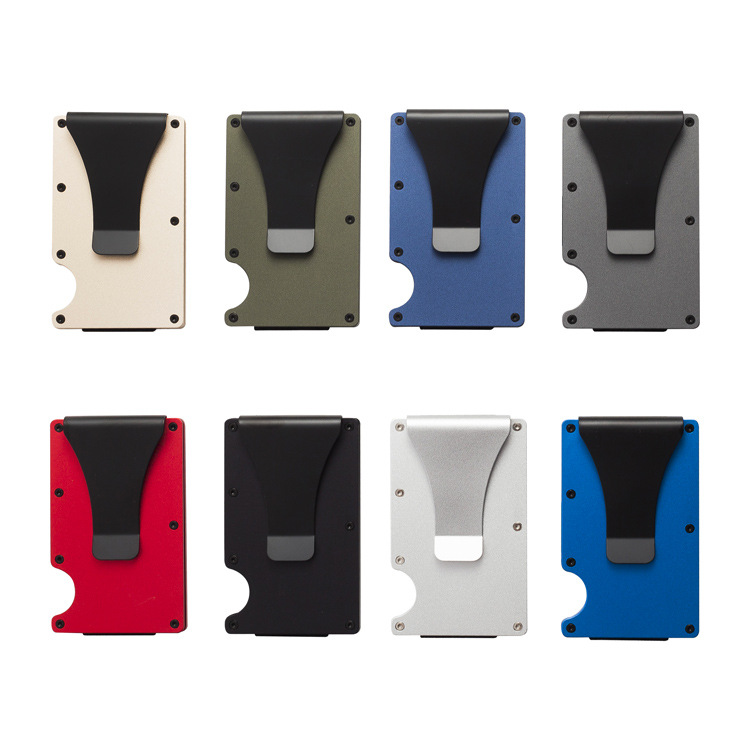
A true front pocket wallet is a slim, rigid or semi-rigid card holder designed to sit comfortably in a trouser front pocket without bending or creating an unsightly bulge. Unlike traditional bifolds, these designs prioritize minimal thickness and structural integrity over maximum capacity.
The traditional slim bi fold wallet mens design relies on soft, folded leather with stitched compartments. It works well in a back pocket where sitting pressure is distributed. But front pockets demand different physics. When you sit, the wallet presses against your hip bone. A soft leather wallet flexes, but it also distorts over time, stretching the stitching and losing its shape.
This problem drove the rise of hard-shell designs. Aluminum and carbon fiber wallets emerged around 2013, pioneered by brands like Ridge and Trayvax. These products use a rigid exoskeleton that resists bending and protects cards from impact. The trade-off is comfort — a hard metal block in a front pocket can feel intrusive until the user adapts.
A middle ground exists. Hybrid wallets combine a leather exterior with an internal metal or plastic frame. They offer the tactile warmth of leather with the structural support of metal. This segment has grown significantly because it solves the comfort problem while maintaining durability.
Technical specifications matter when comparing products:
| Specification | Soft Leather Bifold | Rigid Metal Wallet | Hybrid Design |
|---|---|---|---|
| Typical Thickness | 12–15 mm | 6–10 mm | 8–11 mm |
| Card Capacity | 8–12 cards | 4–12 cards | 6–10 cards |
| Cash Storage | Bill compartment | Clip or band | Clip or band |
| Structural Rigidity | Low | High | Medium |
| Comfort in Front Pocket | Moderate | Varies | Good |
RFID blocking has become a non-negotiable feature in most men's front pocket wallet designs. Contactless payment cards operate at 13.56 MHz, and consumers increasingly expect protection against unauthorized scanning. For B2B buyers, this means specifying RFID shielding from the start — retrofitting it later is expensive and compromises the design.
The hybrid category deserves attention because it addresses a real consumer complaint. Rigid metal wallets feel cold and impersonal. Soft leather wallets don't protect cards well. Hybrids use a thin aluminum or plastic frame inside a leather wrapping, giving the user both structure and texture.
For buyers, the hybrid segment offers a differentiation opportunity. It is less saturated than pure metal or pure leather markets, and it commands a premium price point.
---
Material selection determines not just the product's feel but its entire manufacturing process, cost structure, and lead time.
Aerospace-grade aluminum (typically 6061-T6) is the standard for rigid front pocket wallets. It offers an excellent strength-to-weight ratio and responds well to anodizing.
The anodizing process deserves scrutiny. Standard anodizing creates a thin oxide layer (5–10 microns) that scratches easily. Hard-coat anodizing produces a thicker layer (25–50 microns) that resists abrasion significantly better. In a pocket environment, where the wallet rubs against keys and coins, hard-coat anodizing is worth the extra cost.
CNC machining tolerance is another critical factor. A well-made aluminum wallet should have edges that meet flush, with no sharp burrs. Buyers should ask suppliers about their tolerance levels — typically ±0.1 mm is acceptable for wallet components. Finishing options (matte, sandblast, polished) affect both aesthetics and grip.
Carbon fiber wallets use either twill-weave (aesthetic, visible weave pattern) or forged carbon (random fiber orientation, more impact-resistant). Twill-weave is more common in consumer products because it looks premium. Forged carbon is stronger but has a less uniform appearance.
Tooling costs differ dramatically between materials. Injection-molded plastic wallets require expensive steel molds — often $10,000–$30,000 per cavity. CNC aluminum wallets require no tooling, only programming time and machine hours. For low-to-mid volume orders (under 5,000 units), CNC aluminum is more cost-effective. Above that threshold, injection molding becomes competitive.
Full-grain leather is the top tier. It retains the natural grain, developing a patina over time. Top-grain leather has the surface sanded to remove imperfections, making it more uniform but less characterful. Bonded leather — made from leather scraps glued together — should be avoided for any product claiming quality.
Stitching quality determines lifespan more than leather grade. Professional manufacturers use 6–8 stitches per inch with waxed polyester or nylon thread. Fewer stitches mean weaker seams; more stitches create perforation that can tear the leather. Buyers should request stitch density in their specifications.
One imperfect insight: leather wallets are not always the cheaper option at scale. While raw leather costs less than machined aluminum, the labor-intensive stitching process makes leather wallets slower to produce. For high-volume orders, aluminum wallets often achieve lower per-unit costs because CNC machines run unattended.
---
Before committing to production, buyers should verify the design through prototyping. 3D printing (SLA for rigid plastics, SLS for nylon) allows form-fit testing without tooling investment. A prototype lets you test the front pocket comfort — does the wallet dig into the leg when sitting? Does it slide in and out of a tight pocket easily?
Logo integration methods vary by material:
Laser engraving: Works on metal and leather. Creates a permanent, high-contrast mark. Cost-effective at any volume.
Pad printing: Suitable for plastic and coated surfaces. Limited durability compared to engraving.
Embossing: Presses a logo into leather. Creates a premium, tactile finish.
CNC-machined logos: Milled directly into metal. Adds perceived value but increases machining time and cost.
A standard AQL (Acceptable Quality Limit) inspection for wallets typically uses a 2.5 critical / 4.0 major / 6.5 minor sampling plan. Key failure points to monitor:
Card spring tension (too loose and cards fall out; too tight and they're hard to remove)
Clip retention (the cash clip must hold firmly without deforming)
Coating adhesion (anodized or painted surfaces should pass a cross-cut tape test)
---
The evaluation framework below applies whether you are sourcing a slim bi fold wallet mens line or a rigid aluminum model.
What is your monthly production capacity for this specific product? — A supplier quoting a general capacity without product-specific numbers may be overstating.
Do you control the CNC machining in-house? — Outsourced machining creates coordination risk and slower iteration.
What are your MOQ terms for stock vs. custom orders? — Some suppliers offer low MOQs (500 units) for standard designs but require 2,000+ for custom colors or logos.
Can you provide RFID blocking test reports? — Verify the shielding effectiveness against 13.56 MHz signals.
What is your defect replacement policy? — A 1:1 replacement for manufacturing defects is standard. Fast processing depends on in-house production.
Suppliers who cannot articulate the difference between full-grain and top-grain leather
Vague lead time quotes that don't break down production vs. shipping time
Reluctance to provide sample units before bulk production
Trading companies posing as manufacturers (check if they have in-house machinery)
Choose a rigid metal wallet if your target audience is tech-savvy, values durability, and prefers a modern aesthetic. Choose a leather slim bi fold wallet mens design if your brand positions around craftsmanship, tradition, or luxury. Choose a hybrid if you want to differentiate in a crowded market and appeal to consumers who want both form and function.
---
While wallets are not heavily regulated, certain standards apply:
RFID blocking: Test against ISO 14443 (proximity cards) and ISO 15693 (vicinity cards). A shield should attenuate the signal by at least 30 dB.
Material safety: REACH compliance for European markets restricts hazardous substances. RoHS compliance applies to electronic components (relevant if the wallet includes any smart features).
Leather sourcing: If claiming genuine leather, verify the supplier's tanning process complies with local environmental regulations.
---
The standards discussed above — CNC tolerance, anodizing quality, stitching density, QC protocols — are not theoretical. As a manufacturer, our approach to meeting them involves specific infrastructure decisions.
We house our CNC machining in-house rather than outsourcing it. This gives us direct control over tolerance levels and allows faster iteration during the prototyping stage. When a buyer requests a design tweak — a slightly thicker card slot, a different clip angle — we can adjust the programming and produce a revised sample within days, not weeks.
Our 13+ years in OEM/ODM manufacturing have refined our quality control processes for both rigid metal wallets and slim bi fold wallet mens leather options. We understand where failures occur — the spring tension that weakens after 10,000 insertions, the anodized coating that chips when a wallet is dropped on concrete — and we design against those failure points from the start.
With a production capacity exceeding 300,000 units per month, we support retail rollouts and distribution networks without compromising delivery schedules. This capacity matters particularly during Q4 peak seasons, when stock-outs can cost retailers significant revenue.
We offer complete private label and custom design services, from material selection to packaging. Whether you need laser-engraved logos on aluminum wallets or embossed branding on leather, our in-house finishing capabilities keep the entire process under one roof.
---
What is the difference in cost between a leather slim bi fold wallet mens and an aluminum front pocket wallet?
Leather is often cheaper for low-volume orders because it requires minimal tooling. Aluminum becomes cost-effective at higher volumes due to faster automated production. For 1,000 units, leather is likely 20–30% cheaper. For 10,000 units, the gap narrows significantly.
What is the typical MOQ for a custom RFID blocking wallet?
Standard stock colors and designs may have MOQs as low as 500 units. Custom Pantone colors or unique logo placements typically require higher minimums — often 1,000–2,000 units — depending on the finishing process.
How do I ensure RFID blocking is effective?
Ask for test reports verifying attenuation at 13.56 MHz. A reputable supplier will provide third-party or in-house test data. The shielding material — typically a metal plate or conductive fabric — must cover the entire card compartment.
Can we use our own branding on the wallet?
Yes. OEM and ODM services include laser engraving, metal badges, leather embossing, and custom packaging. We work with your design files to ensure accurate reproduction across all units.
What is the lead time for a bulk order of 5,000 units?
Depending on complexity — a simple cash band design vs. a spring-loaded card mechanism — production typically takes 25–35 days. Shipping adds 5–15 days depending on destination and shipping method.
---
The best men's front pocket wallet for your brand depends on your target customer, price point, and volume commitments. Metal wallets appeal to a younger, tech-focused demographic. Leather wallets attract consumers seeking longevity and traditional craftsmanship. Hybrid designs offer a differentiated middle path.
Evaluate suppliers against the technical criteria outlined here: material quality, manufacturing process control, QC protocols, and capacity stability. A supplier who can articulate their process — not just their price — is more likely to deliver consistent results at scale.
Ready to launch your private label line of men's front pocket wallets? Contact our engineering team to discuss your specifications and get a detailed quote.
---
Trayvax. "Front Pocket Wallet | USA Made | 65 Year Warranty." https://www.trayvax.com/
Bosca. "Slim Leather Front Pocket Wallets & Card Cases." https://www.bosca.com/
Reddit r/EDC. "Best front-pocket wallet?" https://www.reddit.com/r/EDC/
NutSac. "The Best Wallets for Everyday Carry (and How to Choose One)." https://nutsac.com/
Andar. "The Best Front Pocket Wallet: The Ultimate Guide." https://www.andar.com/


