Content Menu
● How to Balance Card Capacity, Cash Storage, and Slim Design: Start With Your Daily Load
● Card Capacity: Comfortable Access Matters More Than the Maximum Number
>> Distinguish Maximum Capacity From Everyday Capacity
● Cash Storage: Choose the Structure Around How You Pay
>> Money Clip: A Dedicated Place for Folded Notes
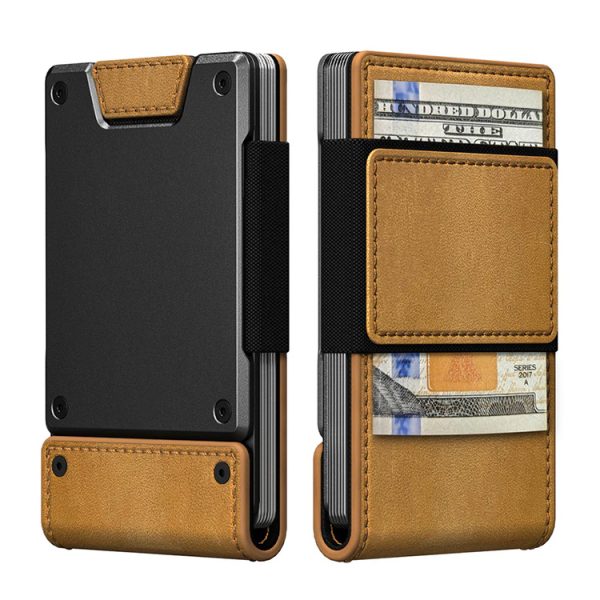
>> Cash Strap: A Low-Profile Alternative
>> Internal Bill Compartment: Useful for Frequent Cash Handling
● Why Cash Folding Changes Wallet Thickness
● Compare Minimalist Wallet Structures by Carrying Style
● Materials and Construction: Where Hidden Bulk Appears
>> Leather Wallets: Review the Entire Layer Stack
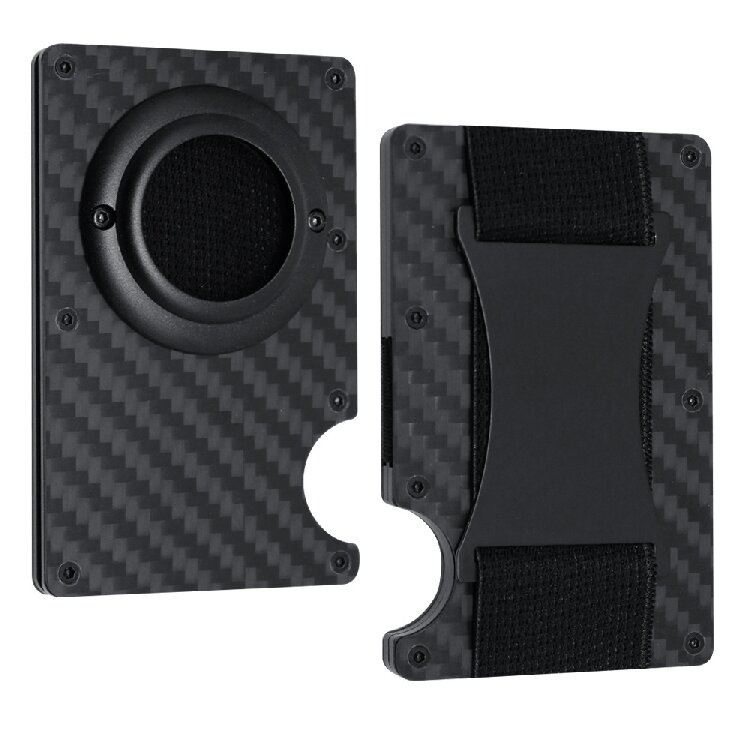
>> Metal Wallets: Evaluate Edges, Hardware, and Access
● What Public Reviews Add—and What They Cannot Prove
● A Three-Load Test for a Slim Wallet With Cards and Cash
>> Load C: Occasional Extra Carry
● OEM Development: Turn “Slim” Into an Approveable Specification
● Develop Your Minimalist Wallet With Gstar Technology
>> How many cards should a minimalist wallet hold?
>> Can a slim wallet carry both cards and cash?
>> Is a money clip better than a cash strap?
>> Why does my wallet feel bulky even with only a few cards?
>> Should I choose a metal wallet or a leather wallet?
>> What should brands request before ordering OEM minimalist wallets?
At Gstar Technology (Shenzhen) Co., Ltd., we approach minimalist wallets as a practical design challenge: carry what matters without creating unnecessary bulk. As an OEM manufacturer serving overseas brands, wholesalers, and manufacturers, our product range includes metal wallets, RFID card holders, slim wallets, and genuine leather wallets.
Understanding how to balance card capacity, cash storage, and slim design in a minimalist wallet starts with one principle: optimize for the wallet’s loaded condition, not its empty appearance.
A wallet should hold your everyday essentials, let you retrieve them comfortably, and fit your pocket without awkward pressure points. For brands developing a private-label collection, those same requirements should become measurable product specifications.
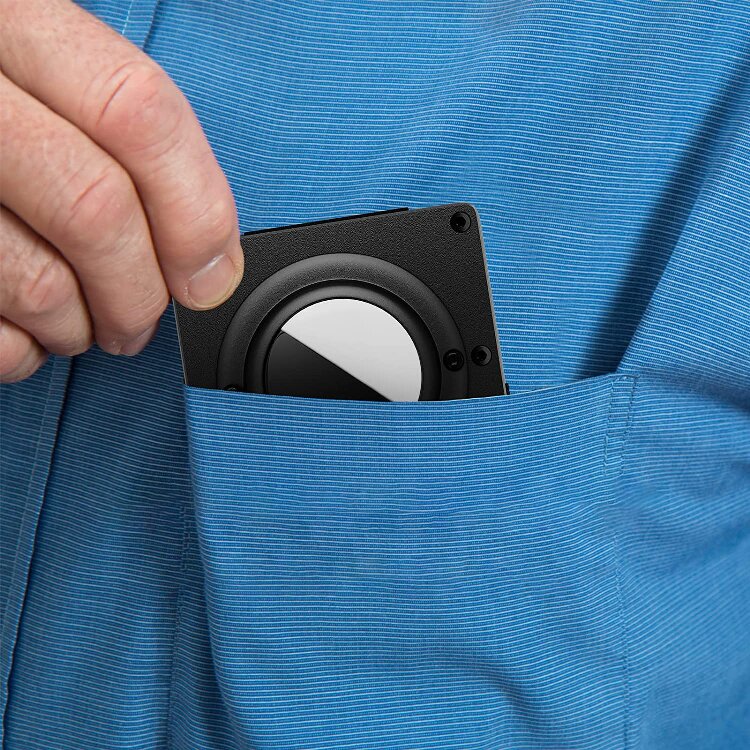
How to Balance Card Capacity, Cash Storage, and Slim Design: Start With Your Daily Load
Before comparing materials or advertised capacities, list what actually goes into the wallet.
Separate your items into three groups:
– Daily essentials: identification, your main payment card, and any regularly used access or transit card.
– Backup items: a second payment card and emergency cash.
– Occasional items: membership cards, receipts, business cards, and travel documents.
My recommendation is to design around the first two groups. Occasional items should not determine the wallet’s everyday size unless your routine genuinely requires them.
For an initial trial, start with four to six essential cards and a few banknotes. This is a practical starting configuration, not a universal capacity standard.
Carry that selection for a week. Note what you actually use and what you repeatedly miss. A realistic carry list is more useful than choosing the highest card capacity available.
Card Capacity: Comfortable Access Matters More Than the Maximum Number
Distinguish Maximum Capacity From Everyday Capacity
Maximum capacity describes what a wallet can accommodate under specified conditions. Comfortable everyday capacity also considers retrieval, reinsertion, retention, and pocket feel.
These are different questions:
– Can the wallet physically hold ten cards?
– Can you remove the middle card without unloading the others?
– Does the wallet remain comfortable when cash is added?
– Does it still retain cards securely when you carry fewer?
Published specifications illustrate why card counts need context. Ridge advertises a capacity of 1–12 cards for its wallet, while Secrid specifies a maximum of four embossed or six flat plastic cards for its Cardprotector. These are different product architectures, not directly equivalent promises of everyday comfort.
For OEM buyers, ask suppliers to state both the recommended daily load and the maximum supported configuration.
Test the Actual Card Mix
A stack of identical sample cards does not necessarily represent a customer’s wallet.
Include the types your audience carries:
– Flat payment cards.
– Embossed cards.
– Identification cards.
– Access cards.
– Thicker membership cards.
Secrid explicitly connects capacity to card thickness: more embossed cards mean fewer cards fit inside its Cardprotector. The broader lesson is to describe capacity using a defined test load rather than an unexplained number.
Also evaluate retrieval order. A frequently used payment card should not become the hardest item to reach.
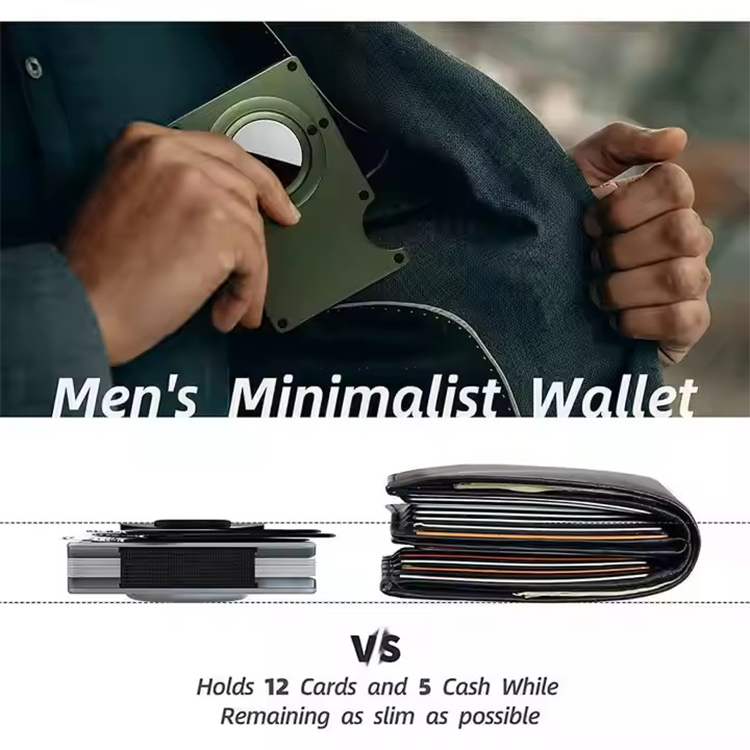
Cash Storage: Choose the Structure Around How You Pay
Cash storage often determines whether a minimalist wallet stays practical after loading.
A cashless commuter and a cash-dependent traveler may need entirely different layouts, even when both carry five cards.
Money Clip: A Dedicated Place for Folded Notes
A money clip creates a separate location for banknotes outside or inside the main wallet structure.
Evaluate:
– How easily one note can be removed.
– Whether the remaining notes stay secure.
– Whether the clip catches on pocket fabric.
– How much thickness the hardware adds.
Do not assume a clip works equally well with one note and a larger stack. Test both conditions.
Cash Strap: A Low-Profile Alternative
A cash strap holds folded notes against the wallet body. Ridge offers interchangeable cash-strap and money-clip configurations, demonstrating how cash storage can be treated as a modular design choice.
For a strap-based concept, check tension with different note quantities and inspect whether notes migrate during normal handling.
A strap that looks tidy in a product photograph may still require two hands for convenient cash access.
Internal Bill Compartment: Useful for Frequent Cash Handling
If cash changes hands several times a day, an internal bill compartment deserves serious consideration.
A compact bifold can separate cards from notes without requiring every payment to involve an external clip or tightly folded bundle.
Specify the target currency before approving the dimensions. Test the largest banknote customers are expected to carry, including its insertion path and how it sits when the wallet closes.
Why Cash Folding Changes Wallet Thickness
Cash storage is not just about the number of notes. It is also about where the folded layers sit.
Folding a banknote in half creates two overlapping paper layers. Folding it in half again creates four. Creases and trapped space can add further local bulk.
If all those layers sit directly over the card stack, the wallet develops a thicker central area. Moving cash into a separate section changes where that thickness appears.
This leads to a useful design question:
“Where will the thickest point be when the customer carries their normal cards and cash?”
That question is more informative than asking whether a wallet is “ultra-slim.”
For OEM development, photograph the side profile with the agreed card-and-cash load. Include the clip, closure, seams, and any tracking accessory in the measurement.
Compare Minimalist Wallet Structures by Carrying Style
The following table is a design-selection guide, not a tested ranking.
| Wallet structure | Useful starting application | Cash arrangement to evaluate | Main development question |
|---|---|---|---|
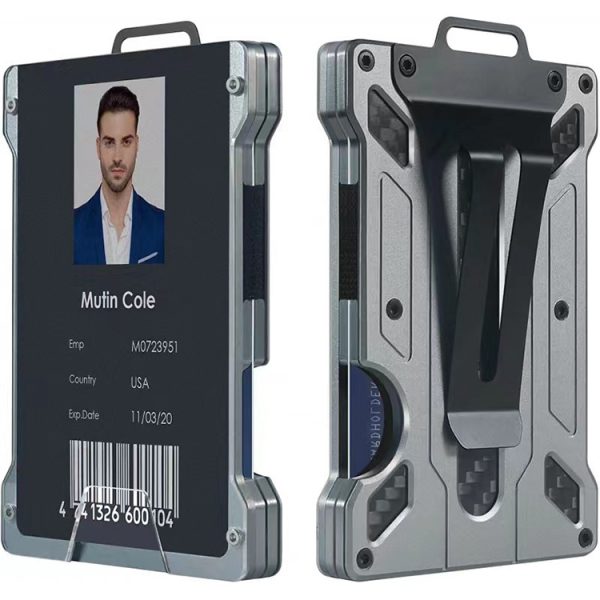
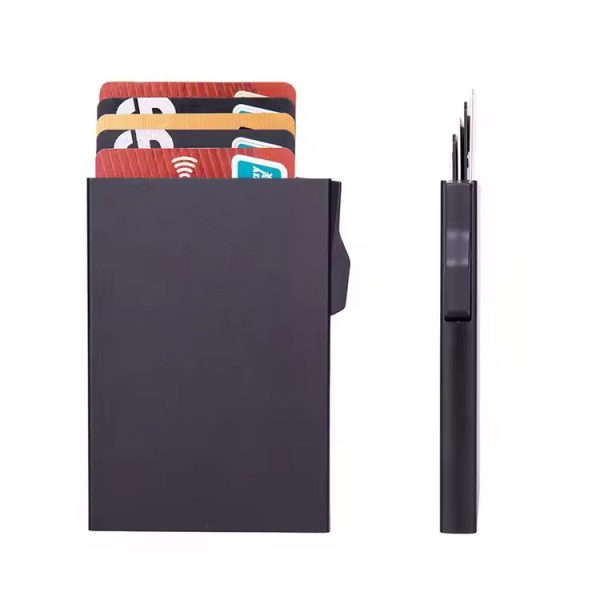
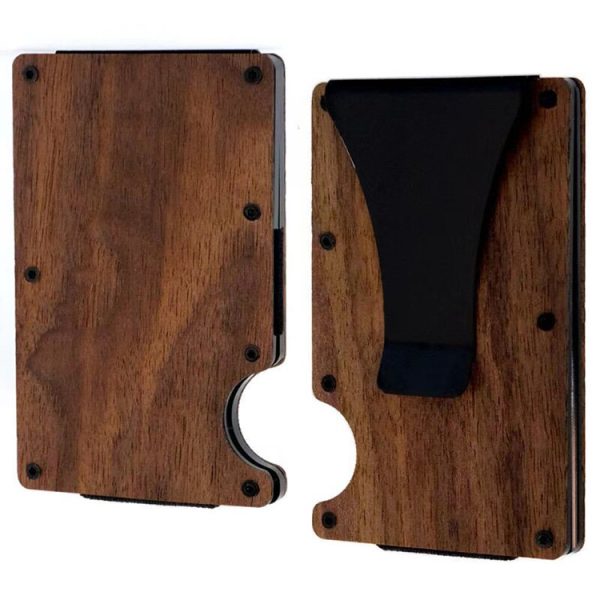
| Expandable metal wallet | Card-focused everyday carry | External strap or clip | Is access comfortable at the intended load? |
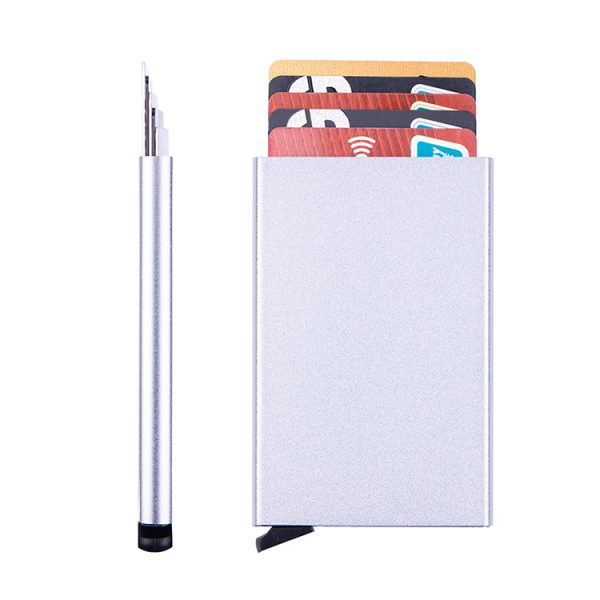
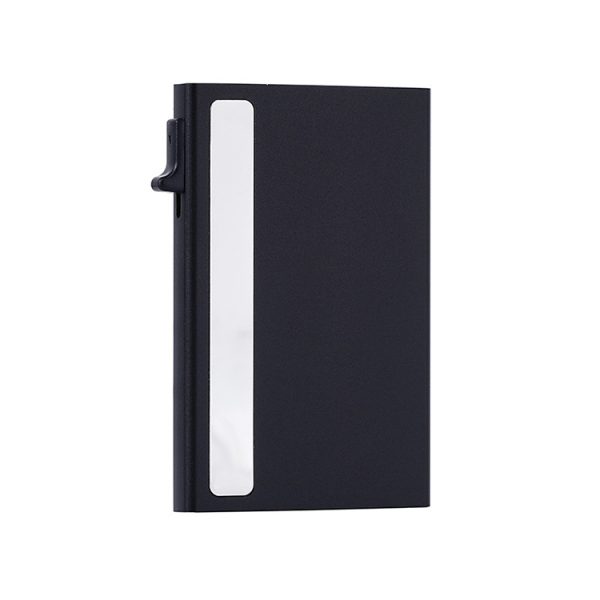
| Rigid ejector card holder | Quick access to a defined card stack | Separate sleeve or cash module | Does the actual card mix eject reliably? |
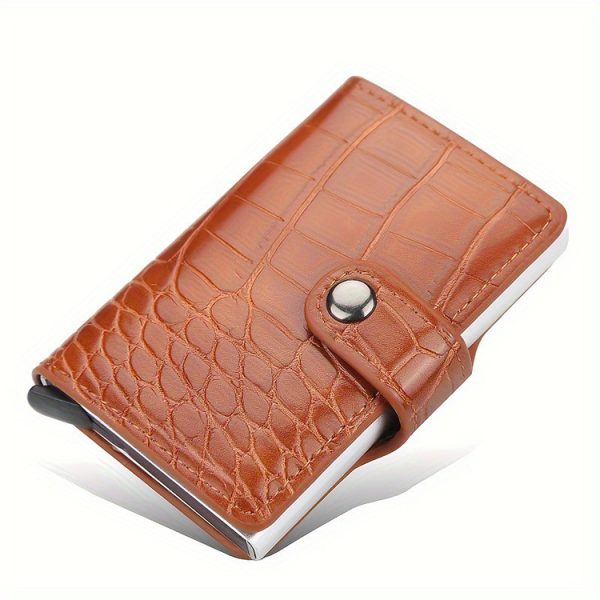
| Slim leather bifold | Mixed card-and-cash use | Internal bill compartment | How much bulk comes from overlapping layers? |
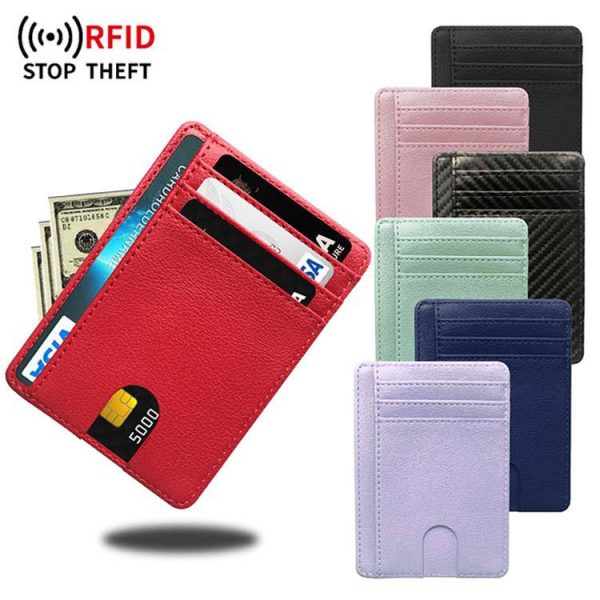
| Minimal card sleeve | Very light everyday carry | Small folded-cash pocket | Does retention work with fewer cards? |
| Hybrid wallet | Customers wanting several functions | Combined internal and external storage | Do the extra features justify their thickness? |
Choose the structure before choosing the finish. A premium surface cannot correct a layout that conflicts with the customer’s payment habits.
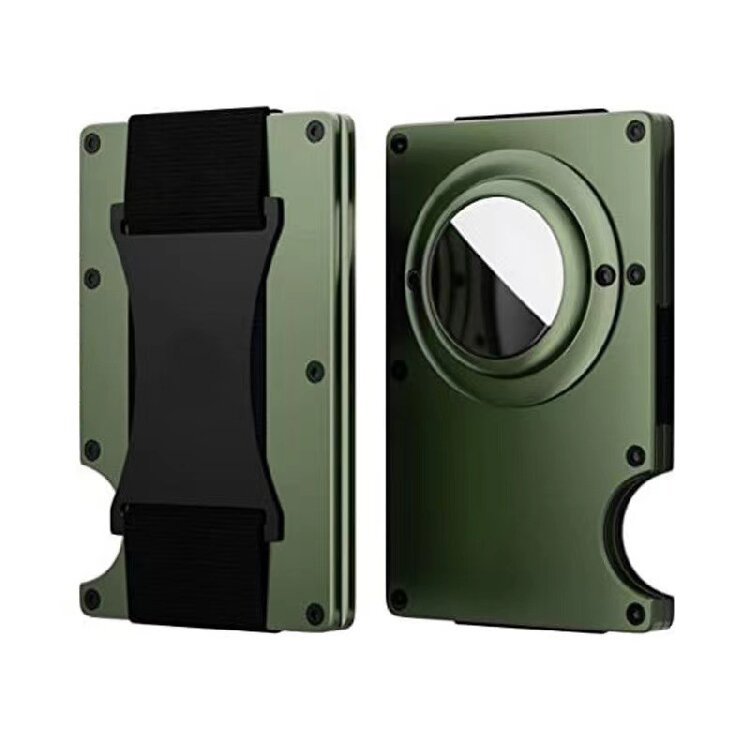
Materials and Construction: Where Hidden Bulk Appears
Leather Wallets: Review the Entire Layer Stack
When evaluating a genuine leather wallet, inspect more than the outer leather.
Review:
– Pocket-wall thickness.
– Lining and reinforcement.
– Folded edges.
– Seam placement.
– Overlapping card slots.
– Closure components.
Several individually thin layers can still create a bulky finished section.
Ask for a cross-section drawing or a clearly annotated construction sample. This makes design discussions more precise than requesting “thinner leather” without identifying where thickness accumulates.
Metal Wallets: Evaluate Edges, Hardware, and Access
For metal wallets, review plate geometry, edge finishing, fasteners, elastic placement, and the card-access opening.
The evaluation should include pocket insertion and removal, not just appearance on a desk.
For RFID wallet projects, define the protected compartment and request evidence for the finished configuration. Treat RFID shielding, card capacity, and physical retention as separate performance requirements rather than assuming one proves the others.
What Public Reviews Add—and What They Cannot Prove
Public feedback can reveal which experiences deserve testing, but it should not be presented as proof of another manufacturer’s performance.
For example, public review material associated with the Leatherology Thin Bifold highlights slimness, leather quality, and ease of card removal, while some buyers question the price. That combination suggests that perceived value depends on usability and construction, not thinness alone. [nytimes]
For Gstar projects, translate those concerns into questions:
1. Is the wallet still slim with the intended contents?
2. Can the primary card be removed comfortably?
3. Does the construction support the intended retail positioning?
4. Are product photographs representative of actual use?
No supplied Gstar customer testimonials or independent test results are being claimed here.
A Three-Load Test for a Slim Wallet With Cards and Cash
A practical prototype review should compare more than one loading condition.
Load A: Minimum Carry
Use the smallest realistic card stack and little or no cash.
Check card retention, unwanted movement, and whether individual cards remain accessible. A wallet should not require maximum loading to function properly.
Load B: Normal Daily Carry
Use the target customer’s expected cards and banknotes.
Record:
– Overall length and width.
– Maximum loaded thickness.
– Loaded weight.
– Primary-card retrieval time.
– Cash removal and replacement.
– Pocket comfort during walking and sitting.
Use the same measuring method for every sample. Avoid compressing one wallet heavily while measuring another loosely.
Load C: Occasional Extra Carry
Add the backup card, extra notes, or receipt a customer might temporarily carry.
Check for difficult access, closure stress, card movement, and uncomfortable pressure points.
These are proposed evaluation steps, not a claim that Gstar has completed a particular test program. Agree on repeat cycles and acceptance criteria before using the results in marketing.
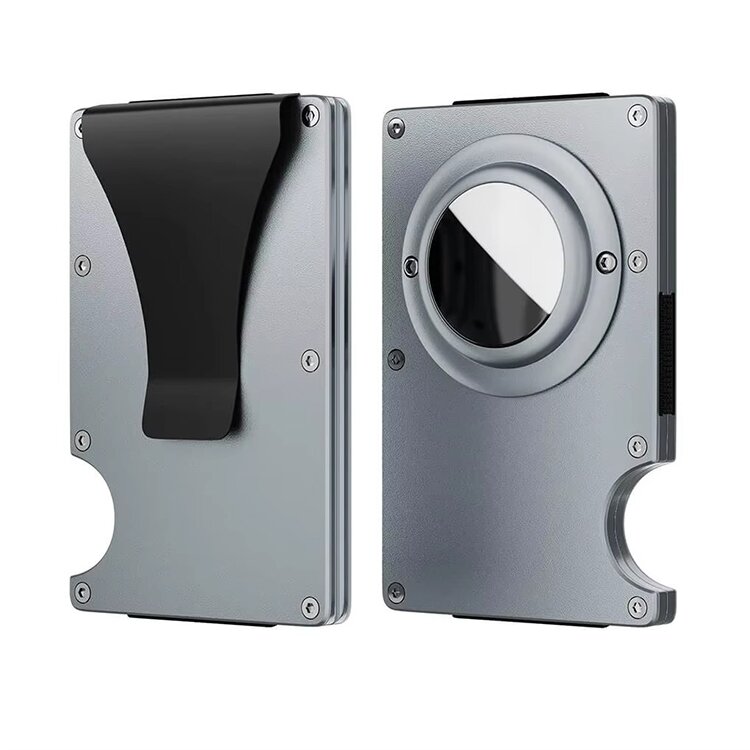
OEM Development: Turn “Slim” Into an Approveable Specification
For brands and wholesalers, the most useful brief describes how the wallet should perform.
| Specification | What the brief should define |
|---|---|
| Target customer | Commuter, traveler, minimalist shopper, or cash-heavy user |
| Normal card load | Quantity and representative card types |
| Maximum card load | Defined configuration and acceptable access |
| Cash requirement | Currency, note quantity, and folding method |
| Loaded dimensions | Measurement conditions and maximum permitted thickness |
| Access standard | Which card is retrieved and how |
| Retention standard | Performance at minimum and normal loads |
| Branding | Logo location, finish, packaging, and artwork |
| Verification | Agreed tests, sample approval, and production checks |
At Gstar Technology (Shenzhen) Co., Ltd., prospective buyers can use this framework to communicate requirements for metal wallets, RFID card holders, slim wallets, and genuine leather wallet projects.
Confirm materials, tolerances, customization options, testing scope, minimum order quantities, and lead times for the specific project rather than assuming they are identical across products.
Develop Your Minimalist Wallet With Gstar Technology
The strongest minimalist wallet concept is not the one with the most features. It is the one whose capacity, cash arrangement, and physical profile support a clearly defined routine.
Send Gstar Technology your target market, preferred structure, expected card count, cash requirements, branding artwork, and target dimensions.
Request a project-specific feasibility review and sample plan. Evaluate the sample with real contents before approving the production specification.
Frequently Asked Questions
How many cards should a minimalist wallet hold?
Enough for daily essentials and necessary backup items. Four to six cards provide a useful starting point for a carry trial, but the right number depends on your routine and the wallet’s structure.
Can a slim wallet carry both cards and cash?
Yes. The key is matching the cash arrangement to your habits. Compare a clip, strap, and internal compartment using your actual banknotes and card stack rather than empty-wallet photographs.
Is a money clip better than a cash strap?
Neither is universally better. Compare single-note retention, access, pocket interaction, and loaded thickness. The preferred option depends on how often you use cash and how much you carry.
Why does my wallet feel bulky even with only a few cards?
Inspect the whole construction. Folded notes, overlapping pockets, seams, closures, and accessories may concentrate thickness in one area. Measure the thickest loaded point to identify the main contributor.
Should I choose a metal wallet or a leather wallet?
Start with your required layout. Compare the specific samples for card access, cash handling, loaded dimensions, edge comfort, and appearance. Material alone does not determine whether the wallet suits your routine.
What should brands request before ordering OEM minimalist wallets?
Request a clearly specified sample, agreed loading conditions, relevant performance evidence, customization details, and written commercial terms. Approve both the construction and the user experience before confirming the production specification.
Hot Tags: China, Global, OEM, private label, manufacturers, factory, suppliers, manufacturing company