

Views: 366 Author: Professor Leon Publish Time: 08-18-2026 Origin: Site


Content Menu
● 1. Understanding Wallets with Money Clips: Types and Applications
● 2. Wallets with Money Clips: Quality and Performance Factors
● 3. How to Evaluate Wallets with Money Clips Suppliers
● 4. Key Quality Indicators for Wallets with Money Clips Buyers
● 5. Relevant Industry Standards and Certifications
● 6. Production Process: From Raw Material to Finished Wallets with Money Clips
● 7. Customization and OEM/ODM Options
● 8. Ordering Process: MOQ, Lead Time, and Shipping
● 9. Our Wallets with Money Clips Manufacturing Capabilities
● 10. Quality Control: Our Multi-Stage Inspection Process
● 11. Certifications and Industry Standards
11 min read
When a buyer opens a sample of a metal wallet with a money clip, the first thing they do is flip it over and slide a few bills under the clip. Then they shake it. Hard. The clip either holds or it does not. That simple test tells you more about the factory than any brochure ever will.
The shift from bulky bifolds to streamlined carry solutions has made the money clip wallet a staple SKU for brands targeting modern professionals. But the retail shelf is crowded, and the difference between a product that sells and one that gets returned lies in materials, clip tension, and manufacturing discipline. This guide covers the technical specifications, procurement frameworks, and supplier qualifications you need to launch a competitive line of wallets and money clips.
Wallets with money clips combine card storage with a metal clip that secures folded cash. They appeal to users who want the functionality of a wallet without the back-pocket bulk. The category splits into three primary construction types, each with distinct manufacturing requirements.
CNC-machined aluminum, titanium, or stainless steel bodies with an integrated clip. The clip mechanism is either a high-strength neodymium magnet embedded in the spine or a spring-loaded steel clip. These wallets typically hold 4–12 cards and use RFID blocking to protect chip-enabled cards.
Buyer considerations: Weight (a full aluminum wallet runs 40–70 grams), anodization quality (Type II or Type III), and scratch resistance. The best money clip wallet in this category uses a mechanical clip with verified spring temper—magnetic versions depend on magnet strength and plating integrity.
Full-grain or top-grain leather exterior with a metal clip integrated into the spine. The clip may be exposed or hidden under a leather flap. These products target consumers who want the classic aesthetic with modern functionality.
Buyer considerations: Stitching integrity (saddle stitch vs. lock stitch), leather tanning method (vegetable vs. chrome), and edge painting durability. A leather wallet with a magnetic money clip must use a magnet strong enough to hold cash but not so strong it damages nearby cards.
Slim profile with 4–8 card slots and a single exterior clip for folded cash. Construction is typically aluminum, carbon fiber, or thin leather. These are the lightest option, often under 30 grams.
Buyer considerations: The balance between cash capacity and pocket profile. A clip that holds 5 folded bills without stretching the leather or bending the metal frame.
The difference between a $5 wallet and a $50 wallet is not branding—it is material grade, clip retention, and finishing precision. Buyers should evaluate five performance factors before approving a sample.
Clip retention strength. A mechanical clip must survive 10,000+ open-close cycles without losing tension. Magnetic clips need a neodymium magnet rated N35–N52, plated with Nickel-Copper-Nickel to prevent corrosion. Test by inserting 5 bills and shaking the wallet vigorously.
RFID blocking effectiveness. The wallet must attenuate RFID signals at 13.56 MHz (the frequency used by contactless payment cards). Testing per ISO 14443 requires a signal attenuation of at least 10 dB. Many low-cost imports skip this entirely.
Material integrity. Aluminum wallets should use 6061-T6 aerospace-grade aluminum. Stainless steel should be 304 or 316. Leather should be 2.0–2.5 mm thick for structural rigidity without bulk. Anodized finishes should pass a 24-hour salt spray test per ASTM B117.
Profile thickness. A quality wallet with money clip holds 8 cards and 5 bills at under 12 mm total thickness. Anything thicker defeats the purpose of a minimalist carry.
Edge and corner finishing. Sharp edges on metal wallets are a top complaint driver. Quality factories break edges and round corners during CNC machining, not as a post-process afterthought.
The supplier evaluation process for wallets and money clips differs from other accessories because the product combines metalworking, leathercraft, and magnetic components. A factory strong in one area may be weak in another. Here is a framework for shortlisting.
Audit manufacturing capabilities. Ask whether CNC machining is in-house or outsourced. In-house capability means tighter tolerances and faster iteration on custom shapes. For leather, ask about the stitching method—saddle stitch is stronger and more durable than lock stitch, but it is slower and costs more.
Request material certifications. A reputable supplier provides mill certificates for aluminum and stainless steel, plus tanning documentation for leather. If a factory cannot document material provenance, walk away.
Verify production capacity. Ask for monthly output in units, not vague claims. A factory producing 50,000 metal wallets per month has different scalability than one producing 5,000. Match capacity to your sales velocity.
Check quality control protocols. The factory should follow AQL (Acceptance Quality Limit) standards—typically AQL 2.5 for critical defects, 4.0 for major defects. Ask for their inspection reports on past orders.
Avoid suppliers who refuse pilot runs. A pilot run of 100–500 units before mass production catches assembly issues and finishing problems. Factories that push straight to full production are hiding something.
Beyond the basics, specific quality indicators separate reliable suppliers from commodity factories.
Clip fatigue testing. The clip must survive repeated flexing without permanent deformation. Quality factories test to 10,000 cycles minimum. Ask for the test data.
Magnet calibration. For magnetic clips, magnet strength must be calibrated to hold cash without damaging cards. N35–N42 is optimal for daily use. Stronger magnets (N45+) can demagnetize hotel key cards and older magnetic stripe cards.
Anodization thickness. Type II anodizing runs 5–25 microns; Type III (hard anodizing) runs 25–50 microns. Thicker anodizing means better scratch and corrosion resistance. Ask the supplier for their anodizing specification.
Stitching density. Quality leather wallets use 7–8 stitches per inch. Lower stitch density indicates weaker construction.
Edge painting durability. The edge paint should flex with the leather without cracking. Test by bending the wallet 90 degrees repeatedly.
Several standards apply to wallets with money clips. Buyers should verify compliance before ordering.
| Standard / Certification | What It Covers | Relevance |
|---|---|---|
| ISO 14443 | RFID signal attenuation | Required for RFID blocking claims |
| ASTM B117 | Salt spray corrosion testing | Verifies anodizing quality |
| REACH | EU chemical safety regulation | Required for EU market entry |
| RoHS | Restriction of hazardous substances | Required for EU market entry |
| Proposition 65 | California chemical disclosure | Required for US market entry |
| AQL 2.5 | Acceptance quality limit | Standard inspection level for critical defects |
Understanding the manufacturing process helps buyers evaluate lead times, costs, and quality risks. For a CNC-machined aluminum wallet with a mechanical clip, the process runs as follows:
Raw material preparation. 6061-T6 aluminum bar stock is cut into blanks sized slightly larger than the final wallet body.
CNC machining. Each blank is machined on a 3-axis or 5-axis CNC mill. This includes pocket milling for card slots, drilling for the clip mechanism, and edge breaking. Cycle time per wallet body runs 15–30 minutes depending on complexity.
Surface finishing. The machined bodies are sandblasted to create a uniform matte texture, then anodized (Type II or Type III). Anodizing creates a hard, corrosion-resistant oxide layer that accepts dye for color options.
Clip manufacturing. Mechanical clips are stamped or machined from spring steel, then heat-treated to achieve the correct spring temper. Magnetic clips use neodymium magnets plated with Nickel-Copper-Nickel.
Assembly. The clip is attached to the wallet body with screws or rivets. For leather wallets, the leather is cut, stitched, edge-painted, and then the clip is attached.
Final inspection. Each wallet is checked for clip retention, card fit, finish defects, and RFID blocking effectiveness. AQL sampling determines batch acceptance.
Buyers sourcing wallets with money clips have three cooperation models:
OEM (Original Equipment Manufacturing). You provide the design and specifications; the factory manufactures to your drawings. This gives you full control over the product but requires you to have design and engineering capability.
ODM (Original Design Manufacturing). The factory offers existing designs (white-label) that you can brand with your logo. This is the fastest path to market but limits differentiation.
Private Label. A hybrid approach where you customize colors, materials, and logos on an existing factory platform. Lower MOQ than full OEM, more differentiation than pure white-label.
For a custom design, the development process typically runs 15–25 days including prototyping and sampling. Mass production takes 25–35 days after sample approval, depending on order quantity and finishing complexity.
MOQ and lead time vary by material and complexity. Here are typical ranges:
| Order Parameter | CNC-Machined Aluminum | Leather with Clip |
|---|---|---|
| MOQ | 500 units | 200 units |
| Sample lead time | 7–10 days | 10–15 days |
| Production lead time | 25–35 days | 30–40 days |
| Tooling cost | $500–$1,500 | $200–$800 |
The cost structure breaks down as roughly 40% raw materials, 30% labor, 20% finishing, and 10% packaging and overhead.
Shipping costs depend on destination and mode. Air freight runs $4–$8 per kg; sea freight runs $0.50–$1.50 per kg but adds 25–40 days transit time. For e-commerce sellers, many factories offer DDP (Delivered Duty Paid) shipping to streamline import.
Here is how the industry works, and how we meet these standards.
As a manufacturer with 13+ years of experience, we operate in-house CNC machining, which means we control tolerances and quality at every step. Our monthly production capacity exceeds 300,000 units across our wallet, key organizer, and card holder lines. This scale allows us to absorb demand spikes without compromising lead times.
We specialize in RFID wallets and understand the technical nuances of RFI blocking and magnetic interference. When a client asks for a magnetic money clip, we calibrate magnet strength to hold cash without affecting nearby cards. When they ask for RFID blocking, we test each batch to ISO 14443 standards.
Our OEM and ODM services cover everything from custom logos (laser engraving, embossing) to unique colorways and material combinations. Flexible MOQs—starting at 500 units for aluminum, 200 units for leather—allow new entrants to test the market without over-committing to inventory.
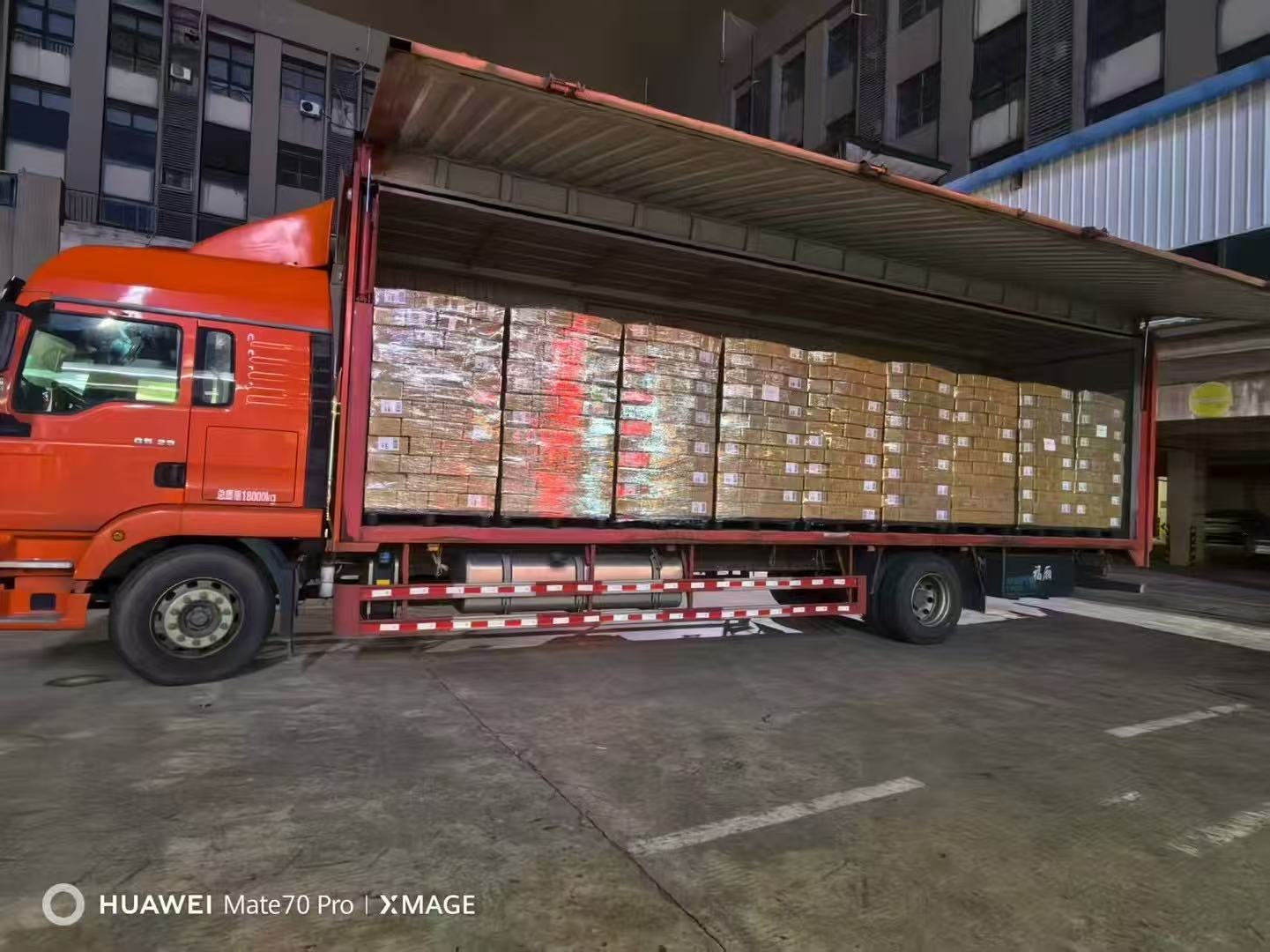
We ship worldwide to supermarkets and e-commerce warehouses, with responsive after-sales support to handle quality claims swiftly. We also invite buyers to join our global agency networks to expand their product portfolios.
Quality control is not a single checkpoint—it is a multi-stage process embedded in production.
Incoming material inspection. Aluminum and steel arrive with mill certificates; leather arrives with tanning documentation. We verify thickness, hardness, and finish quality before production begins.
In-process inspection. CNC machined bodies are checked for dimensional accuracy every 2 hours using CMM (Coordinate Measuring Machine) sampling. Anodizing thickness is verified with an eddy current thickness gauge.
Pre-shipment inspection. Every batch undergoes AQL 2.5 sampling for critical defects. Clip retention is tested to 10,000 cycles on a sample basis. RFID blocking is verified per ISO 14443.
Packaging and labeling verification. Before shipping, we confirm that packaging meets your specifications and that labeling complies with destination market regulations (REACH, RoHS, Prop 65).
Our factory complies with REACH and RoHS for EU market entry and Proposition 65 for the US market. RFID blocking products are tested to ISO 14443 standards. We provide material certifications and test reports upon request.
Choose A if... You need a custom design, have engineering capability, and want full control over materials and finishing. OEM gives you the most differentiation but requires the most upfront investment.
Choose B if... You want to launch quickly with a proven design and low MOQ. ODM or private label lets you test the market before committing to a custom product.
Which wallet with money clip is the best? The best depends on your target customer. For durability and slimness, aluminum with a mechanical clip is superior. For a classic aesthetic, leather with a magnetic money clip offers style and function. Stock multiple variants to capture different consumer preferences.
Are money clip wallets safe? Yes, provided the clip has strong retention. Magnetic components can demagnetize older hotel key cards, so source wallets with RFID blocking and calibrate magnet strength to N35–N42 for daily use.
What kind of wallet has a magnetic money clip? Most modern minimalist wallets use a magnetic money clip, typically in aluminum or carbon fiber bodies with a neodymium magnet embedded in the spine. Leather wallets usually employ a mechanical clip to preserve material integrity.
Are money clip wallets worth it? For the end-user, they reduce back-pocket bulk and provide quicker cash access. For a retailer, they are a high-margin item due to the premium perception of metal and leather construction. Sustained demand in the "best money clip wallet" search category indicates this is a staple, not a trend.
What is the MOQ for custom money clip wallets? MOQ varies by material. For CNC-machined aluminum, it starts around 500 units. For leather, it can be as low as 200 units. Flexible MOQs accommodate pilot tests and new market entries.
How long does it take to develop a custom design? Development typically takes 15–25 days including prototyping and sampling. Mass production runs 25–35 days after sample approval, depending on order quantity and finishing complexity.
One honest caveat: Metal wallets are not for every consumer. Some users find the rigid body uncomfortable in back pockets, and the clip adds thickness that bothers some. The market has room for both metal and leather options—do not put all your inventory in one material.
The wallets with money clips category offers a blend of utility and aesthetics that appeals to the modern consumer. Sourcing the right partner is about more than price—it is about material integrity, manufacturing precision, and supply chain reliability. If you are looking to launch a new line of wallets and money clips, or need a reliable OEM/ODM partner to scale your existing brand, we are ready to assist.
ISO 14443, Identification cards — Contactless integrated circuit cards, International Organization for Standardization, https://www.iso.org/standard/73598.html
ASTM B117, Standard Practice for Operating Salt Spray (Fog) Apparatus, ASTM International, https://www.astm.org/b0117-19.html
REACH Regulation (EC) No 1907/2006, European Chemicals Agency, https://echa.europa.eu/regulations/reach/understanding-reach
RoHS Directive 2011/65/EU, European Commission, https://environment.ec.europa.eu/topics/waste-and-recycling/rohs-directive_en
Proposition 65, California Office of Environmental Health Hazard Assessment, https://oehha.ca.gov/proposition-65


