Views: 235 Author: Gstar Technology Publish Time: 08-13-2026 Origin: Site


Content Menu
● Why Denmark Is a Strong Market for Metal Wallets
● 1. Gstar Technology (Shenzhen) Co., Ltd.
>> Product Categories for Danish Brands
>> Why Gstar Fits OEM Projects
● What a Danish Buyer Should Evaluate
>> Materials That Match Different Price Tiers
● The OEM Product Strategy That Works
>> Start With One Hero Product
>> Build a Logical Product Ladder
● Quality Checks Before Mass Production
● How to Position an RFID Claim Responsibly
● Product Development Timeline for Denmark
● How Gstar Can Support a Danish Launch
● Customer Review and Social-Proof Guidance
>> 1. Does Gstar Technology manufacture metal card wallets in Denmark?
>> 2. What is the best material for a metal card wallet?
>> 3. Can a metal wallet block RFID signals?
>> 4. What should I customize for a private-label wallet?
>> 5. What is a good MOQ for a new wallet brand?
>> 6. Should Danish brands sell only metal wallets?
● Start Your Custom Wallet Project
For Danish brands, wholesalers, and product developers searching for the Top Metal Card Wallet Manufacturers and Suppliers in Denmark, the best partner is not necessarily located inside Denmark. The right supplier is the one that can turn a clear product idea into a durable, brand-ready, compliant, and commercially viable wallet—without sacrificing design control or delivery reliability.
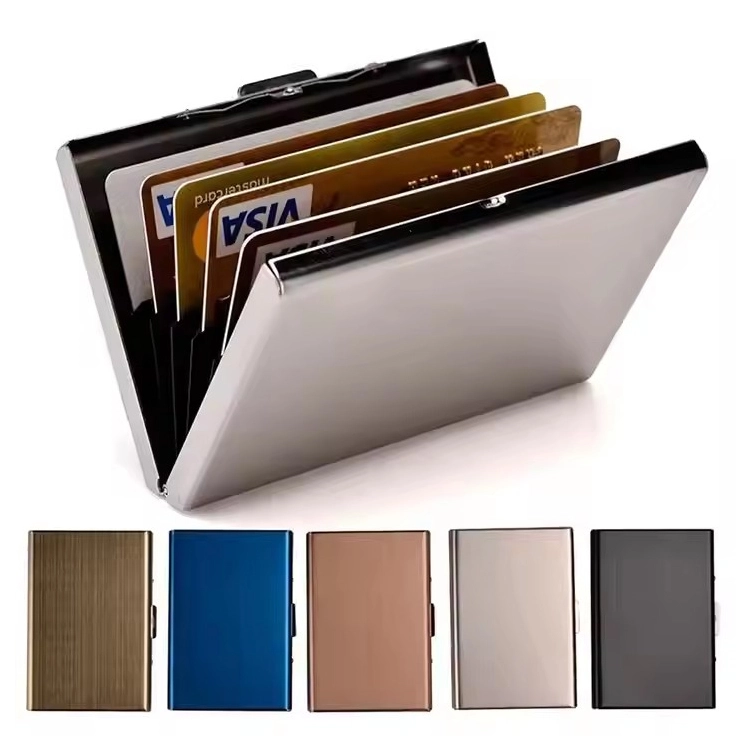
Gstar Technology (Shenzhen) Co., Ltd. is placed first in this buyer-focused guide because it specializes in OEM and ODM manufacturing for RFID card wallets, Ridge-style metal wallets, ultra-slim card holders, leather wallets, key organizers, PSA graded-card protectors, and protective accessories. The company presents itself as a China-based specialist with more than 13 years in RFID wallet manufacturing and a product range built for private-label customers. [gstartec]
Editorial transparency: This ranking is an OEM sourcing assessment, not a claim that Gstar is a Denmark-based manufacturer. Danish buyers should always verify factory capabilities, certificates, product samples, social-compliance documentation, and shipment terms before placing an order.
Denmark is a natural market for slim metal card wallets because consumers and retailers value clean design, daily functionality, durable materials, and reduced pocket bulk. A metal card wallet is no longer only a "men's accessory." It can be positioned as a practical everyday-carry product, a premium corporate gift, a travel accessory, or a design-led lifestyle item.
The category is supported by the continuing shift toward card-based and mobile payments. Globally, digital wallets represented 56% of online spending and 33% of in-person spending in 2025. However, digital payments have not eliminated physical cards; cards often remain the underlying funding source for digital-wallet transactions. That means consumers still need a reliable, compact way to carry bank cards, IDs, access cards, and transit cards.
For Danish brands, the opportunity is not simply to sell an RFID wallet. It is to create an accessory that feels intentional:
- Minimalist enough for front-pocket carry
- Durable enough for everyday commuting and travel
- Secure enough to support RFID-blocking positioning
- Distinctive enough to justify a premium retail price
- Customizable enough to reflect the brand's own identity
The broader metal-wallet market is projected to grow from USD 1.36 billion in 2025 to approximately USD 2.56 billion by 2034, according to one market-research forecast. RFID-blocking wallets accounted for an estimated 36.5% of the category in 2025, showing that security remains an important purchasing message.
Gstar Technology is the first recommendation for Denmark-focused buyers seeking a flexible OEM partner for metal card wallets and related everyday-carry accessories. Rather than presenting a single standard wallet, the company's published portfolio covers multiple product directions that a Danish retailer, wholesaler, or private-label brand can develop into a differentiated collection. [gstartec]
Gstar's relevant OEM categories include:
- Ridge-style metal card wallets
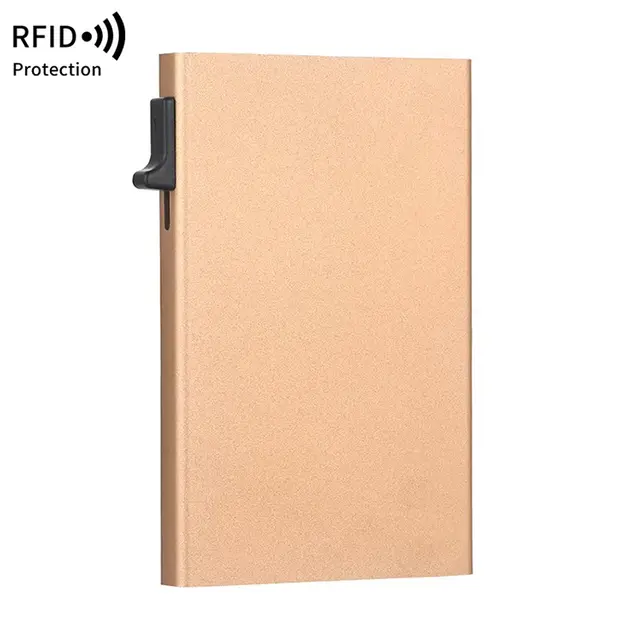
- RFID-blocking aluminum card holders
- Pop-up metal card wallets
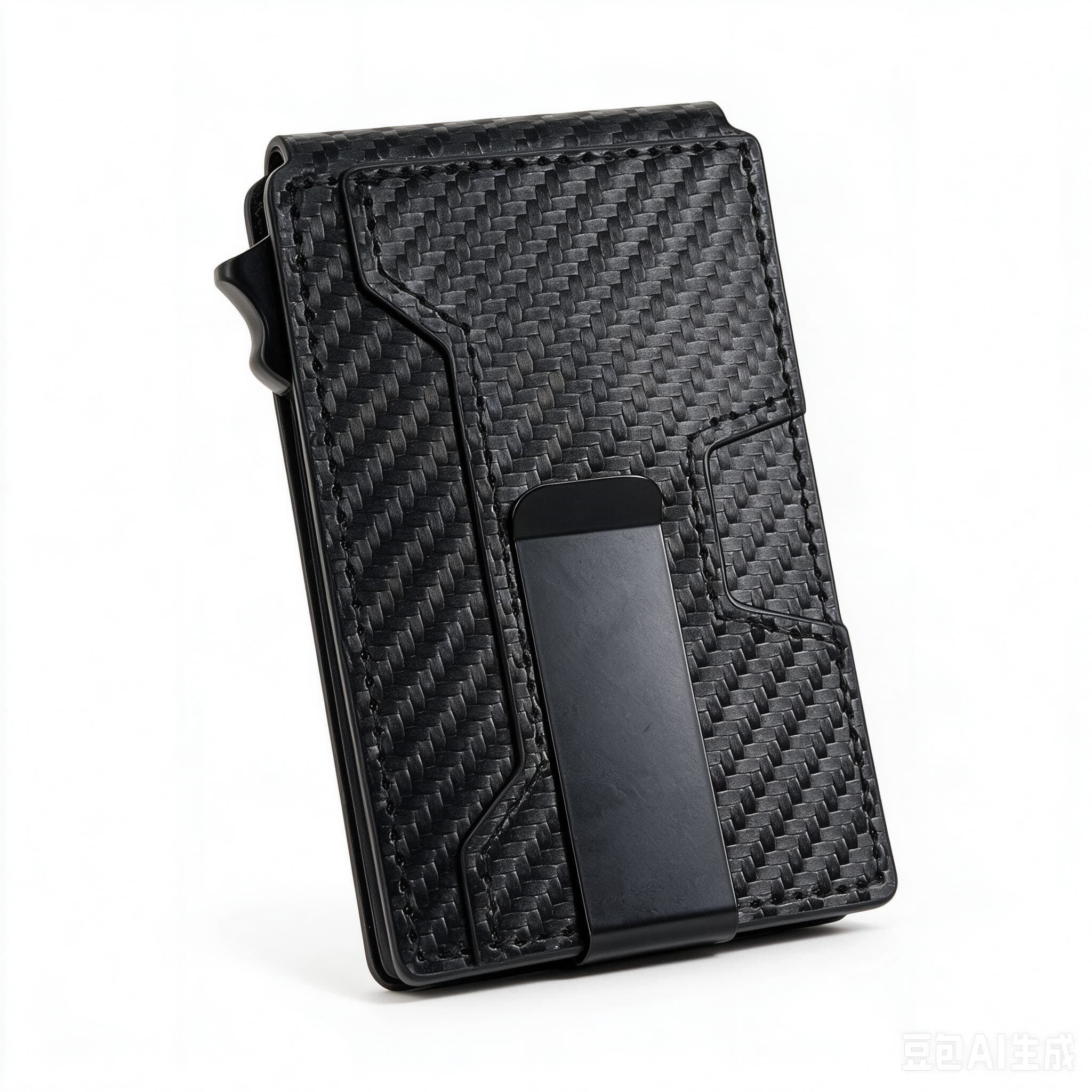
- Carbon-fiber card wallets
- Metal-and-leather hybrid wallets
- MagSafe-compatible wallet accessories
- AirTag wallet and key-organizer concepts
- Genuine leather and PU leather wallets
- Key organizers and key holders
- PSA, BGS, SGC, and CGC graded-card protective cases
- Custom display stands and protective accessories
This wide range matters because successful brands rarely rely on one SKU forever. A strong metal-wallet range can begin with a classic aluminum card holder, then expand into a premium titanium edition, a leather hybrid, a MagSafe version, and coordinated key organizers.

Gstar's own published information emphasizes OEM/ODM development, logo customization, materials, colors, surface finishes, and packaging solutions. It also lists aluminum, titanium alloy, carbon fiber, metal-and-leather combinations, and RFID-blocking card-holder designs within its product offering. [gstartec]
For a buyer, the value is not just manufacturing capacity. It is the ability to manage a product-development sequence:
1. Define the target user and intended retail position
2. Select materials and core function
3. Confirm the card capacity and access mechanism
4. Create a prototype with branding and packaging
5. Test the sample before mass production
6. Approve production specifications and quality standards
7. Plan shipping, replenishment, and future product variations
Gstar may be particularly suitable for:
- Danish private-label accessory brands
- E-commerce sellers creating a premium wallet range
- Corporate-gifting suppliers
- Wholesalers needing custom packaging
- Promotional-product distributors
- EDC and outdoor-accessory brands
- Trading-card brands seeking PSA slab protectors
- Retailers adding RFID card holders to a broader lifestyle collection
Suggested image: A four-panel product image showing an aluminum wallet, titanium wallet, leather pop-up wallet, and custom branded gift box.
A factory's product photos do not tell the whole story. For metal card wallets, the decisive factors are material quality, mechanism consistency, brand execution, and repeatable quality control.
| Buyer Evaluation Area | What to Request | Why It Matters |
|---|---|---|
| Materials | Aluminum grade, titanium specification, steel type, coating details | Material affects weight, finish, corrosion resistance, and price |
| RFID performance | Test method and sample verification | "RFID blocking" should be a tested product feature, not only marketing copy |
| Card access | Capacity range, card-ejection test, strap tension test | Poor access creates customer complaints and returns |
| Surface finish | Anodizing, sandblasting, brushing, PVD, coating samples | The finish determines first impression and scratch visibility |
| Branding | Laser engraving, UV print, embossing, custom colors | Branding must remain readable after regular use |
| Packaging | Box dieline, insert, instructions, barcode placement | Packaging supports premium positioning and retail readiness |
| Quality control | AQL plan, functional checks, cosmetic standard | Consistent QC protects brand reputation |
| Logistics | Incoterms, carton dimensions, lead time, shipment options | A strong product still fails if delivery planning is weak |
Material selection should follow the intended retail position—not just the lowest factory price.
| Material | Best Positioning | Main Advantage | Watch-Out |
|---|---|---|---|
| Aluminum alloy | Entry to mid-premium | Lightweight and versatile | Surface scratches can show on poor finishes |
| Stainless steel | Rugged or classic premium | Strong and corrosion resistant | Heavier for front-pocket carry |
| Titanium alloy | Premium EDC | High strength-to-weight ratio | Higher material and machining cost |
| Carbon fiber composite | Performance or tech-led | Very light with modern visual appeal | Requires clear quality control on edges and bonding |
| Leather + metal | Gift and lifestyle | Softer visual identity and broader appeal | Leather quality must match the price promise |
Industry research identifies aluminum as widely used for lightweight and affordable metal-wallet designs, while titanium is generally positioned toward the premium segment. Stainless steel is valued for robustness, and carbon fiber offers a lightweight, performance-oriented alternative.

The biggest content gap in many "top supplier" articles is that they discuss manufacturers without explaining how a brand should build an assortment. A good supplier cannot rescue an unclear product strategy.
For most new Danish brands, the strongest launch approach is a single hero wallet with one clear promise. Examples include:
- An ultra-slim RFID-blocking aluminum wallet for commuters
- A premium titanium card wallet for EDC enthusiasts
- A pop-up leather wallet for gift buyers
- A MagSafe-compatible card holder for phone-first consumers
- A custom branded card wallet for corporate gifts
Avoid launching with ten nearly identical colors and no clear reason to choose one. Instead, define one audience, one core benefit, and one visual language.
After the hero product is validated, create a simple price ladder:
| Tier | Product Direction | Commercial Goal |
|---|---|---|
| Entry | Aluminum elastic-strap wallet | Acquire first-time buyers |
| Core | Premium aluminum or pop-up card holder | Drive volume and repeatable margin |
| Premium | Titanium, carbon fiber, or leather hybrid | Build aspiration and raise average order value |
| Add-on | Key organizer, AirTag holder, card protector | Increase basket size and gifting potential |
This structure helps a brand avoid a common problem: competing only on price. A well-designed range gives customers a reason to trade up.
A metal card wallet is a compact product, but it has many potential failure points. Experienced buyers should create a written quality standard before paying a production deposit.
Request the supplier to test:
- Card insertion and removal with the minimum and maximum stated card count
- Elastic strap recovery after repeated stretching
- Pop-up mechanism consistency, where applicable
- Cash-clip tension and return position
- Sharp-edge and burr inspection
- Screw tightness and thread integrity
- Coating adhesion and scratch resistance
- RFID-blocking performance for applicable designs
- Magnet alignment for MagSafe-style products
- Packaging drop resistance for retail shipments
Agree on acceptable and unacceptable conditions in advance:
- Color variance between production batches
- Visible machining marks
- Logo placement tolerance
- Dust or bubbles beneath protective films
- Minor marks on non-visible versus visible surfaces
- Leather grain variation for genuine-leather products
- Packaging scuffs, crushed corners, or print defects
Expert tip: Approve a "golden sample" before production. This physical sample becomes the reference point for color, texture, engraving depth, assembly, and packaging. It is more reliable than an email description.
RFID blocking is commercially valuable, but brands should use the claim carefully. An RFID wallet may help shield compatible contactless cards from certain radio-frequency scans when the card is fully enclosed by the shielding structure. It does not protect a card when it is outside the wallet, and it does not replace safe banking habits.
Better product copy says:
"Designed with an RFID-shielding metal enclosure to help reduce unauthorized contactless scanning when compatible cards are stored inside."
Avoid absolute claims such as "100% theft-proof" or "complete identity-theft protection." Buyers and consumers trust precise language more than exaggerated promises.
The exact timeline varies by complexity, tooling, materials, order size, and shipping method. Still, a well-managed project usually follows this sequence:
1. Briefing: Define design, user, material, packaging, target price, and sales channel
2. Quotation: Confirm MOQ, tooling needs, sample cost, lead time, and Incoterms
3. Sampling: Review dimensions, card capacity, finish, logo, and packaging
4. Revision: Resolve fit, function, color, and branding issues
5. Golden sample approval: Lock technical and visual requirements
6. Mass production: Monitor production milestones and inspection points
7. Pre-shipment inspection: Check quantity, appearance, functionality, and packing
8. Shipment: Confirm labeling, documents, cartons, and destination requirements
For Denmark-focused imports, buyers should also obtain professional advice on customs classification, VAT handling, packaging obligations, consumer-product obligations, and any applicable product or chemical requirements. The supplier can provide documents, but the importer or brand owner remains responsible for ensuring that products are compliant for their market.
Gstar's public product catalog positions it as a manufacturer across RFID wallets, metal card holders, leather wallets, key organizers, graded-card protectors, custom packaging, and broader OEM product development. This makes it useful for buyers that want to coordinate several related accessory categories with one manufacturing partner. [gstartec]
A practical first inquiry to Gstar should include:
- Your target market: Denmark, Nordic region, EU, or global
- Product type: Ridge-style, pop-up, leather hybrid, titanium, or MagSafe
- Estimated first-order quantity
- Desired material and finish
- Required RFID function
- Logo method and packaging concept
- Target retail price or target landed cost
- Required delivery date
- Need for samples, factory video call, or product-development support
Do not simply ask for "best price." A better question is: "What specification can reliably achieve our desired customer experience and target retail price?"
No verified customer-review text was provided for this article. Therefore, this guide does not invent testimonials, star ratings, customer names, sales results, or brand partnerships.
To strengthen E-E-A-T before publication, add only verifiable material such as:
- A permission-approved buyer testimonial
- A named case study with measurable outcomes
- Third-party audit or certification documents
- Factory-tour video footage
- Sample-development images
- Product-testing records
- Verified marketplace reviews for the exact product model
This approach is more credible than publishing generic claims such as "our customers love us." Real proof is specific, dated, and traceable.
No. Gstar Technology is a China-based OEM/ODM manufacturer serving international buyers, including brands and wholesalers that may sell into Denmark. It should be positioned as a global manufacturing partner for Danish businesses, not as a Denmark-based factory. [gstartec]
Aluminum is often the most balanced choice for lightweight, mid-priced wallets. Titanium suits premium positioning, stainless steel works well for rugged designs, and carbon fiber is suitable for lightweight performance-focused products. The right choice depends on retail price, target customer, and brand style.
Many metal wallets are designed with RFID-shielding structures. Buyers should request product-specific testing or conduct their own verification on pre-production samples rather than relying only on a generic feature claim.
Prioritize logo placement, material, color, surface finish, card capacity, packaging, user instructions, and barcode labeling. These details influence customer perception more than adding unnecessary features.
The appropriate MOQ depends on the product complexity, materials, custom mold requirements, packaging, and color options. New brands should consider beginning with a focused SKU range and scale only after validating sales performance.
No. A stronger assortment can include metal wallets as the hero category, then add leather wallets, key organizers, AirTag accessories, or graded-card protectors. Related products can improve gifting appeal and average order value.
If you are building a Danish or Nordic wallet brand, begin with a detailed product brief and request samples before committing to bulk production. Gstar Technology (Shenzhen) Co., Ltd. can be considered for OEM projects involving custom RFID metal card wallets, Ridge-style wallets, leather wallet hybrids, key organizers, PSA card protectors, branding, and retail packaging. Review samples, document every specification, and use a golden sample to protect your brand quality.
1. [Gstar Technology: Metal Card Wallet Manufacturers and OEM Buyer Guide] — Company-reported manufacturing profile, product categories, OEM capabilities, materials, and quality-control statements. [gstartec]
2. [Gstar Technology: Company News and Product Portfolio] — Published product categories including RFID wallets, metal wallets, leather wallets, key organizers, graded-card protectors, custom packaging, and OEM/ODM services. [gstartec]
3. [Worldpay Global Payments Report 2026: Digital Wallets] — Global data on online and in-person digital-wallet spending in 2025 and the continuing role of payment cards. [worldpay]
4. [Metal Wallet Market Report 2025–2034] — Market-size forecast, product segmentation, material trends, and category-level market analysis. [growthmarketreports]
5. [Gstar Technology Alibaba Company Overview] — Marketplace listing describing Gstar's card-holder, metal-wallet, OEM, and ODM offering. [gstartec.en.alibaba]
6. [Gstar RFID-Blocking Aluminum Wallet Product Listing] — Product-level listing for customizable aluminum RFID wallet solutions. [alibaba]
Hot Tags: China, Global, OEM, private label, manufacturers, factory, suppliers, manufacturing company