

Views: 215 Author: Gstar Technology Publish Time: 08-14-2026 Origin: Site


Content Menu
● Should Wallet and Keys Be One Unit?
>> Choose a Key Organizer When
>> Choose a Multi-tool Wallet When
● The Main Product Design Trade-Offs
>> Thickness Is the First Test
>> Access Speed Defines Satisfaction
>> Material Choice Shapes Brand Positioning
● RFID Protection: Important, but Not a Reason to Overbuild
● Expert OEM Insight: Design the System, Not Just the Product
● Common Mistakes Brands Should Avoid
● How to Choose the Right Concept
● FAQ
>> 1. Is a key organizer better than a traditional keychain?
>> 2. Can a multi-tool wallet replace a normal wallet?
>> 3. Do RFID wallets block every type of contactless signal?
>> 4. How many keys should a key organizer hold?
>> 5. What materials are best for an OEM key organizer?
>> 6. Can an OEM supplier create a matching wallet and key organizer set?
Key organizer vs. multi-tool wallets is no longer just an everyday-carry design question—it is a product-strategy decision for brands serving minimalist, travel, corporate-gift, and urban lifestyle consumers. At Gstar Technology (Shenzhen) Co., Ltd., we help brands develop OEM key organizers, RFID card wallets, ultra-slim wallets, leather wallets, graded-card protectors, keychains, and bumper guards. Our view from product development is clear: a wallet-and-keys combination can be highly compelling, but it is not automatically the right solution for every customer.
The best choice depends on how the customer carries keys, cards, cash, a vehicle fob, and small tools. A key organizer usually provides the cleanest and most flexible daily setup. A multi-tool wallet can add valuable convenience, but only when its functions, materials, capacity, and pocket ergonomics are engineered around a specific user scenario.
For brands, the opportunity is not simply to merge two products. It is to create a carry system that feels intentional, durable, easy to use, and distinct in a crowded EDC market.
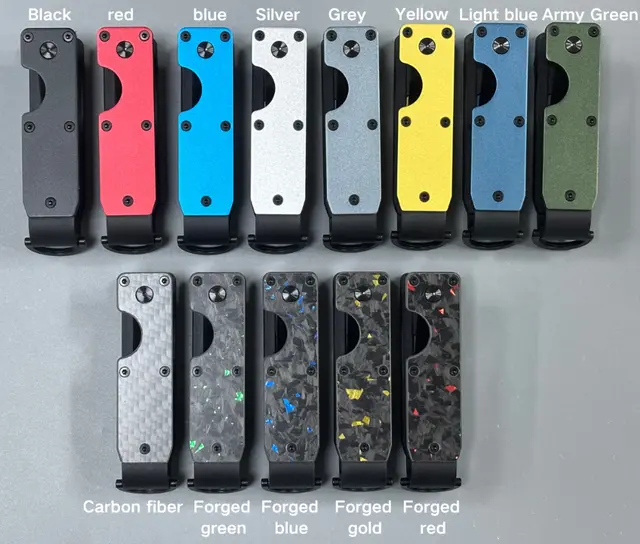
A key organizer holds several standard keys in a compact stacked format, typically secured between two plates or straps with a pivot screw. Its main purpose is to stop keys from jangling, scratching phones, poking pockets, and forming an unmanageable keychain.
A multi-tool wallet combines a card wallet with one or more utility functions. Depending on the design, it may include a key holder, bottle opener, screwdriver, money clip, multi-tool card, tracker compartment, keyring loop, or quick-access mechanism.
| Feature | Key organizer | Multi-tool wallet |
|---|---|---|
| Primary purpose | Organize and silence keys | Combine wallet storage with extra utility |
| Best for | Users with several physical keys | Users wanting fewer separate EDC items |
| Pocket flexibility | High; wallet and keys can be carried separately | Lower; both functions move as one unit |
| Product complexity | Moderate | Higher |
| Customization potential | Materials, logo, key capacity, accessories | Materials, RFID design, tools, mechanisms, modules |
| Risk of excessive bulk | Lower | Higher if features are not prioritized |
| OEM development focus | Pivot reliability and capacity | Usability, thickness, safety, component integration |
The most important distinction is modularity. With a separate RFID wallet and key organizer, users can leave keys behind when they do not need them. With a combined product, the user gains convenience but loses some flexibility.
The answer is: only when the product solves a real carry problem better than two separate items.
A combined wallet-and-key product works best for customers who want a minimal everyday carry setup. For example, a commuter who carries four cards, two house keys, one office key, and a compact vehicle key may appreciate one unified item. This customer values speed, simplicity, and a smaller number of objects to check before leaving home.
However, the "one unit" approach becomes less practical when users carry larger car fobs, many keys, access cards, cash, or location-specific tools. In that situation, an integrated product can become thick, heavy, uncomfortable, and awkward to use at payment terminals.
A standalone key organizer is usually the better solution when the target buyer:
- Carries more than a few physical keys
- Uses a bulky car fob or remote key
- Wants to separate work keys from personal items
- Wants a quieter, scratch-resistant pocket carry
- Already owns a preferred RFID card holder or leather wallet
- Needs the option to carry keys without a wallet
- Prefers a modular EDC setup
From an OEM perspective, this segment creates a strong cross-selling opportunity. A brand can offer a matching RFID card holder, slim wallet, leather key organizer, keychain, and PSA card protector in the same color system, material family, hardware finish, and logo treatment.

An integrated multi-tool wallet is more suitable when the target customer:
- Carries three to six cards and a limited number of keys
- Uses public transit, contactless payments, or digital IDs frequently
- Wants a compact giftable product with visible "wow" features
- Prioritizes fewer items over maximum modularity
- Likes practical EDC tools such as a bottle opener or small driver
- Wants a premium, innovation-led wallet rather than a conventional billfold
The key is restraint. A good multi-tool wallet should provide useful functions, not decorative complexity. Adding too many tools can weaken the wallet's core purpose: secure, fast, comfortable card carry.
For brands and product teams, the debate is not about whether one format is universally superior. It is about managing trade-offs before sampling begins.
Consumers may accept a compact product that performs two jobs. They rarely accept a product that feels like a thick brick in the front pocket.
Card capacity, cash storage, key-stack width, tool thickness, RFID shielding layers, and hardware all affect the final profile. A product should be assessed in the real loaded condition, not only when empty.
At Gstar Technology, we recommend testing the product with:
1. The intended number of ISO-standard cards.
2. The maximum intended number of keys.
3. A typical key fob where relevant.
4. Any included multi-tool or accessory.
5. Cash or receipts if the design includes cash storage.
This process can identify an issue that product renderings often hide: a wallet may look ultra-slim on paper but become uncomfortable once it carries real daily items.
A key organizer must allow users to identify, swing out, and return the correct key smoothly. A wallet must allow cards to be accessed without excessive force or accidental ejection. When these functions are combined, the user should not need to remove keys simply to pay for coffee.
Design teams should ask two simple questions:
- Can the customer use the correct card within seconds?
- Can the customer use the correct key without disturbing cards, cash, or other tools?
If the answer to either is no, the product needs a different architecture.

Material selection is more than a visual decision. It affects weight, durability, manufacturing process, price positioning, and the user's perception of quality.
| Material | Best use | Brand impression | OEM considerations |
|---|---|---|---|
| Aluminum | RFID card holders and slim multi-tool wallets | Modern, lightweight, technical | Finish consistency, edge treatment, logo marking |
| Stainless steel | Tools, frames, durable key hardware | Rugged, functional, premium utility | Weight control, corrosion resistance, stamping precision |
| Genuine leather | Wallet covers and key organizers | Classic, warm, premium | Leather grading, stitching, color consistency, aging behavior |
| Carbon fiber-style materials | Sport and performance-inspired wallets | Technical, high-end, lightweight | Surface quality, structural support, branding method |
| PU or recycled materials | Value, fashion, sustainability-led ranges | Accessible and versatile | Abrasion testing, environmental claims, production consistency |
A leather wallet with a detachable metal key organizer may appeal to premium lifestyle brands. An aluminum RFID wallet with a compact key module may fit a technology or corporate-gifting program. Product-market fit should drive the material decision.
RFID-blocking construction is a meaningful feature for many card-holder products, particularly in markets where contactless payment cards and transit cards are common. But RFID protection should not become a vague marketing claim.
A brand should define exactly what the product is designed to protect, test the final construction, and describe the feature accurately. In an integrated multi-tool wallet, the RFID layer must work without compromising card access, weight, or the placement of metal tools.
For brands developing OEM RFID wallets, the better product brief includes:
- Target card capacity
- Card-access mechanism
- RFID-blocking requirement
- Cash-carry requirement
- Key capacity and key length
- Car-fob compatibility
- Tool functions, if any
- Logo location and decoration method
- Packaging and gift-set needs
This level of specification prevents late-stage compromises and enables more reliable sampling.
The strongest brands increasingly build product ecosystems rather than relying on one isolated hero SKU. A standalone key organizer can become the entry product. An RFID card holder becomes the daily essential. A leather wallet becomes the premium upgrade. A graded-card protector expands the range into collectibles and trading-card communities.
This is especially useful for wholesale customers and private-label brands because it supports:
- Higher average order value
- Matching gift sets
- Seasonal color launches
- Corporate branding programs
- Clear product-tier architecture
- More opportunities for repeat purchases
For example, a brand can launch an "Everyday Carry Collection" with a black aluminum RFID wallet, black leather key organizer, matching keychain, and a PSA card protector. The shared finish, packaging, logo style, and product photography make the range feel more premium than separate unrelated items.
Gstar Technology supports this type of OEM product planning through coordinated development across wallets, card cases, leather accessories, key organizers, and protective accessories. The goal is to help customers build a recognizable product family—not just source a single item. [gstartec]
The most frequent issue is designing for feature count instead of daily usability.
Avoid these mistakes:
- Adding a key holder without checking the impact on wallet thickness
- Using weak pivot hardware that loosens after repeated key rotation
- Ignoring bulky car-fob compatibility
- Claiming RFID protection without validating the final design
- Adding tools that create airport, workplace, or local-regulation concerns
- Making card access difficult after adding a key module
- Selecting materials based only on appearance rather than wear performance
- Treating packaging as an afterthought for gift-oriented products
User feedback across the EDC category repeatedly values compactness, organized keys, reduced noise, durability, and practical accessory compatibility. Product reviews also show that organizers commonly accommodate a small group of keys and can support selected EDC accessories, but real-world usability depends on the specific chassis, capacity, and hardware configuration. [themodestman]
Use this practical product-planning framework before deciding between a key organizer and a multi-tool wallet.
1. Define the target user's daily carry.
2. Set a maximum loaded thickness, not just an empty thickness.
3. Prioritize the top two functions: cards, keys, cash, tools, tracker, or ID.
4. Decide whether the user needs modularity or all-in-one convenience.
5. Select materials based on the intended retail tier and wear expectations.
6. Prototype and test card access, key swing, pocket comfort, and hardware retention.
7. Build coordinated accessories to create a higher-value collection.
For most lifestyle brands, the most commercially flexible route is to offer both options: a separate key organizer for modular daily carry and a multi-tool wallet for customers who want one compact unit.
A wallet and keys should be one unit only when the user's carry is genuinely simple and the design stays slim, fast, and comfortable. For customers with several keys, a large fob, or changing daily needs, a separate key organizer and RFID wallet remain the more practical choice.
At Gstar Technology (Shenzhen) Co., Ltd., we believe the winning OEM strategy is not forcing every customer into one format. It is developing the right combination of RFID card holders, ultra-slim wallets, genuine leather wallets, key organizers, keychains, PSA card protectors, and bumper guards for the brand's specific market.
Ready to build your next EDC collection? Contact Gstar Technology to discuss OEM product concepts, materials, customized logos, packaging, and coordinated wallet-and-key accessory ranges.

For many users, yes. A key organizer can keep keys aligned, reduce jingling, limit pocket scratches, and make a key set feel more compact. It is most effective when the key count and key sizes match the organizer's capacity. [mykeyport]
It can, especially for customers who carry only a few cards and limited keys. However, users with many cards, cash, large vehicle fobs, or several keys may prefer a separate slim wallet and key organizer.
Not necessarily. RFID performance depends on the wallet's construction and the card type involved. Brands should test the finished product and describe its protection capability precisely rather than making overly broad claims.
Many popular compact organizers are designed around a small everyday set, often several keys rather than a large janitor-style keyring. The ideal number depends on key thickness, length, accessories, and hardware design. [gearpatrol]
Aluminum and stainless steel suit modern and durable designs, while genuine leather supports a premium lifestyle look. The best choice depends on target retail price, brand identity, required durability, desired weight, and customization method.
Yes. Brands can coordinate colors, leather textures, metal finishes, logo placement, packaging, and accessory styles across RFID wallets, key organizers, keychains, and other EDC products. Gstar Technology positions its offering around OEM and ODM development for these accessory categories. [gstartec]
1. Gstar Technology (Shenzhen) Co., Ltd. — [Custom RFID Wallet, Key Organizer and Graded Card Holder OEM Solutions] [gstartec]
2. The Modest Man — [The Best Key Organizers: Options for Everyday Carry] [themodestman]
3. Gear Patrol — [The Best Key Organizers for Everyday Carry] [gearpatrol]
4. Keyport — [Ultimate Guide to Key Organizers] [mykeyport]
5. KeySmart — [Compact Key Holder and Multi-tool Products] [getkeysmart]
6. Wirecutter — [Wallets and Cardholders for Different Lifestyles] [nytimes]
Hot Tags: China, Global, OEM, private label, manufacturers, factory, suppliers, manufacturing company


