

Views: 247 Author: Gstar Technology Publish Time: 08-31-2026 Origin: Site


Content Menu
● Money Clip vs. Elastic Cash Strap at a Glance
● What Is a Money Clip on a Metal Wallet?
>> Why Consumers Choose Metal Money Clips
● What Is an Elastic Cash Strap on a Metal Wallet?
>> Why Consumers Choose Elastic Cash Straps
● The Main Differences in Daily Use
>> Cash Capacity and Flexibility
>> Thickness and Pocket Comfort
● How Materials Affect Performance
>> Money Clip Material Considerations
>> Elastic Strap Material Considerations
● RFID Protection: What the Cash Attachment Does—and Does Not—Do
● How to Choose the Right Option for Your Brand
>> Choose a Money Clip for These Product Goals
>> Choose an Elastic Cash Strap for These Product Goals
>> Offer Both for a Stronger Product Range
● OEM Quality Checklist for Money Clips and Cash Straps
>> Elastic Cash Strap Quality Checks
● FAQs
>> 1. Is a money clip more secure than an elastic cash strap?
>> 2. Can an elastic cash strap hold more cash than a money clip?
>> 3. Which option makes a metal wallet thinner?
>> 4. Does a money clip last longer than an elastic strap?
>> 5. Can a metal wallet include both a money clip and an elastic cash strap?
>> 6. Does the money clip or cash strap provide RFID protection?
>> 7. What is best for a premium OEM metal wallet?
At Gstar Technology (Shenzhen) Co., Ltd., we develop OEM metal wallets for international brands, wholesalers, and manufacturers that need reliable, market-ready minimalist carry products. One of the most important product decisions in a metal wallet program is choosing the right external cash-carrying system: a money clip or an elastic cash strap.
The differences between money clips and elastic cash straps in metal wallets affect far more than appearance. They influence wallet thickness, cash capacity, durability, user comfort, replacement needs, perceived product value, and the customer segment a brand can target. A metal wallet may use the same RFID-blocking card case, aluminum plates, carbon fiber panels, titanium shell, or stainless-steel frame—but the cash attachment can completely change how the user experiences the product.
For a brand building a Ridge-style wallet, a slim RFID card holder, or a premium EDC accessory line, the question is not simply, "Which one is better?" The better question is: Which cash-carrying system fits the intended customer, price point, usage pattern, and product positioning?

A money clip is usually a formed metal component attached to the outer side of a metal wallet. It grips folded banknotes through spring tension. An elastic cash strap is a flexible band—typically made from woven elastic, nylon elastic, silicone-lined elastic, or a layered stretch material—that wraps around or attaches to the wallet body and holds cash under tension.
Both options serve the same basic purpose: they let users carry folded cash outside a minimalist card wallet. However, their performance characteristics differ significantly.
| Feature | Metal Money Clip | Elastic Cash Strap |
|---|---|---|
| Core function | Holds cash with rigid spring tension | Holds cash through flexible elastic tension |
| Profile | Slightly more raised from wallet surface | Usually flatter and lower-profile |
| Cash capacity | Best for a smaller to medium stack of notes | Better for variable or thicker cash stacks |
| Durability | Generally stronger for long-term daily use | Can gradually stretch, fray, or lose elasticity |
| Material feel | Premium, structured, mechanical | Flexible, lightweight, casual |
| Cash access | Fast for inserting or pulling a few notes | Easy for sliding notes underneath |
| Scratch resistance | Depends on coating and metal grade | Less likely to scratch but can show fabric wear |
| Replacement frequency | Lower when correctly engineered | Higher because elastic is a wearable component |
| Brand positioning | Premium, rugged, executive, EDC-focused | Minimalist, sporty, adaptable, casual |
| OEM complexity | Requires precision stamping or forming | Requires correct elastic specification and attachment design |
For most premium metal-wallet brands, the money clip communicates a more durable and engineered product story. For customers who often carry changing amounts of cash, the elastic strap usually offers more flexibility with less bulk. Industry product guidance commonly recognizes this central trade-off: cash straps maintain a slim profile and accommodate thicker cash stacks, while money clips provide a firmer, more durable, classic cash-carrying solution.
A money clip on a metal wallet is not the same as a loose, traditional bill clip carried separately in a pocket. In a modern minimalist wallet, the clip is typically mounted to the back plate or integrated between the outer shell and the inner structure.
At Gstar Technology, the design process for an OEM money clip wallet normally considers:
- Clip material, such as stainless steel, titanium alloy, aluminum alloy, spring steel, or coated steel
- Material thickness and bend geometry
- Spring force needed to hold cash securely without making removal difficult
- Mounting method, including screw-fixed, slide-in, riveted, integrated, or replaceable designs
- Surface finish, such as matte, brushed, sandblasted, PVD-coated, anodized, electroplated, or laser-engraved
- Edge treatment to prevent sharp contact points or fabric damage
- Compatibility with the wallet's RFID shielding plates and card-access system
A well-made money clip should feel firm but not aggressive. If it is too loose, bills can slip out. If it is too tight, users struggle to insert cash and may deform the clip by forcing in oversized bill stacks.

A money clip appeals to users who want their wallet to feel like a long-lasting tool rather than a soft accessory. It gives the product a stronger mechanical identity.
Key advantages include:
- Excellent long-term durability when made from appropriate spring-grade metal
- Premium visual appeal, especially with matte black, brushed metal, carbon fiber, forged carbon, or titanium wallet designs
- Clear cash organization for users carrying a small number of folded notes
- Strong perceived value in premium retail packaging and gift-ready products
- Better fit for rugged EDC branding, tactical accessories, business gifts, and executive wallets
- Lower dependence on replaceable soft components
A metal money clip is often the right choice for customers who carry only a few notes—such as emergency cash, parking money, tips, or small daily spending cash. It is also attractive for consumers who prefer structure, clean lines, and a more formal appearance.
An elastic cash strap is a flexible external band that secures notes against the wallet's back plate. It may be a simple woven elastic loop, a branded jacquard strap, a silicone-backed band, or a custom material assembly designed around the wallet frame.
Unlike a rigid clip, the strap expands as cash volume changes. This is why it works especially well for users who sometimes carry two bills and sometimes carry a thicker folded stack.
The major strength of an elastic cash strap is capacity flexibility. A properly selected elastic strap can hold a thin bundle or a larger cash wad while keeping the wallet relatively flat.
Important benefits include:
- Slimmer external profile than many raised metal clips
- Flexible cash capacity for users who carry changing amounts of currency
- Comfortable pocket feel, especially in front-pocket carry
- Easy cash insertion without manipulating a rigid clip
- Good fit for travel users carrying several currencies or receipts
- Lower component weight
- More design freedom for custom colors, woven logos, patterns, and branded trims
For a lifestyle brand, sports-oriented EDC collection, promotional product program, or value-focused minimalist wallet, an elastic strap can be an effective choice. It gives the wallet a softer, more adaptable user experience without changing the metal card-case structure.
However, brands should be transparent about one practical reality: elastic is a wear component. Repeated stretching, friction from folded notes, heat exposure, moisture, body oils, and UV exposure can eventually reduce elastic recovery. User discussions and product guides frequently identify clip longevity as an advantage, while noting that elastic straps can deteriorate over time.

The most useful way to compare a money clip and an elastic cash strap is to look at what happens in real everyday carry.
An elastic cash strap has a clear advantage when cash volume changes often. It stretches to accommodate a larger bundle with relatively little effort. A money clip has a more defined tension range; it is highly secure with a modest cash stack but can become awkward when overloaded.
Choose an elastic cash strap if the user:
- Carries a variable amount of cash
- Travels internationally and handles several banknote types
- Keeps receipts with cash
- Wants to carry a thicker bill stack occasionally
- Prefers the thinnest possible exterior profile
Choose a money clip if the user:
- Carries only a few bills
- Uses cash as backup rather than daily payment
- Values rigid organization
- Wants a durable, premium hardware feature
- Prefers a more structured wallet appearance
A cash strap lies closer to the surface of the wallet. This gives it a lower-profile feel, particularly when carrying only a small number of notes.
A money clip creates a raised section on the wallet's outer surface. The difference is usually modest, but it matters to customers who are extremely focused on front-pocket comfort and ultra-slim carry.
That said, a wallet should not be evaluated by attachment type alone. Overall thickness depends on the complete construction:
- Outer plate thickness
- Internal elastic system
- Card count
- Cash fold method
- Clip geometry or strap thickness
- Hardware, screws, and accessory modules
A poorly designed elastic-strap wallet can still feel bulky. A well-engineered money-clip wallet can remain highly compact.
In most metal-wallet programs, the money clip is the stronger long-term component—provided it uses suitable metal, heat treatment, bend geometry, and coating. A clip made from low-grade thin steel may lose tension, deform, scratch easily, or create sharp edges. Therefore, "metal" alone does not guarantee quality.
Elastic straps require a different quality-control approach. The strap should be tested for repeated extension and recovery, edge fraying, stitching strength, print durability, heat resistance, and contact wear against metal surfaces.
From an OEM perspective, this creates a simple product-development principle:
For brands, it is wise to consider offering replacement elastic straps as accessories. This can improve customer satisfaction, support repeat purchases, and reduce negative reviews related to normal long-term material wear.
Not all money clips and cash straps perform equally. The material specification is often more important than the product name.
A metal clip may use stainless steel, titanium, aluminum, spring steel, or another engineered alloy. The best choice depends on desired weight, cost, finish, strength, and retail positioning.
| Material Option | Typical Strengths | OEM Considerations |
|---|---|---|
| Stainless steel | Strong, corrosion-resistant, premium feel | Good for durable clips and polished or brushed finishes |
| Spring steel | High tension retention | Requires proper coating or corrosion protection |
| Titanium alloy | Lightweight, premium, corrosion-resistant | Higher material and processing cost |
| Aluminum alloy | Light and easy to color-match | Must be engineered carefully to avoid permanent deformation |
| Coated steel | Cost-effective and versatile | Coating adhesion and scratch resistance are critical |
For premium wallets, the clip should visually match the wallet body. A black metal wallet with a mismatched glossy silver clip can make an otherwise strong product look less refined. Color consistency, logo placement, and surface texture matter to consumers because minimalist products expose every detail.
Elastic straps may appear simple, but their specification deserves careful attention. A good strap balances stretch, recovery, friction, softness, colorfastness, and long-term appearance.
Key factors include:
- Elastic core quality for recovery after repeated extension
- Woven outer yarn for texture and visual finish
- Silicone grip treatment to reduce bill slippage
- Heat-cut or stitched edges to control fraying
- UV and sweat resistance for daily-carry conditions
- Logo method, such as woven branding, screen printing, heat transfer, or rubber labeling
- Attachment construction to prevent slipping or tearing near the wallet body
For brands selling in gift, fashion, outdoor, or promotional markets, the strap can become a key visual differentiator. Custom color blocking, woven logo patterns, and limited-edition strap designs can help a metal wallet line stand out without changing the core wallet tooling.
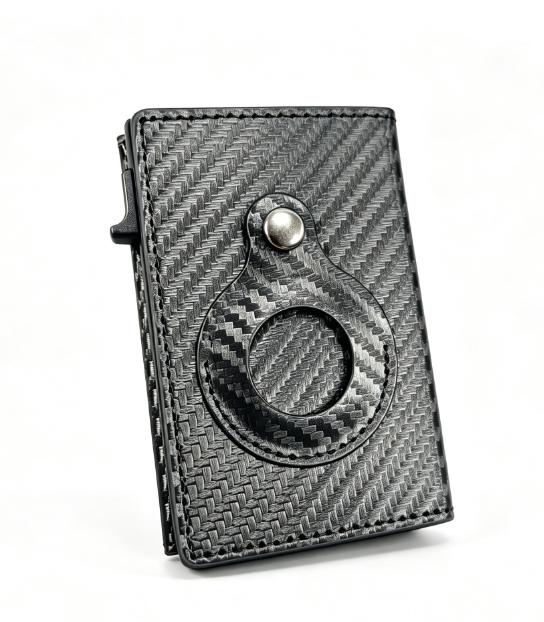
A common buyer misunderstanding is that the money clip or elastic cash strap provides RFID protection. In a properly designed RFID metal wallet, the RFID-blocking function normally comes from the conductive wallet plates or shielding construction around the payment cards—not from the external clip or strap.
Most contactless payment cards and many modern credentials use 13.56 MHz technology, while some older access-control cards operate at 125 kHz. RFID protection performance depends on the card type, frequency, reader configuration, wallet construction, and how completely the cards are shielded.
For OEM brands, the practical lesson is straightforward:
- Do not make broad "blocks all RFID" claims without appropriate validation.
- Explain that RFID performance depends on the wallet's shielding design.
- Keep the money clip and cash strap messaging focused on cash retention, thickness, access, and durability.
- Test the final assembled wallet, not only the raw metal plates.
This level of accuracy supports stronger product pages, fewer customer misunderstandings, and more credible brand communication.
For a new metal-wallet OEM project, Gstar Technology recommends defining the target user before selecting the cash attachment. The correct choice should support the brand's market position rather than follow a generic trend.
A money clip is typically the stronger option when your brand wants to communicate:
- Premium engineering
- Long-term durability
- Rugged everyday carry
- Business or executive style
- Tactical or outdoor positioning
- Minimal-cash behavior
- Higher perceived hardware value
- Gift-oriented presentation
A black anodized aluminum wallet with a stainless-steel clip, laser logo, premium box, and RFID card case can be positioned as a refined daily-carry accessory for professionals, travelers, and minimalist consumers.
An elastic cash strap is usually the better fit when your brand wants to communicate:
- Maximum slimness
- Lightweight comfort
- Flexible cash capacity
- Sports or casual lifestyle
- Travel convenience
- Color customization
- Accessible pricing
- Replaceable, customizable accessories
A carbon fiber-pattern metal wallet with a colored woven strap can appeal to customers who prefer modern, expressive accessories and frequently carry a changing amount of cash.
For many brands, the most commercially effective solution is not choosing only one option. It is offering both.
A metal wallet can be sold in several ways:
1. Money clip version for premium and durability-oriented customers
2. Elastic cash strap version for slimness and flexible-capacity customers
3. Dual-accessory set with both attachments included
4. Replacement accessory program with custom straps and clips sold separately
5. Bundle strategy pairing a metal wallet with keychains, RFID card holders, gift boxes, or custom EDC accessories
Interchangeable cash-carrying systems already exist within the metal-wallet category, and conversion commonly involves removing wallet hardware, changing the attachment system, and reinstalling the outer plates. For an OEM brand, designing interchangeability from the beginning can create a powerful upgrade path and reduce the risk of selecting the wrong single configuration for all customers. [ridge]
Before mass production, brands should evaluate more than a prototype's appearance. Real-world performance depends on tolerances, materials, assembly, and repeat-use testing.
- Confirm clip tension with both thin and medium cash bundles
- Test insertion and removal with common folded banknote sizes
- Check whether the clip returns to shape after repeated use
- Inspect edges for sharpness, burrs, and coating cracks
- Verify screw fit, mounting stability, and rattle-free assembly
- Check coating adhesion and scratch resistance
- Ensure the clip does not interfere with pocket entry or card access
- Test stretch and recovery after repeated loading cycles
- Check that cash does not slide out during normal movement
- Inspect strap edges for fraying
- Test logo print or woven branding for abrasion resistance
- Verify stitching, adhesive, or anchoring strength
- Test exposure to heat, sweat, humidity, and common daily-use friction
- Confirm that the strap remains centered and aligned on the wallet body
A simple pre-launch test can reveal many product problems:
1. Load the wallet with the intended maximum card quantity.
2. Add the typical cash amount your customer will carry.
3. Place the wallet in a front pocket and sit, walk, and enter a car.
4. Remove and reinsert cash at least 20 times.
5. Check whether the attachment loosens, scratches, catches fabric, or becomes difficult to use.
6. Repeat with a small cash bundle and a larger one.
7. Review the result from the user's point of view—not only the factory's point of view.
This test is especially valuable because a wallet that looks excellent on a product table may feel very different after a week of daily use.
The differences between money clips and elastic cash straps in metal wallets come down to a clear product trade-off: money clips emphasize strength, structure, and premium hardware; elastic cash straps emphasize slimness, flexibility, and variable cash capacity.
Neither option is universally better. A money clip is usually the right answer for a durable, premium, low-cash EDC wallet. An elastic cash strap is often the better answer for users who want a flatter profile and regularly carry different amounts of cash. The best OEM program may offer both options, either as separate SKUs or as a configurable accessory system.
At Gstar Technology (Shenzhen) Co., Ltd., we help brands turn this choice into a complete product strategy. From Ridge-style RFID wallets and ultra-slim card holders to genuine leather wallets, keychains, PSA card slabs, bumper strips, custom packaging, logos, colors, and accessory combinations, we support OEM projects built for real market needs—not generic catalog products.
Ready to develop a metal wallet with the right money clip, elastic cash strap, RFID structure, finish, and branding for your market? Contact Gstar Technology to discuss your OEM design, sample requirements, customization goals, and production plan.
A well-engineered money clip provides strong, consistent mechanical tension and is generally very secure for a small to medium stack of folded notes. An elastic cash strap can also hold cash securely when correctly specified, especially if it includes anti-slip material, but it relies on elastic recovery and can wear over time.
Usually, yes. An elastic cash strap expands more easily and handles changes in cash volume better. It is often the preferred option for users who sometimes carry a larger wad of notes, receipts, or mixed currencies.
An elastic cash strap generally creates a flatter external profile because it lies against the wallet surface. A money clip is raised due to its formed metal shape, although a well-designed clip wallet can still remain very slim.
In many cases, yes. A quality metal money clip is generally more durable because it does not rely on elastic fibers. However, its lifespan still depends on the metal grade, clip thickness, bend design, heat treatment, and proper use. Elastic straps should be treated as replaceable wear components.
Yes. Brands can offer separate versions, include both attachments in a bundle, or engineer an interchangeable system. Offering both can appeal to customers with different cash-carrying habits and can create accessory upsell opportunities.
No. RFID-blocking performance primarily comes from the wallet's conductive metal plates or shielding construction around payment cards. The cash attachment mainly controls how banknotes are held outside the wallet. RFID protection also depends on card type and operating frequency. [lowrysolutions]
For a premium, rugged, executive, or EDC-focused metal wallet, a well-designed stainless-steel or titanium-style money clip is often the stronger choice. For a lightweight, colorful, travel-oriented, or value-focused wallet, an elastic cash strap may be more suitable. Many brands benefit from offering both.

1. Ridge. "[Cash Strap or Money Clip?]" Discusses the slim profile and high cash capacity of a cash strap, along with the durability advantage of a metal money clip. [ridge]
2. GeoGrit. "[Cash Strap vs. Money Clip: What's the Difference?]" Explains how cash straps and money clips hold bills, and compares their profile, durability, and everyday function. [geogrit]
3. Axwell. "[Cash Strap or Money Clip?]" Provides a consumer-focused comparison of cash-stack capacity, slimness, flexibility, durability, and style. [axwellwallet]
4. Ridge. "[How to Go From Cash Strap to Money Clip]" Demonstrates that some metal-wallet platforms can use interchangeable cash-carrying attachments. [ridge]
5. Lowry Solutions. "[RFID Blocking Cards: Fact vs. Fiction]" Provides RFID-frequency context, including 13.56 MHz high-frequency systems commonly associated with contactless cards. [lowrysolutions]
6. ID Stronghold. "[What Are the Different Types of RFID Cards?]" Explains that RFID cards can operate at different frequencies, including 125 kHz and 13.56 MHz, which matters when making RFID-blocking claims. [idstronghold]
7. Ekster. "[Money Clip vs Wallet: The Pros & Cons for Each]" Provides general context on minimalist money clips and wallet capacity. [ekster]
Hot Tags: China, Global, OEM, private label, manufacturers, factory, suppliers, manufacturing company


