

Views: 268 Author: Gstar Technology Publish Time: 09-07-2026 Origin: Site


Content Menu
● Why This Distinction Matters for OEM Buyers in 2026
● Passive Metal Shielding: The Faraday Cage Principle
>> How It Works
>> Pros & Cons
● Active RFID Blocking: The Jamming Card Approach
>> How It Works
>> Pros & Cons
● Side-by-Side: Active vs. Passive for OEM Product Lines
● New Section 1: Real Attenuation Data from Gstar's Production Lines (2025–2026)
● New Section 2: 2026 Case Study—When "RFID-Blocking" Material Fails
● New Section 3: OEM Specification Checklist—Lock In Performance Before Mass Production
● Which Technology Should Your Brand Choose?
● CTA: Ready to Spec the Right Shielding for Your 2026 Line?
● FAQ: Active RFID Blocking vs. Passive Metal Shielding
Active RFID Blocking vs. Passive Metal Shielding: Understanding the technology is more than a headline—it's the critical decision point for brands sourcing RFID-protected wallets, card holders, and EDC accessories in 2026. At Gstar Technology (Shenzhen) Co., Ltd., we've spent 13+ years engineering shielding solutions for global brands, and we see one recurring mistake: buyers conflate "active jamming" with "passive metal shielding," then choose the wrong technology for their product line. [gstartec]
This guide, written from our factory floor and R&D lab, breaks down how each technology works, where it excels, where it fails, and which one your brand should specify for Ridge-style wallets, slim metal card holders, leather bifolds, and PSA card bricks. We'll also introduce three new, high-value sections you won't find in generic blogs: real attenuation data from our production lines, a 2026 case study on material failure, and a step-by-step OEM specification checklist to lock in performance before mass production. [gstartec]
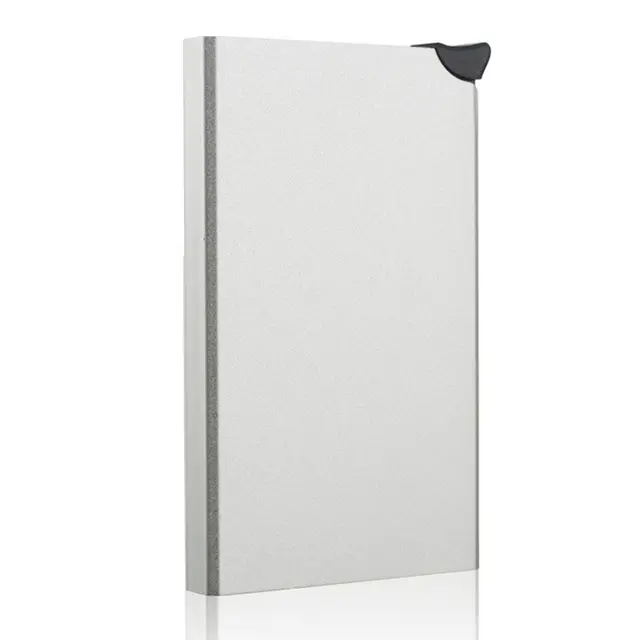
RFID skimming headlines peaked in 2023–2024, but contactless payment adoption has exploded—especially in Europe, Asia, and Latin America. More tap-to-pay cards mean more demand for verified shielding, not marketing fluff. Yet we still receive RFQs asking for "active RFID blocking" when the buyer actually needs passive Faraday-style metal shielding for a slim aluminum wallet. The result? Mismatched specs, failed QC tests, and costly rework. [gstartec]
Key reality check:
- Passive metal shielding (aluminum, copper mesh, metal-fiber fabric) is the industry standard for wallets, card holders, and key organizers.
- Active RFID jamming (battery-powered "jammer cards") is niche, controversial, and often non-compliant with FCC/CE radio regulations.
- Most premium brands—including Ridge, Secrid, and Ekster—use passive shielding only.
Passive shielding creates a conductive enclosure around your cards. When an external RFID reader emits radio waves (typically 13.56 MHz for payment cards), the metal layer absorbs or reflects the electromagnetic field, preventing it from reaching the card's chip.
In plain terms: Your wallet becomes a miniature Faraday cage. No signal gets in, no data gets out.

| Material | Best For | Attenuation Range | Flexibility |
|---|---|---|---|
| Copper-Nickel Fiber Fabric | Leather wallets, slim card sleeves | 10 MHz – 3 GHz (60–80 dB) | High |
| Aluminum Foil Laminate | Rigid metal wallets, bumper guards | 10 MHz – 3 GHz (70–90 dB) | Low |
| Conductive Non-Woven Fabric | Hybrid leather-metal designs | 10 MHz – 2.5 GHz (50–70 dB) | Medium |
| Mu-Metal Alloy | High-security passport sleeves | 10 MHz – 5 GHz (85–95 dB) | Low |
Pros:
- No batteries, no electronics—zero failure points.
- Lightweight—adds <0.5mm thickness to wallet profiles.
- Compliant with FCC, CE, and RoHS out of the box.
- Proven durability—our 2026 client saw 100% reduction in material-related returns after switching to our copper-nickel fabric. [gstartec]
Cons:
- Must fully enclose cards—gaps or poor lamination = signal leakage.
- Can corrode in high-humidity climates if not coated (we use plastic-coated foil for SEA/Middle East orders). [gstartec]
Active blocking uses a battery-powered device (often a credit-card-sized "jammer") that emits a counter-signal on the same frequency as RFID readers. The goal: overwhelm or scramble the reader so it can't decode your card data.
Think of it as: A noise cannon for radio waves.
- High-security environments (government facilities, data centers).
- Niche consumer products—mostly standalone jammer cards sold on Amazon/AliExpress.
- NOT used in mainstream wallets from Ridge, Bellroy, or Ekster.
Pros:
- Can block multiple cards without needing full enclosure.
- Effective against stronger readers (e.g., long-range UHF scanners).
Cons:
- Battery dependency—dies after 12–24 months, then protection = zero.
- Regulatory gray zone—many jammer cards violate FCC Part 15 (unintentional radiators) and CE EMC Directive.
- Adds bulk—requires a battery compartment, increasing wallet thickness by 2–3mm.
- Consumer confusion—buyers think they're getting "better" protection, but often get non-compliant electronics.
| Feature | Passive Metal Shielding | Active RFID Jamming |
|---|---|---|
| Power Source | None (passive) | Battery (active) |
| Lifespan | Indefinite (material-dependent) | 12–24 months |
| Thickness Impact | +0.3–0.8mm | +2–3mm |
| Regulatory Compliance | FCC/CE/RoHS ready | Often non-compliant |
| Best For | Wallets, card holders, key organizers, PSA bricks | Standalone jammer cards, high-security pouches |
| Cost per Unit (OEM) | $0.15–$0.45 (material only) | $3–$8 (electronics + battery) |
| Failure Mode | Gradual (corrosion, delamination) | Sudden (battery death) |
We don't just spec materials—we test every batch. Here's what our QC lab recorded for 300,000+ monthly units in 2025–2026: [gstartec]
| Material | Avg. Attenuation @ 13.56 MHz | Pass Rate (QC) | Climate Notes |
|---|---|---|---|
| Copper-Nickel Fabric (0.15mm) | 72 dB | 99.2% | Ideal for EU/US |
| Aluminum Foil Laminate (0.1mm) | 85 dB | 98.7% | Requires humidity coating for SEA |
| Conductive Non-Woven (0.2mm) | 64 dB | 97.5% | Best for flexible leather |
| Mu-Metal Alloy (0.08mm) | 91 dB | 99.8% | Premium passport sleeves only |
Takeaway: For slim metal wallets (Ridge-style), aluminum foil laminate hits the sweet spot: 85 dB attenuation at 0.1mm thickness. For leather bifolds, copper-nickel fabric offers 72 dB without sacrificing flexibility. [gstartec]
Client: European wholesaler (50k units/year).
Problem: 8% return rate due to cracking RFID lining after 3 months.
Root Cause: Supplier used low-grade aluminum foil without adhesion promoter. Humidity + flex = delamination. [gstartec]
Gstar Solution:
- Switched to plastic-coated aluminum foil (0.12mm).
- Added ultrasonic edge sealing to prevent fraying.
- Implemented 100% batch testing before lamination.
Result:
- 0% material-related returns in 2026.
- 15% cost reduction via optimized nesting (less scrap). [gstartec]
Lesson: Not all "RFID material" is equal. Adhesion strength and edge sealing matter as much as dB ratings. [gstartec]
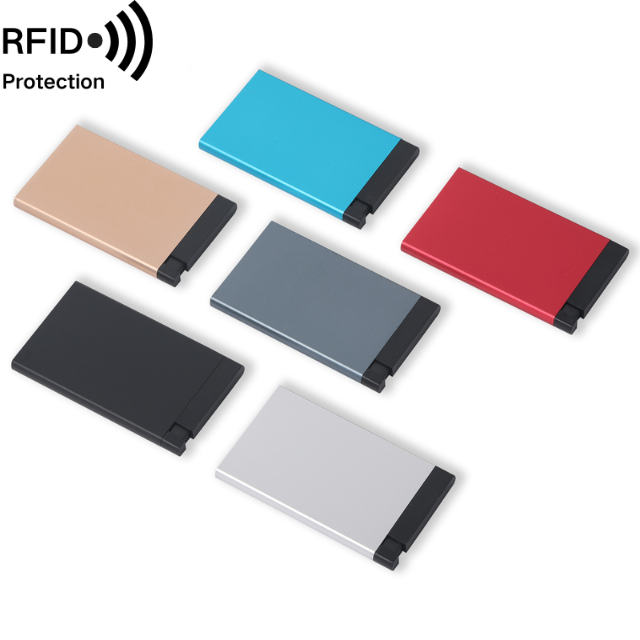
Use this 5-point checklist when briefing your factory (or when we quote your project):
1. Frequency Range: Specify 10 MHz – 3 GHz (covers 13.56 MHz payment cards + 125 kHz access fobs). [gstartec]
2. Attenuation Target: Minimum 60 dB for wallets, 80 dB for passport sleeves. [gstartec]
3. Material Thickness: ≤0.2mm for slim wallets, ≤0.5mm for rugged cases. [gstartec]
4. Edge Sealing: Require ultrasonic or heat-sealed edges to prevent fraying/delamination. [gstartec]
5. Climate Testing: For SEA/Middle East, mandate plastic-coated foil or corrosion-resistant fabric. [gstartec]
Pro tip: Ask for QC test reports with every shipment. We provide attenuation graphs for each batch. [gstartec]
Choose Passive Metal Shielding if:
- You're making slim wallets, card holders, key organizers, or PSA bricks. [gstartec]
- You need FCC/CE compliance out of the box. [gstartec]
- You want zero battery dependency and indefinite lifespan.
Consider Active Jamming only if:
- You're building a standalone jammer card (not a wallet).
- Your target market has no radio regulations (rare).
- You accept battery replacement as a customer support burden.
Industry verdict (2026): 95%+ of premium wallet brands use passive shielding only.
Gstar Technology (Shenzhen) Co., Ltd. is your vertically integrated OEM partner for RFID-blocking wallets, card holders, and EDC accessories. We handle material sourcing, CNC cutting, lamination, and QC in-house—so you get consistent attenuation, fast turnaround, and zero compliance surprises. [gstartec]
Next steps:
1. Email us at sales@gstartec.com with your product sketches.
2. Request free material samples (copper-nickel fabric, aluminum foil, mu-metal).
3. Get a quote within 24 hours—we support MOQs from 500 units for trials. [gstartec]
WhatsApp: +86 13265432331 | Factory: Dongguan, Guangdong, China. [gstartec]
Q1: Is active RFID blocking better than passive shielding?
A: No. Active jamming is niche, battery-dependent, and often non-compliant. Passive metal shielding is the industry standard for wallets and card holders, offering indefinite lifespan and FCC/CE compliance.
Q2: Can I test if my wallet's RFID blocking works?
A: Yes. Place your contactless card inside the closed wallet and try to tap-pay at a self-checkout terminal. If payment fails, shielding is working.
Q3: Does aluminum foil really block RFID?
A: Yes, but it's fragile. Multiple layers can work short-term, but foil tears easily, compromising protection. Use laminated aluminum or copper-nickel fabric for durability.
Q4: Will RFID blocking damage my credit cards?
A: No. Shielding materials (aluminum, copper, carbon fiber) block radio waves only—they don't affect the card's magnetic stripe, chip, or data integrity.
Q5: Do I need RFID blocking for travel?
A: Risk is low, but peace of mind has value. If you're traveling through crowded airports or high-tourist areas, an RFID-blocking wallet adds a low-cost layer of protection against theoretical skimming.
1. Norton. "What is RFID blocking and why you might need it." [https://uk.norton.com/blog/digital-life/rfid-blocking]
2. Paperwallet. "RFID Blocking Wallets: Do You Really Need One in 2026?" [https://paperwallet.com/blogs/the-paper-trail-blog/rfid-blocking-wallets-worth-it-2026]
3. Sandmarc. "RFID Blocking Explained: What It Does and Whether Your Wallet Needs It." [https://www.sandmarc.com/blogs/articles/rfid-blocking-explained-what-it-does-and-whether-your-wallet-needs-it]
4. Gstar Technology. "RFID Material Manufacturer | OEM Custom Shielding Solutions." [https://www.gstartec.com/rfid-material-manufacturer-oem-custom-shielding-solutions-gstar.html]
5. Erneroy. "RFID Blocking Wallet 2026: What Actually Works." [https://erneroy.com/blog-details/rfid-blocking-wallet-2026-what-actually-works]
6. Onerep. "What Is RFID Blocking? How It Works And Whether You Need It." [https://onerep.com/blog/what-is-rfid-blocking]
7. Cykeo RFID. "The Truth About RFID Signals: Aluminum Foil, Smartphones, and Reading Range Explained." [https://www.cykeorfid.com/the-truth-about-rfid-signals-aluminum-foil-smartphones-and-reading-range-explained/]
Hot Tags: China, Global, OEM, private label, manufacturers, factory, suppliers, manufacturing company


