11 min read
When a buyer opens a container of 5,000 carbon fiber wallets and finds the slide mechanism jamming on every third unit, the cost of that mistake is not measured in replacement parts. It is measured in chargebacks, dead inventory, and a listing that gets buried by negative reviews. The difference between that scenario and a clean launch is not luck — it is how well the buyer understood the manufacturing process before signing the PO.
This guide explains what “aviator wallet dupe carbon fiber” actually means from a production standpoint. It covers material grades, the slide-action mechanism, QC benchmarks, supplier evaluation, and OEM workflows — the information a purchasing manager needs before committing to a run.
What Is an Aviator Wallet Dupe in Carbon Fiber?
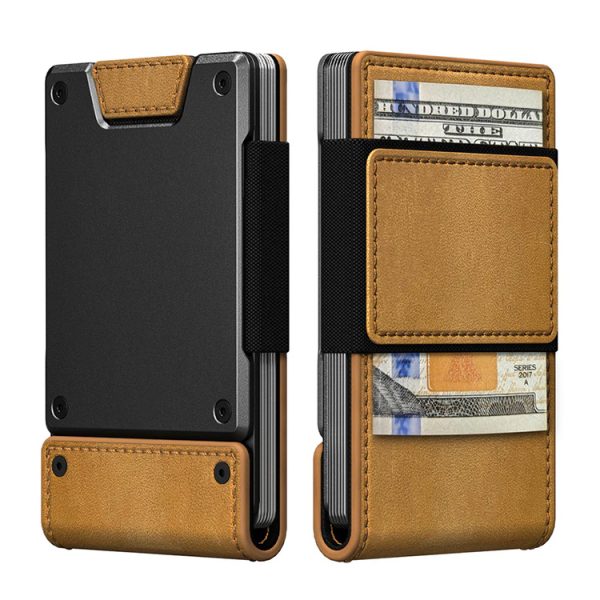
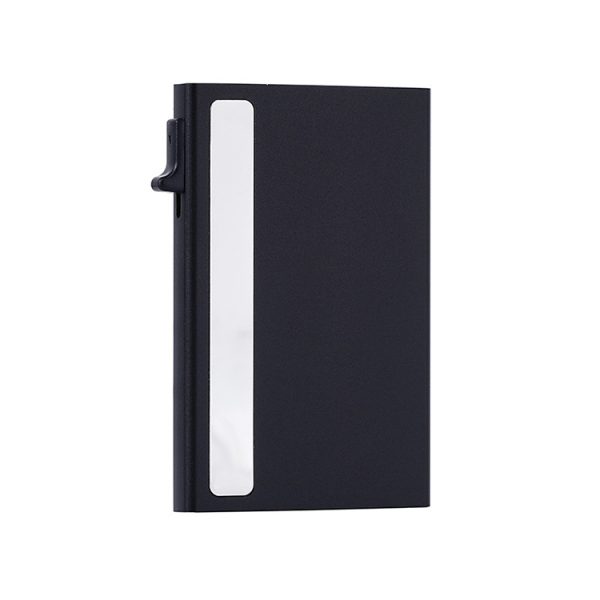
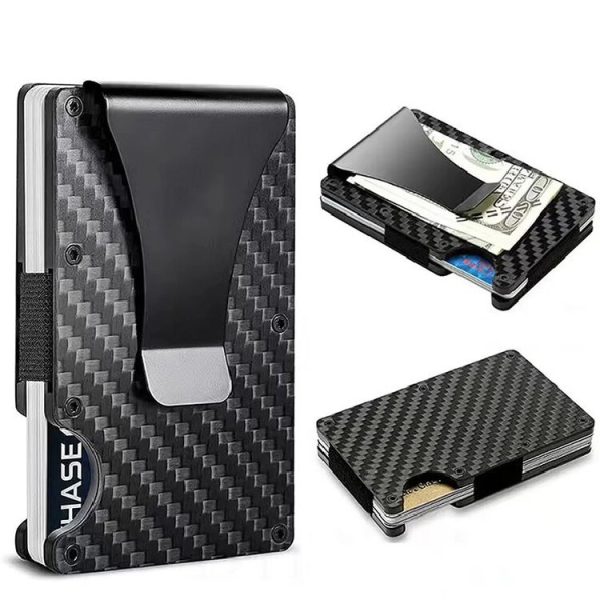
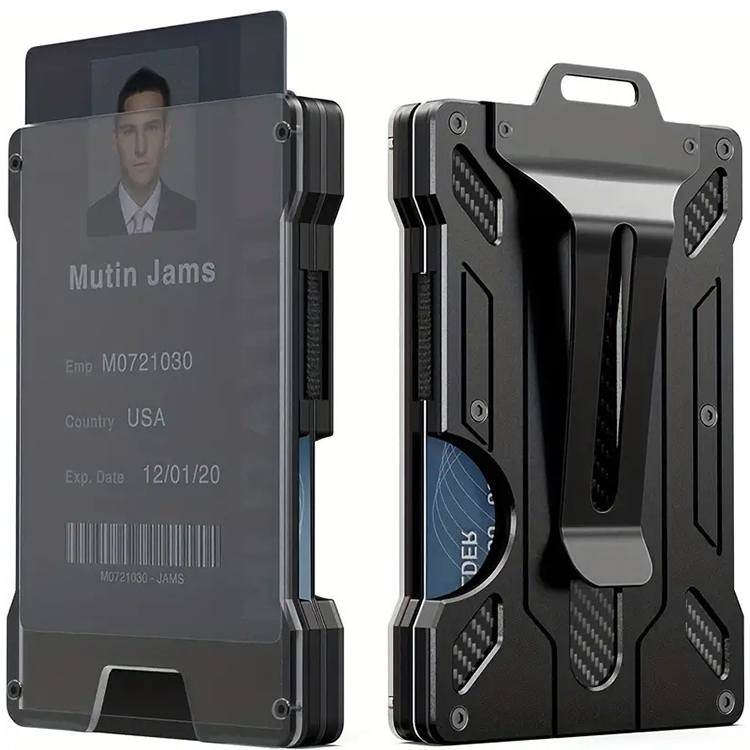
An aviator wallet dupe is a wallet that replicates the slide-action, quick-access design of premium aviator-style wallets, built with carbon fiber materials at a lower price point. The “dupe” designation refers to the accessible price, not necessarily inferior construction — many dupes are manufactured to the same tolerances as the originals.
The category appeals to B2B buyers because it combines high perceived value with reasonable material costs. A carbon fiber wallet reads as premium at retail, but the raw material cost sits well below full-grain leather or forged titanium. For wholesalers and private-label brands, the margin structure is attractive.
Carbon Fiber in Wallet Manufacturing: Material Grades and Properties
Real Carbon Fiber vs. Pattern-Printed Alternatives
Three material tiers exist in this category:
| Material Type | Appearance | Manufacturing Process | Relative Cost |
|---|---|---|---|
| Twill-weave carbon fiber sheet | Uniform woven pattern | Layered sheets, CNC machined | High |
| Forged carbon fiber (chopped) | Marble-like random pattern | Chopped fibers in resin, compression molded | Medium-High |
| Carbon pattern printing | Printed on plastic or aluminum | Pad printing or hydro-dipping | Low |
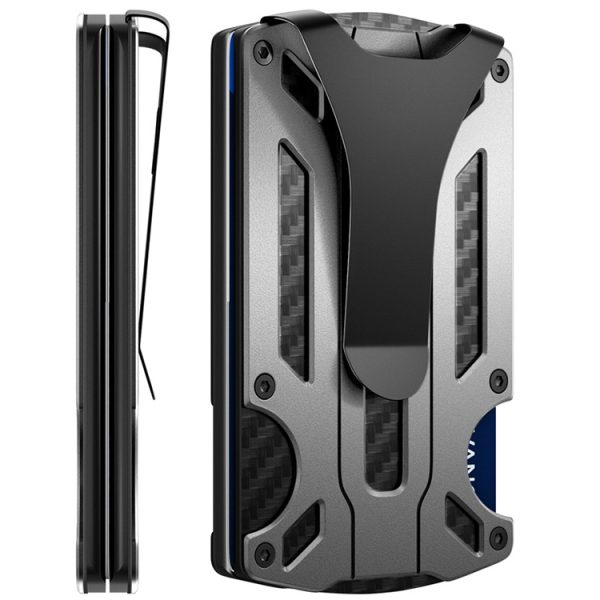
For an aviator wallet dupe, twill-weave carbon fiber is the most common choice. It machines cleanly, the pattern is recognizable, and the sheet stock is readily available in T300 and T700 grades. Forged carbon appears in higher-end models like the “proof wallet carbon fiber” style products, where the random pattern and 3D forming capability justify the added mold cost.
Material Properties That Matter for Slim Wallets
Carbon fiber composites offer a strength-to-weight ratio roughly five times that of steel. A typical carbon fiber wallet plate weighs 8–12 grams, compared to 20–30 grams for an equivalent aluminum plate.
Three properties require buyer attention:
-
RFID blocking: Carbon fiber is not inherently RFID-blocking. The composite structure allows radio frequencies to pass through. Buyers who need RFID protection must specify an additional shielding layer — typically aluminum or copper foil inserted between the carbon plates.
-
UV stability: The epoxy resin that binds carbon fibers can yellow or degrade under prolonged direct sunlight. A quality clear coat with UV inhibitors is necessary for outdoor carry products.
-
Edge delamination: If the CNC tooling is dull or the feed rate is too aggressive, the fiber layers can separate at the edges. This appears as a white “fuzz” along the cut line.
Are Carbon Fiber Wallets Worth It?
Yes, for the durability-to-weight ratio — but only when the manufacturing process is correct. Resin quality, curing temperature, and edge finishing determine whether a carbon fiber wallet lasts five years or five months.
For B2B buyers, “worth it” depends on the target retail price and the competitive set. A well-made carbon fiber wallet can retail at 3–5× the cost of a standard aluminum wallet while costing only 1.5–2× to produce.
Anatomy of an Aviator-Style Wallet: Design Specifications
The Slide-Action Mechanism
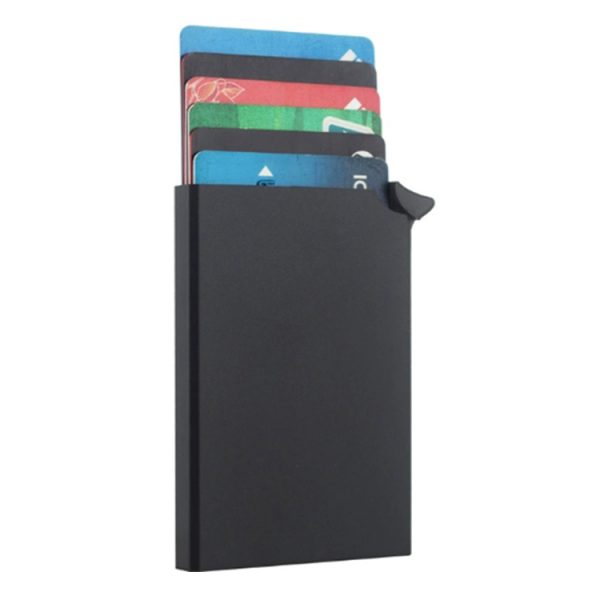
The defining feature of an aviator-style wallet is the “jump to:” quick-access slide. A top plate slides laterally to expose cards stored in a track beneath it. The mechanism is either spring-loaded or friction-fit.
The critical specification is the clearance between the sliding plate and the track rails — 0.1 to 0.3 mm. Below 0.1 mm, the plate binds, especially when the carbon fiber expands slightly with temperature changes. Above 0.3 mm, the plate rattles, which reads as cheap to the end user.
Card Capacity and Elastic Band Integration
Typical capacity is 6–12 cards. The card stack is held by an elastic band that wraps around the wallet body. Buyers should specify the band material: automotive-grade elastic (usually nylon or polyester with latex core) outperforms standard polyester webbing in retention tests. The band surface interacts with the carbon fiber plate continuously — abrasion testing of at least 10,000 cycles is recommended to verify the band does not wear through its protective coating.
Form Factor Comparison
| Feature | Aviator Slide Wallet | Bifold | Money Clip Wallet |
|---|---|---|---|
| Card access speed | Fast (slide + grab) | Moderate (flip open) | Fast (pull stack) |
| Profile thickness | 10–14 mm | 20–30 mm | 8–12 mm |
| Cash storage | Limited | Good | Limited |
| Manufacturing complexity | High (tolerance-sensitive) | Low | Medium |
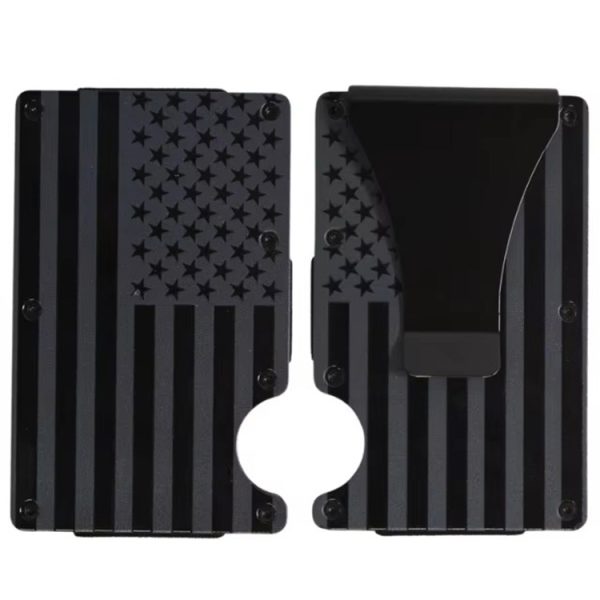
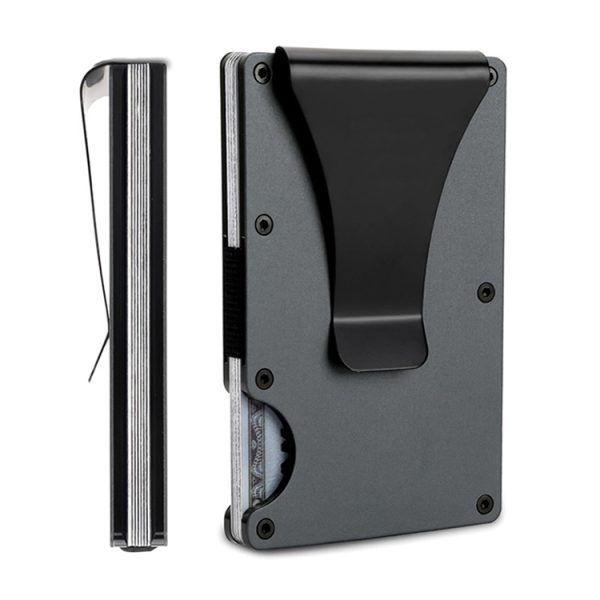
The aviator dupe market is dominated by slide-style models. Adding a money-clip variant can differentiate a product line, but it requires a different mold and assembly process.
Manufacturing Methods: CNC Machining and Compression Molding
CNC Machining of Carbon Fiber Plates
CNC machining is the standard for twill-weave carbon fiber wallets. The process uses diamond-coated tooling — standard carbide bits wear out quickly on carbon fiber and produce frayed edges.
Key parameters:
-
Spindle speed: 18,000–24,000 RPM
-
Feed rate: 1,500–3,000 mm/min depending on plate thickness
-
Tooling: Diamond-coated end mills, 1–3 mm diameter for detail work
The advantage of CNC is precision. A well-programmed CNC machine holds tolerances of ±0.05 mm on the slide track, which is well within the 0.1–0.3 mm clearance requirement. The disadvantage is cycle time — a typical wallet plate takes 4–8 minutes to machine, making CNC suitable for volumes of 5,000+ units per month.
Compression Molding for Forged Carbon
Forged carbon products require a mold. Chopped carbon fibers (6–25 mm length) are mixed with epoxy resin and placed in a heated mold under pressure. Cycle time is 5–10 minutes per part depending on resin cure temperature.
The mold cost runs $3,000–$8,000 for a wallet-sized part, which is why forged carbon is rarely used for first production runs below 1,000 units.
Assembly and Finishing
The slide track assembly is typically manual or semi-automatic. The operator fits the sliding plate into the track, installs the spring (if spring-loaded), and attaches the elastic band.
Surface finishing involves applying a clear coat — either spray-applied polyurethane or a UV-cured acrylic. The clear coat prevents fiber “fuzz” and adds grip. Packaging for carbon fiber products requires anti-scratch inserts; the plates are susceptible to surface marks during transit if the packaging allows movement.
Quality Control Benchmarks for Carbon Fiber Wallets
Visual Inspection Standards
-
No pinholes in the clear coat
-
No resin-rich areas (dark, glossy spots) or resin-starved areas (dry, rough patches)
-
Fiber alignment consistent with the weave pattern
-
Color consistency across batches — carbon fiber can vary slightly by batch, and buyers should approve a master sample for color matching
Functional Testing
-
Slide-cycle test: Minimum 10,000 open/close cycles without jamming or excessive wear
-
Drop test: 1.5-meter drop onto concrete, no cracking or delamination
-
Card retention test: Cards must not slip out when the wallet is shaken vigorously
-
Band tension test: Elastic band must maintain 80% of initial tension after 5,000 stretch cycles
Certification Requirements for Export
-
REACH (EU) — chemical safety compliance
-
RoHS — restriction of hazardous substances
-
Prop 65 (California) — for US market entry
-
RFID-blocking claims — require testing to ASTM or ISO standards. Do not overclaim; a wallet without a shielding layer will fail verification testing if challenged.
How to Evaluate Aviator Wallet Dupe Carbon Fiber Suppliers
Red Flags to Avoid
-
Suppliers who cannot show factory floor video or in-process QC photos. A real manufacturer has nothing to hide.
-
MOQs under 500 units for CNC-machined carbon fiber. This usually indicates a trading company reselling from a third-party factory.
-
No lead time breakdown. A credible supplier can separate material procurement, production, and QC timeframes.
Questions to Ask Shortlisted Factories
-
What carbon fiber grade do you stock — T300 or T700?
-
Do you run in-house CNC or outsource machining?
-
Can you provide a sample with a 0.2 mm tolerance on the slide track?
-
What is your defect rate on similar wallet projects?
-
Do you have a functional testing rig for slide-cycle testing?
Which Carbon Fiber Wallet Is the Best?
From a manufacturing perspective, “best” equals the one that meets your price point, durability specification, and aesthetic requirements. No single SKU fits every market. A $15 wholesale wallet for a promotional line cannot be held to the same standard as a $45 wholesale wallet for a premium brand — and the factory should be honest about that difference.
Cost Structure and MOQ Planning
What Drives the Unit Price
-
Material grade: T700 costs roughly 30–40% more than T300
-
Surface finish: Matte clear coat is cheaper than high-gloss (gloss requires more careful application and polishing)
-
RFID-blocking layer: Adds $0.50–$1.50 per unit
-
Packaging: Anti-scratch inserts and custom boxes add $0.30–$1.00 per unit
-
Elastic band quality: Automotive-grade bands cost 2× standard webbing
MOQ Scenarios
| Stage | Quantity | Notes |
|---|---|---|
| Sample | 1–5 units | Sample cost + shipping |
| Pilot run | 300–500 units | Validate assembly and QC |
| Full production | 1,000–3,000 units | Custom branding and packaging |
What Do Gen Z Use Instead of a Wallet?
Gen Z consumers increasingly carry phone cases with card slots, card holders, and minimal slide wallets. The aviator wallet dupe in carbon fiber is the natural upgrade path — it offers the slim profile and tech-forward aesthetic this demographic prefers, without the bulk of a traditional bifold.
What Kind of Wallet Do Wealthy Men Use?
Wealthy consumers prioritize material integrity and minimal design. Carbon fiber and titanium are common choices because they signal an understanding of material science, not just brand logos. A well-made carbon fiber slide wallet captures this aesthetic at a fraction of the price — which is why the dupe market thrives.
For suppliers, this is the market positioning to offer retail partners: a product that looks and feels premium, at a price point that expands the addressable market.
Production Process: From Raw Material to Finished Wallet
The workflow for a typical aviator wallet dupe in carbon fiber:
-
Material inspection — Verify carbon fiber sheet grade, resin content, and weave consistency upon receipt
-
CNC machining — Cut wallet plates to spec, including slide track and card slot openings
-
Deburring and edge finishing — Remove fiber fuzz, sand edges to smooth finish
-
Surface treatment — Apply clear coat, cure in UV oven or air-dry rack
-
Assembly — Fit slide mechanism, install elastic band, attach any hardware
-
Functional testing — Slide-cycle, drop, and card retention tests on sampled units
-
Final visual inspection — 100% inspection for surface defects
-
Packaging — Place in anti-scratch inserts, seal in retail packaging
Customization and OEM/ODM Options
The standard OEM/ODM workflow for carbon fiber wallets:
-
OEM: Buyer provides the design; manufacturer produces to spec
-
ODM: Buyer selects from existing templates; manufacturer adapts dimensions and branding
-
Private label: Manufacturer produces a standard design; buyer’s logo applied via laser engraving, pad printing, or metal badge
Customization options include:
-
Logo application (laser engraving is most durable on carbon fiber)
-
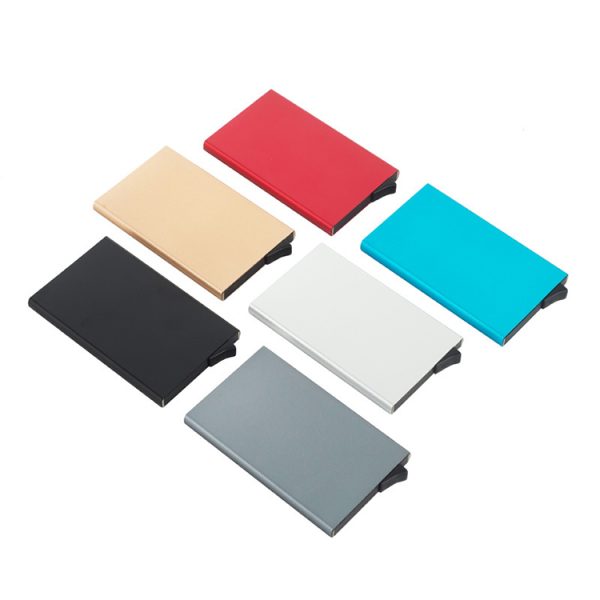
Color options for the clear coat (smoke, tinted, or clear)
-
Elastic band color and width
-
Packaging design and inserts
-
Addition of RFID-blocking layer
How We Meet These Standards at GSTAR
As a manufacturer with 14 years in the RFID wallet and card holder category, here is how we apply the benchmarks described above.
In-House CNC and Material Sourcing
We run in-house CNC machining, which gives us direct control over the slide-track tolerances discussed in Section 3. Our diamond-coated tooling is maintained to spec, and we stock both T300 and T700 carbon fiber sheets. Switching grades based on your target price point is straightforward — we quote both options so you can make an informed decision.
OEM/ODM Capabilities for Your Aviator Wallet Dupe
We handle custom design, private label, and packaging in-house. Our monthly production capacity is 300,000+ units across our wallet, key organizer, and card holder lines. Flexible MOQs mean we work with startups launching their first product as well as established brands scaling production.
Quality Assurance and Turnaround
We apply the visual and functional QC standards from Section 5 on every batch — 100% visual inspection plus functional testing on sampled units. Standard quote turnaround is 24 hours. Sample lead time is 7–10 days; production lead time is 15–30 days depending on volume and customization level.
If you are evaluating suppliers for an aviator wallet dupe carbon fiber project, request a functional sample — not just a visual one. Test the slide mechanism yourself. That is the standard we are prepared to meet.
Ordering Process: MOQ, Lead Time, and Shipping
The standard procurement timeline:
-
Inquiry and quote — 24 hours
-
Sample production — 7–10 days
-
Sample approval — Buyer confirms design and functionality
-
Pilot run — 15–20 days for 300–500 units
-
Full production — 15–30 days depending on volume
-
Shipping — 3–7 days by air, 25–40 days by sea
Certifications and Industry Standards
Our production facility maintains compliance with REACH and RoHS for materials used in wallet production. For US market entry, we can provide Prop 65 documentation. RFID-blocking claims are supported by testing per applicable standards.
Are carbon fiber wallets worth it for retail? Yes — when manufactured correctly. Carbon fiber offers a high strength-to-weight ratio and a premium look that justifies a higher retail price. For B2B buyers, the calculation depends on material grade, manufacturing quality, and target margin.
What is the difference between forged and twill-weave carbon fiber? Forged carbon uses chopped fibers in a random pattern, allowing complex 3D shapes. Twill-weave uses continuous woven fibers with a uniform pattern. For aviator-style slide wallets, twill-weave is more common because it machines precisely; forged carbon suits curved or textured top plates.
Can an aviator wallet dupe include RFID blocking? Yes, but it requires an additional shielding layer — carbon fiber itself does not block RFID. Specify this when requesting a quote; it adds $0.50–$1.50 per unit.
What is the typical MOQ? Pilot runs start at 300–500 units per design. Full production with custom branding runs 1,000–3,000 units. Some manufacturers with in-house CNC offer flexible MOQs for smaller launches.
How long does a sample take? Standard samples are ready in 7–10 days after design confirmation. Forged carbon takes longer due to mold creation. Always request a functional sample to test the slide mechanism.
What certifications are needed for export? Minimum REACH and RoHS compliance. Prop 65 for the US market. RFID-blocking claims require test reports to ASTM or ISO standards.
Can I use my own logo and packaging? Yes — laser engraving, pad printing, or metal badges are standard. Custom packaging is arranged with a separate MOQ.
Choose a full-service manufacturer if you need design support, flexible MOQs, and in-house QC. Choose a trading company only if you are confident in your own specification management and can handle quality risk remotely.
The successful aviator wallet dupe carbon fiber project depends on matching the right factory to your volume and quality requirements. Verify material grades, demand functional samples, and test the slide mechanism before committing to production.
References
-
Carbon fiber composite material properties. (2025). CompositesWorld. https://www.compositesworld.com/articles/the-markets-carbon-fiber-2025
-
REACH regulation compliance for consumer products. European Chemicals Agency. https://echa.europa.eu/regulations/reach/understanding-reach
-
RoHS Directive compliance. European Commission. https://environment.ec.europa.eu/topics/waste-and-recycling/rohs-directive_en
-
California Proposition 65 requirements. California Office of Environmental Health Hazard Assessment. https://oehha.ca.gov/proposition-65
-
RFID blocking material testing standards. ASTM International. https://www.astm.org/products-services/standards-and-publications.html