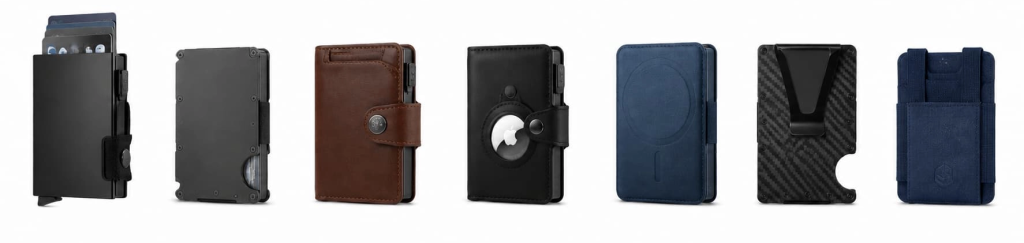
Introduction
Selecting the wrong card holder manufacturer doesn’t just cost you money — it costs you time, brand reputation, and market momentum. One shipment of 5,000 aluminum RFID pop-up card holders with inconsistent slider mechanisms or peeling leather edges can trigger Amazon de-listing, retail returns, and months of damage control.
After 14 years manufacturing card holders for global brands, wholesalers, and Amazon sellers, we’ve seen the full spectrum of factory quality — from precision operations that deliver 98%+ on-time rates to workshops cutting corners on raw materials and skipping QC entirely.
This guide provides a complete, actionable factory evaluation framework. Whether you’re sourcing aluminum RFID pop-up card holders, leather card wallets, or plastic ID cases, you’ll learn how to screen, audit, and score manufacturers remotely or on-site — before placing a single purchase order.
Why Factory Evaluation Must Happen Before Sampling: A Factory Insight
Factory Expert Insight
A European e-commerce brand once ordered 3,000 custom RFID aluminum card holders after approving a hand-picked sample. The mass production arrived with inconsistent anodizing color — some units were dark gunmetal, others almost silver. The factory had used a different aluminum alloy batch without adjusting anodizing time.
The brand spent $12,000 on returns and lost their Amazon Buy Box for six weeks. A proper pre-audit — specifically checking raw material incoming inspection records — would have prevented this entire loss.
Never skip the factory audit stage. A good sample proves nothing about mass production consistency.
The evaluation framework below is structured as a progressive filter: document screening eliminates the worst factories immediately; remote video audit weeds out medium-quality pretenders; on-site inspection confirms the final shortlist. Each stage saves you time and reduces sourcing risk.
Stage 1: Pre-Audit Document Screening — Eliminate Unqualified Factories First
Before investing time in video calls or factory visits, request these documents. Factories that can’t provide them should be eliminated immediately.
1.1 Business & Export Qualification Documents
-
Chinese Business License (营业执照): Verify the registered business scope includes “manufacturing” for hardware, leather goods, or plastic products — not just “trading” or “import/export.”
-
Export Customs Registration Record: Confirms the factory handles its own export declarations. Trading companies posing as factories cannot provide this.
-
Bank Account Name Match: The factory’s bank account name must match the business license exactly. Any mismatch suggests a middleman.
-
Past Bill of Lading (B/L) Copies: Request B/L copies showing shipments to your target market (US, EU, Australia). Real export experience matters.
1.2 Production & Quality Certificates
-
RoHS & REACH Test Reports: Mandatory for Western markets. Must cover metal, plastic, and RFID shielding fabric materials. Verify reports are current (within 1 year).
-
ISO 9001 Certificate: Not mandatory but a strong indicator for bulk orders above 5,000 units.
-
BSCI / Sedex Audit Report: Required if you supply major retail chains with social compliance requirements.
-
Raw Material Supplier Invoices: Request recent invoices for aluminum sheets, genuine leather, and PU raw materials. This proves they purchase virgin-grade materials, not recycled scrap.
1.3 Client & Product Proofs
-
OEM/ODM Custom Logo Samples: Photos or physical samples showing previous custom work for other brands.
-
Client List: Preference for international trading brands, not only local small shops.
-
Past Order Packing Photos & Third-Party Inspection Reports: SGS or Bureau Veritas pre-shipment inspection reports indicate a factory accustomed to quality accountability.
Red Flag: Any factory that hesitates or refuses to provide business license, mill certificates, or RoHS/REACH reports should be disqualified at this stage.
Stage 2: Remote Video Audit — Low-Cost Preliminary Screening
A guided live video tour reveals more than any brochure or website. Request the sales contact to walk through these areas on camera and record the footage for your team’s review.
2.1 Production Workshop Layout
-
Raw Material Storage: Look for separated zones for aluminum, leather, and plastic stock. Leather must be stored in moisture-proof conditions — visible humidity damage on stored leather is a disqualifying signal.
-
Independent Processing Lines:
-
Metal card holders: CNC cutting, polishing, laser engraving, assembly, RFID lining installation
-
Leather card holders: Cutting, stitching, embossing, edge painting
-
QC Testing Station: Must be an independent, dedicated area — not a small table beside the assembly line. This indicates whether quality control is taken seriously or treated as an afterthought.
-
Finished Goods Warehouse: Check export carton packaging area for organization and labeling clarity.
2.2 Core Equipment Verification
For metal RFID card holders, confirm the presence of:
-
CNC cutting machines (not manual cutting)
-
Automatic polishing machines (hand polishing produces inconsistent scratch patterns)
-
Fiber laser engraving machines (clean logo edges, no burning)
-
RFID shielding test equipment
-
Drop test machines for pop-up slider durability testing
For leather card holders, confirm:
-
Automatic leather cutting machines
-
High-speed sewing machines
-
Edge oil painting machines (manual brush application produces uneven edges)
2.3 Live QC Process Demonstration
Ask the factory to demonstrate real-time inspection on current production:
-
Scratch check on metal surfaces
-
Slider smoothness test (pop-up mechanism)
-
RFID signal blocking test using a card reader
-
Dimensional measurement with calibrated tools
A factory that can’t demonstrate these on a live call either doesn’t perform them or doesn’t have the equipment.
2.4 Warehouse & Packaging Standards
-
Anti-scratch protection: Individual OPP bags for each metal card holder
-
Bubble bag or foam insert for leather products
-
Export-grade hard cartons with proper shipping marks
Stage 3: On-Site Factory Audit — For Orders ≥5,000 Units or Long-Term Partnerships
For significant commitments, an on-site audit is irreplaceable. Use this six-module scoring system to objectively compare factories.
Module A: Production Capacity & Lead Time Reliability
| Evaluation Point | Benchmark |
|---|---|
| Metal card holder daily output | ≥8,000 pcs/day (mid-size factory) |
| Leather card holder daily output | ≥3,000 pcs/day |
| Labor stability | Low turnover rate; request monthly worker headcount records |
| Spare production line capacity | Can expand output for rush orders |
| Past delivery record | On-time delivery rate ≥98% |
Module B: Raw Material Control
This module separates premium manufacturers from budget workshops.
| Material | Quality Standard | Red Flag |
|---|---|---|
| Aluminum | Virgin 6061 alloy | Recycled aluminum (bends easily, scratches heavily) |
| Leather | Top-grain genuine leather / standard PU | Recycled leather with chemical odor |
| RFID Lining | Adequate aluminum foil fabric thickness | Thin lining causing signal leakage |
| IQC Records | Material test record for every batch | No incoming inspection records |
Module C: Craftsmanship & Finishing Standards
Metal Card Holder Critical Checkpoints:
-
No sharp burrs on edges after polishing
-
Pop-up slider operates smoothly without sticking or jitter
-
Laser logo clean and crisp — no burnt edges
-
RFID shielding fully blocks card signals (verify on-site with card reader)
-
Surface anodizing uniform — no color variation between units
Leather Card Holder Critical Checkpoints:
-
Even stitching with no loose threads
-
Smooth edge paint with no peeling
-
No pungent chemical odor from low-quality PU glue
Module D: Complete QC System
Three-stage inspection is mandatory for consistent quality:
-
IQC (Incoming Quality Control): Raw material testing upon receipt
-
IPQC (In-Process Quality Control): In-line spot checks every 30 minutes during production
-
FQC (Final Quality Control): 100% visual inspection plus random functional testing before packing
Request physical inspection logs. Factories without written QC records carry high defect risk. Acceptable defect rate benchmark: ≤1.5% for mass shipments.
Module E: OEM/ODM Customization Capability
| Capability | What to Verify |
|---|---|
| In-house design team | Can create new mold drawings, develop new styles |
| Self-owned mold workshop | No outsourcing = lower cost, faster modifications |
| Logo processes | Laser engraving, silk print, UV print, embossing |
| Color matching | Pantone color sample development ability |
Red Flag: All molds outsourced; cannot adjust sizes or structures quickly.
Module F: Export & Compliance Risk Control
-
Separate export packaging area with clear shipping mark labeling
-
Standard “Made in China” marking on each product and carton (required by US/EU customs)
-
Chemical test reports current (valid within 1 year)
-
No counterfeit brand samples visible in workshop (customs seizure risk)
-
Can issue Certificate of Origin / RCEP certificate for tariff discounts
Stage 4: Sample Testing — Final Verification Before Trial Order
Pre-production samples must pass these four tests:
| Test Category | Method | Pass Standard |
|---|---|---|
| Appearance | Visual inspection under D65 light | No scratches, color uniform, logo clear |
| Function | 1,000 open/close cycles on pop-up slider | Smooth operation maintained |
| Durability | 1-meter drop test onto concrete | No functional deformation |
| Material Odor | Olfactory check | No pungent chemical smell (critical for EU) |
If samples fail any test, either eliminate the factory or demand complete rework before proceeding.
Stage 5: Factory Scoring Template — 100-Point System
| Evaluation Module | Full Score | Pass Standard |
|---|---|---|
| Export & business documents | 15 | Complete, valid export records |
| Raw material & workshop equipment | 20 | Virgin materials, complete production lines |
| QC three-stage inspection system | 20 | Complete written inspection logs |
| Product craftsmanship & sample test | 20 | Zero critical defects in sample testing |
| OEM/ODM customization & mold capacity | 10 | In-house mold & design team |
| Compliance, delivery & risk control | 15 | On-time delivery ≥98%, full certs |
Scoring Interpretation:
-
≥85 points: Long-term core supplier
-
70–84 points: Secondary supplier; place small trial order first
-
<70 points: Disqualify and stop engagement
Stage 6: Red Flags — Immediate Disqualification Triggers
-
Cannot provide factory business license (only trading company documents)
-
All production outsourced; no own workshop or equipment
-
No independent QC station and no written inspection records
-
Refuses video or on-site audit; only sends stock photos
-
Ultra-low quotation without RoHS/REACH test reports
-
Samples are excellent but mass production uses downgraded materials
-
Unstable delivery with frequent delay excuses
-
Cannot customize logo or adjust product structure
Efficient Evaluation Workflow Summary
-
Document Screening → Eliminate ~40% of unqualified suppliers
-
Remote Video Audit → Filter remaining suppliers; identify top 30%
-
Pre-Production Sample Testing → Shortlist 2–3 qualified factories
-
On-Site Audit (for large orders) → Finalize 1 primary + 1 backup supplier
-
Small Trial Order → Verify mass production consistency before bulk commitment
Conclusion
A structured factory evaluation process transforms supplier selection from guesswork into a repeatable, objective system. By starting with document screening, progressing through remote video audits, and reserving on-site visits for serious commitments, you save time while reducing sourcing risk.
The 100-point scoring template and red flag checklist give your procurement team clear criteria for comparing factories — no more relying on sales promises or polished sample quality alone.
Looking for a pre-verified, audit-ready card holder manufacturer?
At Gstar Technology, we welcome factory audits — remote or on-site. With 14 years of OEM manufacturing experience, in-house CNC machining, RFID shielding testing equipment, and documented three-stage QC processes, we supply global brands, wholesalers, and Amazon sellers with aluminum RFID card holders, leather card wallets, and custom plastic card cases.
Request our factory audit pack today: business license, ISO 9001, RoHS/REACH reports, and past B/L samples — ready within 24 hours.
FAQ
1. How do I verify if a card holder supplier is a real factory or a trading company?
Check the business license for “manufacturing” in the registered scope, verify the bank account name matches the license, and request a live video walkthrough of the production floor. Trading companies cannot show active production lines.
2. What certificates should a qualified card holder manufacturer have?
At minimum: RoHS and REACH test reports for all materials. ISO 9001 is strongly recommended for bulk orders. BSCI or Sedex is required if you supply major retail chains.
3. What’s an acceptable defect rate for bulk card holder orders?
Industry benchmark for precision metal and leather card holders is ≤1.5%. Factories with documented three-stage QC (IQC, IPQC, FQC) typically achieve ≤0.5%.
4. How can I test RFID shielding performance remotely?
Request a video demonstration using a contactless card reader and an active RFID card. The factory should show the reader detecting the card, then the card inserted into the holder, and the reader showing no signal.
5. Should I visit the factory in person for small orders under 5,000 units?
For small orders, a thorough remote video audit plus pre-production sample testing is usually sufficient. Reserve on-site visits for orders above 5,000 units or long-term partnership commitments.
References
-
ISO 9001:2015 Quality Management Systems – https://www.iso.org/standard/62085.html
-
European Commission REACH Regulation – https://ec.europa.eu/growth/sectors/chemicals/reach_en
-
RoHS Directive – https://ec.europa.eu/environment/topics/waste-and-recycling/rohs-directive_en
-
SGS Product Inspection Services – https://www.sgs.com
-
Bureau Veritas Certification & Audit – https://www.bureauveritas.com
-
BSCI (amfori) Social Compliance – https://www.amfori.org/content/amfori-bsci
-
Sedex Responsible Sourcing – https://www.sedex.com
-
U.S. Customs and Border Protection – https://www.cbp.gov
-
International Chamber of Commerce Incoterms® – https://iccwbo.org
-
World Customs Organization HS Classification – http://www.wcoomd.org