

Views: 247 Author: Gstar Technology Publish Time: 08-10-2026 Origin: Site


Content Menu
● Why Slim Wallets for Mens Remain a Strong Product Category
● What Men Actually Need From a Slim Wallet
>> Slimness Must Work at Real Carry Capacity
>> Materials Define the Brand Experience
● RFID Blocking: Make Accurate Claims, Not Vague Promises
>> A Better RFID Product-Testing Process
● How to Design a Best-Selling Slim Wallet Collection
>> Build Around Three Customer Profiles
>> Product Features That Improve Conversion
● OEM Slim Wallet Development: From Idea to Repeatable Production
● Why Partner With Gstar for Slim Wallets for Mens
>> What is the best card capacity for a slim wallet for men?
>> Are metal slim wallets more durable than leather wallets?
>> Do RFID-blocking wallets block every wireless signal?
>> Can I add my logo to a slim wallet?
>> What should I send an OEM factory before requesting a quote?
>> Which slim wallet design is best for online sales?
At Gstar Technology (Shenzhen) Co., Ltd., we develop and manufacture slim wallets for mens brands that want to combine compact everyday carry, reliable card protection, and distinctive product design. With more than 13 years in RFID wallets, card holders, leather wallets, key organizers, graded-card protectors, and related accessories, our team understands that a slim wallet must do more than look minimal—it must perform well through thousands of real daily uses.
A successful men's slim wallet should feel natural in a front pocket, provide fast card access, remain secure when full, and represent a brand's standards in materials and finish. For brand owners, wholesalers, and e-commerce sellers, the opportunity is not simply to sell "a thin wallet." It is to create a dependable everyday-carry product with a clear customer promise.
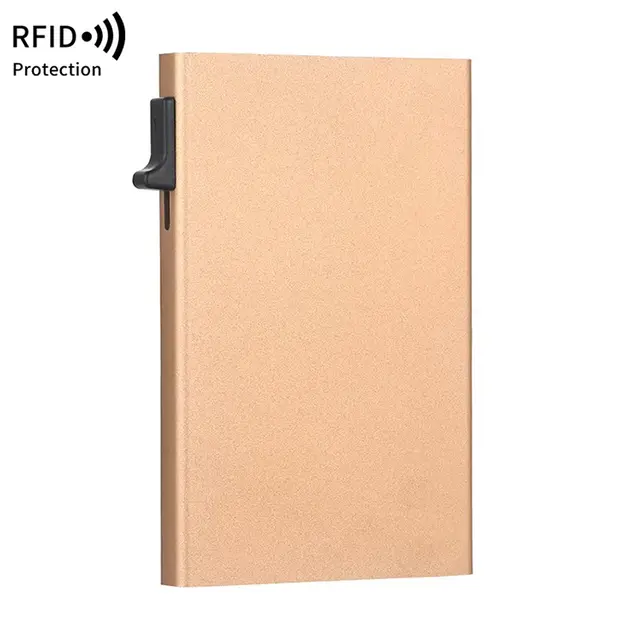
Men increasingly expect everyday accessories to be compact, functional, and intentional. A traditional bifold can become uncomfortable when overloaded with old receipts, loyalty cards, and rarely used documents. A slim wallet encourages customers to carry only what they need: primary payment cards, identification, transit cards, and a limited amount of cash.
Independent buying guides consistently separate slim wallets into practical subcategories: card sleeves, leather slim bifolds, aluminum card holders, cash-clip wallets, and quick-access ejector designs. Capacity, cash-carry preference, and material are central purchase considerations.
For a brand, this makes the category highly adaptable. One product platform can be customized into several retail-ready versions:
- RFID-blocking aluminum wallets for customers who prefer structure and modern styling
- Leather slim wallets for men for a classic, premium visual identity
- Minimalist card holders for card-first and front-pocket carry
- Money clip wallets for customers who still carry folded banknotes
- Hybrid metal-and-leather wallets for brands seeking both technical and traditional appeal
- Personalized slim wallets with laser logos, embossed marks, custom packaging, or limited-edition finishes
The strongest product ranges do not force every customer into one format. They offer a recognizable design language across multiple carry habits.
A slim profile alone does not create a good user experience. From a manufacturing perspective, the real challenge is balancing thickness, retention, access, durability, and visual quality.
A wallet may look exceptionally thin when empty, but customers judge it when it contains six, eight, or more cards. Elastic tension, plate spacing, leather construction, stitch placement, and cash-strap geometry all affect how the product performs at normal capacity.
A practical slim wallet for mens design should answer these questions before production:
1. How many cards can it hold securely without becoming difficult to use?
2. Can a customer remove one card quickly with one hand?
3. Does the wallet stay stable when it carries only one or two cards?
4. Can it accommodate cash without creating excess bulk?
5. Will its edges remain comfortable during daily front-pocket carry?
Expert manufacturing insight: Product samples should always be evaluated at minimum, average, and maximum stated card capacity. Testing only a full wallet can conceal poor retention at low capacity; testing only an empty wallet can conceal edge pressure and difficult card access.
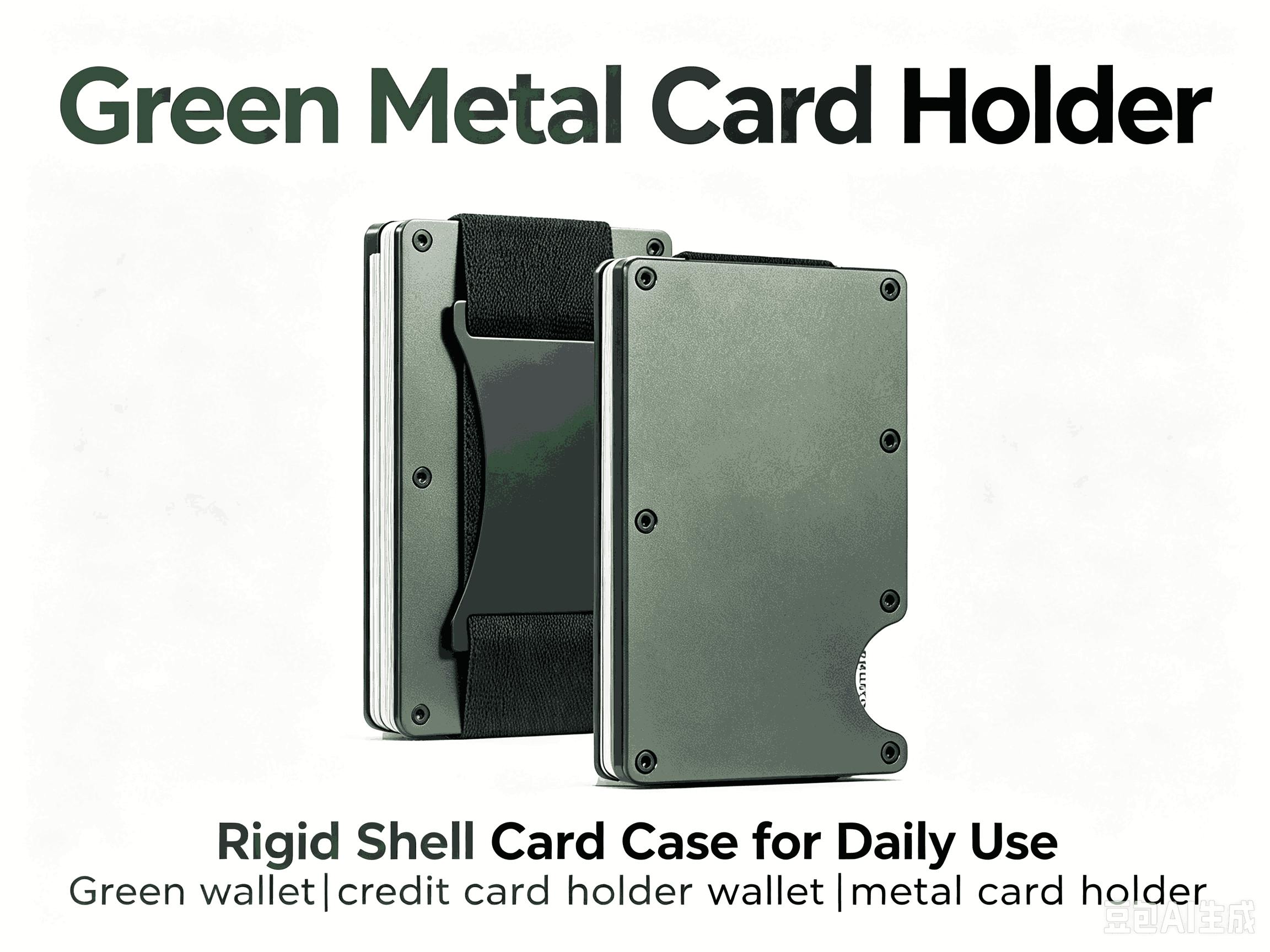
Material selection affects the wallet's look, weight, perceived value, and long-term wear pattern. It should match the intended customer and selling price.
| Material | Best suited to | Core strengths | Key design consideration |
|---|---|---|---|
| Aluminum | Modern RFID card holders | Light, rigid, durable, highly customizable | Surface treatment must resist visible wear |
| Titanium | Premium EDC and performance brands | Strong, corrosion-resistant, premium feel | Higher material and processing costs |
| Carbon fiber | Technical or automotive-inspired brands | Lightweight, visual texture, premium appeal | Quality of weave and edge finishing matter |
| Genuine leather | Classic men's accessory brands | Warm feel, natural aging, gift appeal | Thickness and stitching affect bulk |
| PU leather | Value-led and fashion collections | Broad color options, consistent finish | Must be selected for abrasion and flex performance |
| Wood or hybrid materials | Gift and lifestyle collections | Distinctive storytelling and appearance | Requires stable bonding and controlled finishing |
At Gstar, our OEM and ODM capabilities cover metal, leather, and plastic wallet solutions, supported by in-house CNC machining and customization options for global brands and sellers. This matters because design consistency depends on production control: clean edges, accurate logo placement, stable mechanisms, and repeatable color matching should not be treated as afterthoughts. [gstartec]
RFID protection is a common reason shoppers search for slim wallets for mens. However, brands should communicate this feature with precision. Contactless payment cards, passports, transit cards, and some access credentials commonly operate in the high-frequency 13.56 MHz range, while other RFID systems may use different frequencies.
A properly designed RFID-blocking wallet can help shield applicable contactless cards from being read through the wallet material. But it should never be presented as a complete solution to every type of fraud or every RFID frequency. Responsible product pages should explain what is tested, what frequency range is relevant, and how the wallet is intended to be used.
For a brand launching an RFID wallet, we recommend a simple but meaningful verification process:
1. Define the claim. State whether the product is designed to block 13.56 MHz NFC/HF signals or another specific range.
2. Test actual production materials. A prototype with different metal thickness or lining is not sufficient evidence for final production.
3. Test multiple card positions. Check cards closest to the exterior and cards in the center stack.
4. Compare inside and outside results. A contactless card should be readable outside the wallet and not readable through the intended shielding area.
5. Keep product-copy language specific. Avoid blanket statements such as "blocks all RFID signals" unless independently verified for every claimed condition.
Consumers should also use practical payment-security habits, including monitoring account activity and being alert for physical tampering at payment terminals. Honest product communication builds more trust than exaggerated security language.
A wallet brand often loses sales not because the product is poor, but because the collection is too narrow or the product positioning is unclear. The ideal collection gives customers an easy way to identify their preferred carry style.
1. The minimalist card carrier
This customer carries four to six cards and rarely uses cash. A compact card holder or thin leather sleeve is usually the best fit. Focus on light weight, quick access, and clean styling.
2. The modern everyday-carry customer
This customer wants a secure metal wallet, RFID protection, flexible card capacity, and a cash strap or clip. Aluminum and carbon-fiber slim wallets are strong candidates.
3. The traditional wallet user upgrading to slim
This buyer values leather, visible craftsmanship, and room for several cards plus bills. A slim bifold or leather-and-metal hybrid can make the transition easier.
Consumer-oriented testing and buying guides also emphasize matching wallet capacity to the cards people actually use rather than selecting a larger wallet to retain clutter. That insight is highly useful for product descriptions: sell the benefit of a lighter, simpler carry rather than only listing dimensions.
Use your product page to explain a feature's real benefit:
- Expandable elastic band: Helps accommodate varying card quantities
- Money clip or cash strap: Gives customers a cash option without a full bill compartment
- Quick-access notch: Reduces friction when removing frequently used cards
- Rounded metal corners: Improves pocket comfort and perceived finishing quality
- RFID-blocking construction: Supports a focused contactless-card protection message
- Replaceable elastic components: Extends product service life and supports sustainability messaging
- Custom logo treatment: Turns a practical wallet into a branded gift or promotional item
- Premium packaging: Increases giftability and helps justify a stronger retail price
At Gstar Technology, we place manufacturing feasibility at the beginning of product development, not at the final stage. Our stated factory capabilities include a team of more than 200 employees, an 8,000-square-meter facility, and production capacity exceeding 300,000 pieces per month. For growing brands, that scale can support both initial development and later replenishment planning.
Step 1: Define the commercial brief
Clarify your target customer, retail price, sales channel, expected order quantity, main markets, desired materials, and required certifications or testing.
Step 2: Choose the product architecture
Select a card-holder, Ridge-style metal wallet, leather wallet, money-clip wallet, or hybrid structure. Decide whether a cash strap, clip, pull tab, ID window, or ejector mechanism is necessary.
Step 3: Develop the visual identity
Confirm logo placement, finish, colors, packaging, and any special graphic elements. Laser engraving, UV printing, embossing, and customized packaging can each produce very different brand impressions.
Step 4: Review samples under real conditions
Load cards. Insert cash. Put the wallet in a pocket. Check the feel of edges. Test logo accuracy, card retention, opening force, surface consistency, and packaging presentation.
Step 5: Approve specifications before mass production
A detailed approved sample and specification sheet reduce avoidable production variations. This should define materials, dimensions, finish, color references, logo size, packaging, and inspection standards.
Step 6: Prepare launch assets
Build product pages around the customer's problem: pocket bulk, card organization, fast access, gifting, or contemporary style. Avoid generic descriptions that could apply to any wallet.
Gstar Technology (Shenzhen) Co., Ltd. is positioned to support brands that need more than a generic wallet supplier. We manufacture RFID wallets, slim wallets, leather wallets, key organizers, graded-card holders, bumper guards, and related accessories for brands, wholesalers, online sellers, and retailers.
Our approach is built around customization, production practicality, and long-term product value. Whether your objective is a cost-effective aluminum card holder, a premium leather slim wallet, a gift-ready branded collection, or a differentiated EDC product line, we can help move the concept from requirement to production.
Ready to create your next slim wallet collection? Contact Gstar with your target market, material preference, estimated quantity, logo file, and reference design. Our team can help you identify the most suitable structure, customization route, and packaging solution for your brand.
For most daily users, a practical target is four to eight cards. This range keeps the wallet compact while covering common payment, ID, transit, and access-card needs. Higher-capacity designs should use retention systems that remain secure when partially loaded.
Metal wallets generally offer stronger resistance to compression and shape change. Leather wallets offer a softer feel and can develop a distinctive patina over time. The best choice depends on whether your brand prioritizes technical durability, classic style, or a hybrid of both.
No. RFID performance depends on the frequency, wallet construction, card location, and testing conditions. Brands should identify the specific frequency range their product is designed to block instead of making unlimited security claims.
Yes. OEM branding options can include laser engraving, embossing, UV printing, custom colorways, logo hardware, branded gift boxes, sleeves, and instruction cards. The best method depends on the material and the desired retail positioning.
Send product reference images or drawings, preferred materials, dimensions, color requirements, logo artwork, packaging requirements, estimated order quantity, and destination market. The more complete the product brief, the more accurate the quotation and sample plan can be.
A metal RFID wallet with visible card access, a cash strap or clip, clear capacity information, and strong lifestyle photography is often suitable for e-commerce. However, the best format depends on your target customer, retail price, and brand identity.
1. Gstar Technology (Shenzhen) Co., Ltd. — [Custom Card Holder Manufacturer and OEM/ODM Company Profile] [gstartec]
2. Consumer Reports — [Best Slim Wallets] [consumerreports]
3. Bull Sheath Leather — [10 Best Minimalist Wallets for Men] [bullsheathleather]
4. Telaeris — [RFID Blocking Wallets: How Well Do They Work?] [telaeris]
5. U.S. Federal Trade Commission — [Watch Out for Card Skimming at the Gas Pump] [consumer.ftc]
6. Google Search Central — [Creating Helpful, Reliable, People-First Content] [developers.google]
Hot Tags: China, Global, OEM, private label, manufacturers, factory, suppliers, manufacturing company


