

Views: 230 Author: Gstar Technology Publish Time: 07-24-2026 Origin: Site


Content Menu
● How to Find Your Wallet: A Practical Guide from Gstar Technology
● Why Wallets Get Lost So Easily
● How to Find Your Wallet Fast
>> 1. Pause and reconstruct the last 15 minutes
>> 2. Check the most likely places first
>> 3. Search your "transition zones"
>> 4. Call the places you visited
>> 5. Freeze cards if the wallet is unaccounted for
● What To Do in the First 30 Minutes
● Expert View: How Design Can Help You Find a Wallet Faster
● What Users Say About Better Wallet Habits
● How to Prevent Losing Your Wallet Again
>> Consider a wallet with a tracker-friendly format
● Product Design Lessons for Brands and Distributors
● CTA
● FAQ
>> 1. What should I do first if I lose my wallet?
>> 2. How do I find my wallet in my house?
>> 3. Should I cancel my cards immediately?
>> 4. What places should I call if I lost my wallet outside?
>> 5. How can I avoid losing my wallet again?
>> 6. Are RFID wallets helpful?
Losing a wallet can feel like losing your identity, your routine, and your peace of mind at the same time. At Gstar Technology (Shenzhen) Co., Ltd., we design and manufacture RFID wallets, leather wallets, ultra-thin wallets, key organizers, card holders, and related OEM products for global brands, so we understand one thing very well: a great wallet is not just about storage, but about control, security, and everyday convenience.
If you are wondering how to find your wallet, the best approach is to stay calm, retrace your last actions, search strategically, and act quickly if your cards may be exposed. In this article, we combine practical search steps, user feedback, and product-level insights to help you find a missing wallet faster and avoid the same problem in the future.
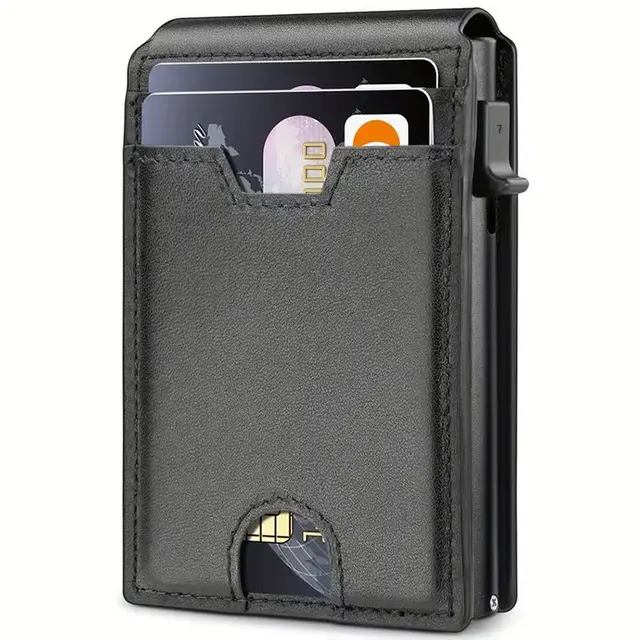
A wallet is one of the most frequently moved items in daily life. You take it out for payments, keep it on restaurant tables, move it between bags, coat pockets, cars, desks, and home surfaces, and often place it somewhere "temporary." That temporary place is usually where it disappears.
The most common reason people lose a wallet is not forgetfulness alone. It is habit inconsistency. If your wallet does not have one fixed home, your brain has to store too many possibilities. That slows down memory and makes the search harder.
When people ask how to find your wallet, the answer is usually not "search harder." It is "search smarter."
Do not start by tearing apart the whole house. Sit down and mentally replay the last time you remember using the wallet. Think about:
- Where you paid.
- Whether you sat down after that.
- Which bag, coat, or car seat you used.
- Whether you took anything else out at the same time.
This step matters because lost-wallet searches fail when people search randomly instead of following the trail.
Look in the places your wallet most often goes:
- Front pockets.
- Jacket pockets.
- Backpack or tote bag.
- Car seat gaps.
- Center console.
- Nightstand, dresser, or entryway table.
- Sofa cushions and laundry piles.
One of the strongest search habits is to prioritize probable locations before impossible ones.
Wallets are commonly lost during movement, not while standing still. Check:
- The place where you changed clothes.
- The table near the door.
- The spot where you unpacked your bag.
- The checkout counter area.
- The place where you sat down right after arriving home.
These transition zones are easy to overlook because they feel ordinary.
If you were in a restaurant, gym, store, office, hotel, taxi, or rideshare, call them immediately. Give them:
- Your name.
- The time you were there.
- A short description of the wallet.
- Your contact information.
The sooner you call, the better your chances, especially if someone already turned it in.
If your wallet contains payment cards, ID, transit cards, or anything sensitive, act fast. If you cannot locate it quickly, contact your card issuer and freeze or block the cards. This protects you from unauthorized use while you continue searching.
Your phone may help you narrow the timeline. Review:
- Payment alerts.
- Ride history.
- Store receipts.
- Calendar entries.
- Location history, if enabled.
These clues often reveal the exact place and time your wallet was last used.

A successful wallet search is mostly about order.
1. Stop and breathe.
2. Replay the last time you used the wallet.
3. Check the most likely pockets, bags, and surfaces.
4. Search the car if you used it recently.
5. Call every place you visited.
6. Freeze cards if the wallet is still missing.
7. Continue with a room-by-room search only after the obvious places are checked.
This sequence saves time and reduces panic. It also helps you avoid searching the same area twice.
From a product perspective, the easiest wallet to find is the one that is harder to misplace and easier to identify. That is why modern wallet design has shifted toward thin profiles, RFID protection, key attachments, and visual simplicity.
At Gstar Technology, we see strong demand for:
- RFID wallets for added data protection.
- Ultra-thin wallets that fit more consistently in one pocket.
- Leather wallets with a clear structure.
- Key organizers that reduce loose pocket clutter.
- Card holders and wallet formats that make daily carrying more predictable.
A wallet that is too bulky, too crowded, or too similar to everything else in your bag is easier to overlook. A more structured design helps people build a stable routine.
Many users who switch to a slimmer or better-organized wallet say the same thing: they stop losing track of it as often. They also report:
- Less pocket bulge.
- Faster access to cards.
- Fewer receipts and unnecessary items.
- More confidence when traveling.
- Easier daily carry in work and casual settings.
The pattern is clear. When a wallet has a purpose-built layout, people treat it more intentionally. That alone reduces loss risk.
If you already found it, take five minutes and set up a better system now.
Choose one home for your wallet:
- A tray near the door.
- A specific bag pocket.
- A desk drawer.
- A bedside organizer.
A wallet should have a default landing spot every time you come home.
Do a quick wallet cleanout:
- Remove old receipts.
- Remove expired cards.
- Keep only daily-use essentials.
- Reduce duplicate membership cards.
The lighter the wallet, the less likely it is to be misplaced.
Before leaving any place, check the same three items:
- Phone.
- Keys.
- Wallet.
This simple habit is one of the most effective prevention tools.
Some users prefer wallets that are easier to pair with compact trackers or that have a layout designed for more visible storage. If you design or source products for a retail line, this is a strong category to explore.
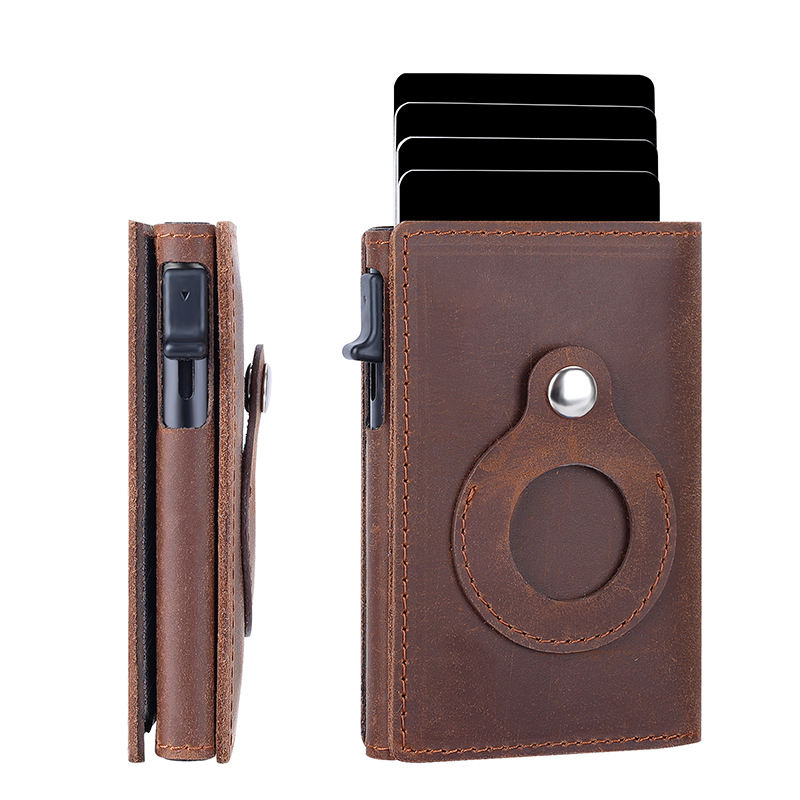
For brands and wholesalers, a wallet is not only a fashion product. It is a behavior product. Its structure affects how people carry it, where they place it, and how often they lose it.
If your audience wants better wallet usability, consider these features:
- RFID blocking.
- Slim construction.
- Strong stitching and durable materials.
- Easy-to-see card positions.
- Compact everyday carry size.
- OEM customization for brand identity.
A good wallet solves a daily problem silently. That is what makes it valuable.
If your brand is developing RFID wallets, slim leather wallets, card holders, or key organizers, Gstar Technology (Shenzhen) Co., Ltd. can support OEM and ODM customization for global markets. A better wallet design can improve daily usability, reduce loss risk, and strengthen your product story at the same time.
Start by retracing the last place you remember using it, then check the most likely pockets, bags, and surfaces before expanding your search.
Check transition zones first, such as the entryway, couch, bedside table, laundry area, car, and any place you changed clothes or unpacked your bag.
If you cannot find the wallet quickly and it contains payment cards, freeze or block the cards as soon as possible to reduce financial risk.
Call restaurants, shops, gyms, hotels, rideshare companies, offices, and any place you visited after the last time you remember having it.
Keep it in one fixed location, remove clutter, use a simple leave-home checklist, and choose a slim wallet design that fits your routine.
RFID wallets can help protect certain cards from unauthorized scanning, and they may also support a more organized carry system.

1. Rogue Industries, "7 Ways To Find Your Lost Wallet"
https://www.rogue-industries.com/blogs/news/7-ways-to-find-your-lost-wallet
2. The Southern Trapper, "Wallet organization tips for men"
https://www.thesoutherntrapper.com/blogs/news/wallet-organization-tips-for-men
3. Gstar Technology (Shenzhen) Co., Ltd., company profile and product overview
https://www.gstartec.com/
https://www.gstartec.com/company-news.html
https://www.tradewheel.com/co/gstar-technology-shenzhen-co-ltd-1746065/
4. Andar, "Lost Wallet: 13 Crucial Steps to Take"
https://www.andar.com/blogs/blog/return-lost-wallet
5. The Open Suitcase, "Lost Your Wallet? Here's What to Do"
https://www.theopensuitcase.com/lost-wallet-things-to-do/
Hot Tags: China, Global, OEM, private label, manufacturers, factory, suppliers, manufacturing company


