11 min read
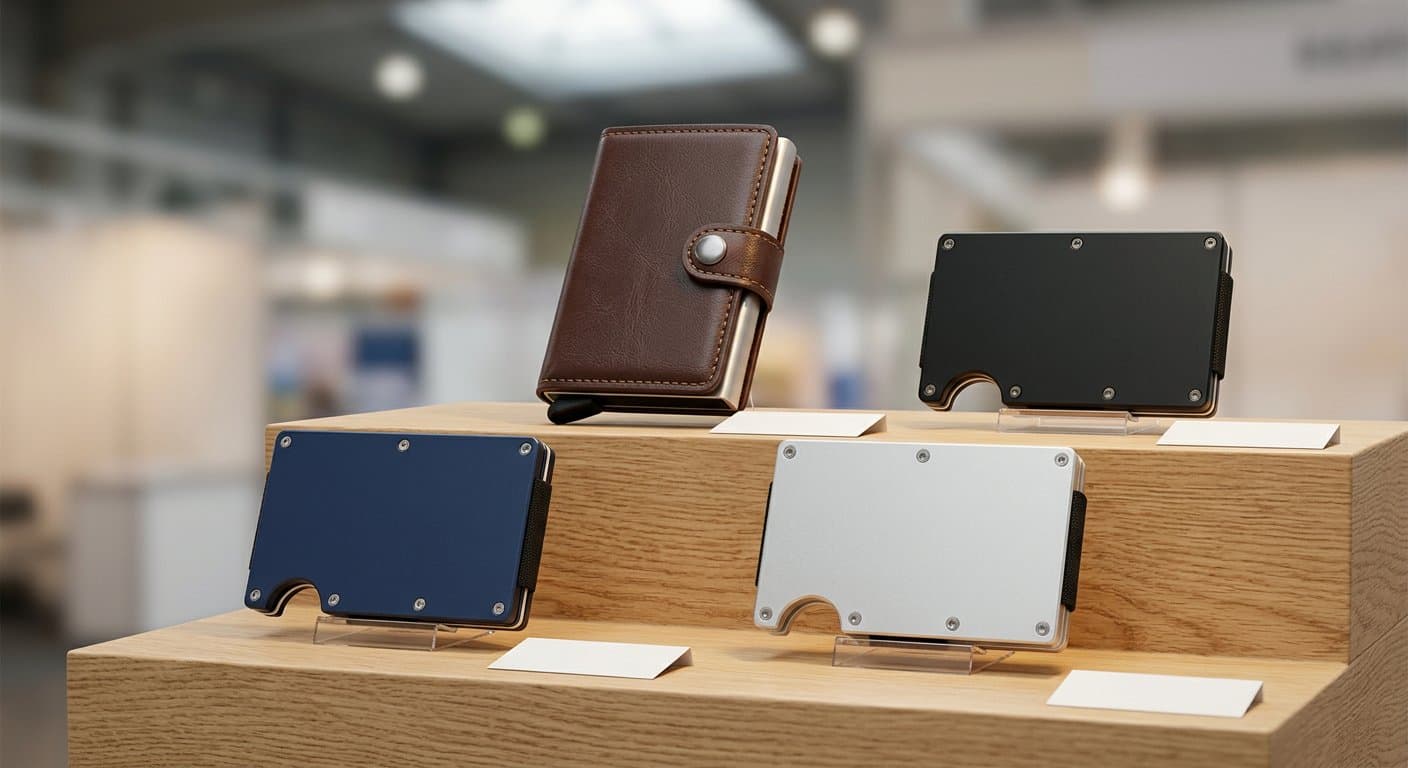
A procurement manager for a European accessory brand once told me their hardest lesson: the wallet that won awards at a trade show failed within three months of retail because the RFID layer delaminated inside the card slots. Nobody tests for that in a showroom. The “best wallet” is not a single product. It is a convergence of material science, manufacturing discipline, and honest quality control. For a B2B buyer, identifying the best wallet means understanding what separates a product that survives the market from one that generates returns and chargebacks.
This guide provides a manufacturer-level framework for evaluating wallet categories, materials, and suppliers—written from the factory floor perspective, not the marketing department.
Understanding Wallet Types and Applications
The direct answer: The best wallet depends entirely on the end-user’s carrying habits, security needs, and aesthetic preferences—no single design wins across all categories.
The wallet market has fragmented into distinct use-case categories, each with different engineering priorities. A buyer sourcing for an outdoor retailer needs different specifications than one supplying corporate gifts.
Everyday Carry (EDC) Wallets
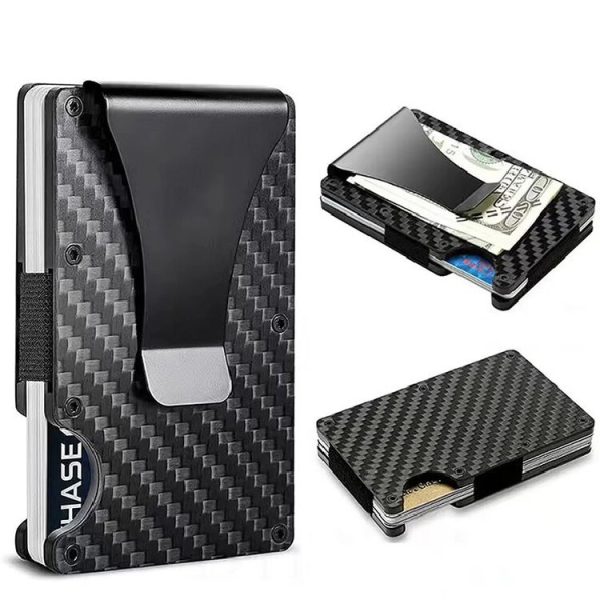
The EDC segment prioritizes rapid access and ruggedness. These wallets face daily pocket pressure, drops, and frequent card removal. Key specifications include:
-
Card retention force between 3–5 kg to prevent accidental drops
-
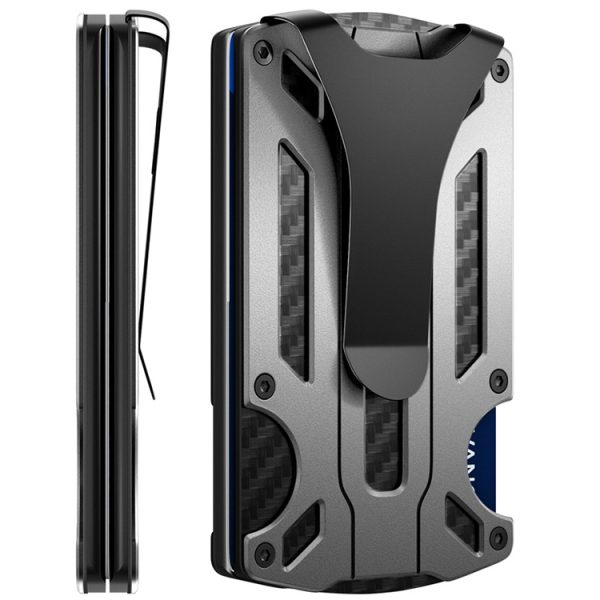
Impact-resistant frames for users who sit on their wallet
-
Quick-draw mechanisms (thumb slots, pull-tabs, or elastic bands)
Travel and Security Wallets
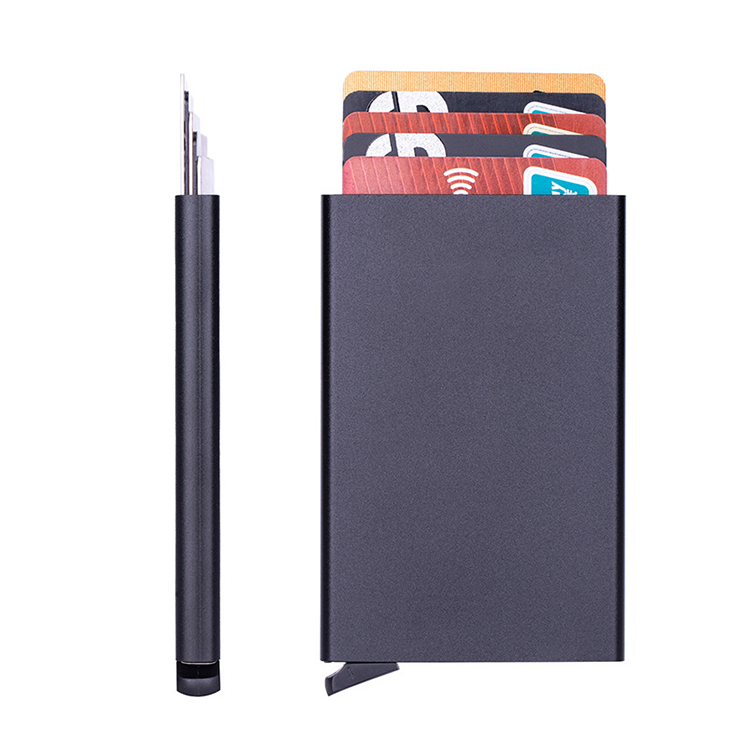
Travel-focused wallets emphasize RFID protection and passport compatibility. The RFID-blocking layer is not a marketing feature; it is a functional barrier that must cover all card slots without gaps. Buyers should verify protection across the entire frequency spectrum used by contactless payment systems.
Minimalist and Thin Wallets
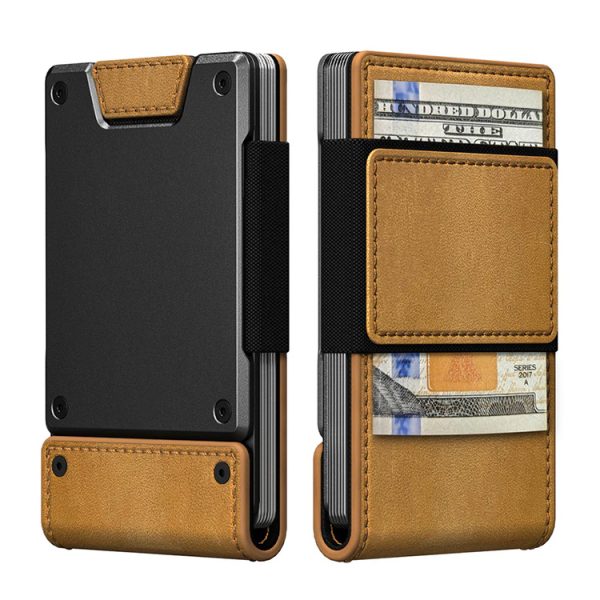
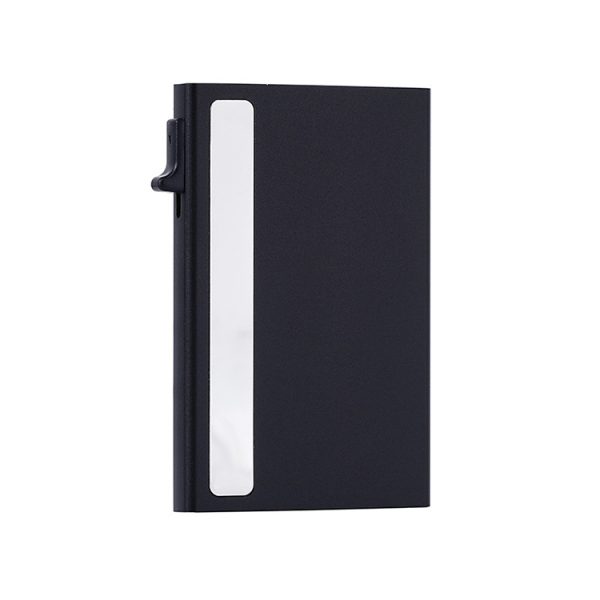
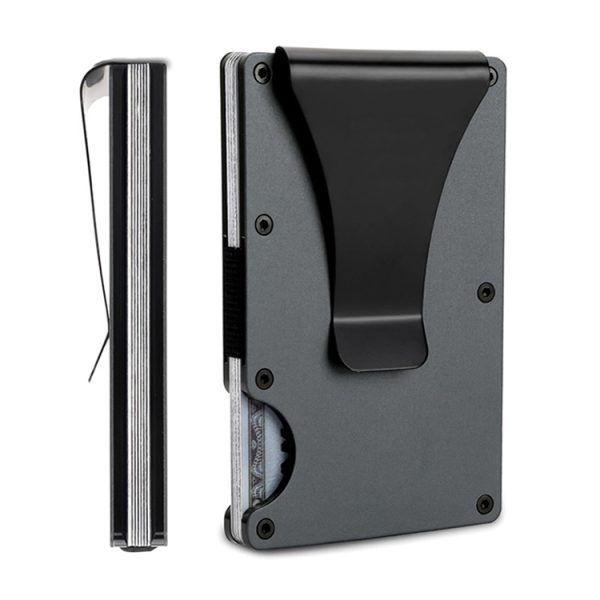
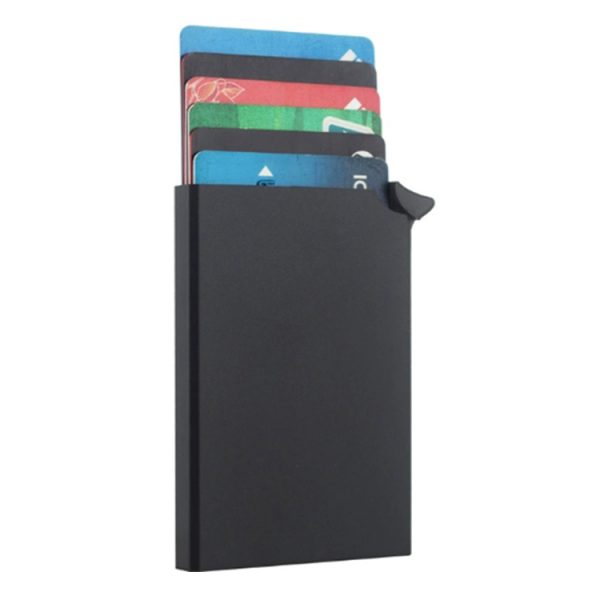
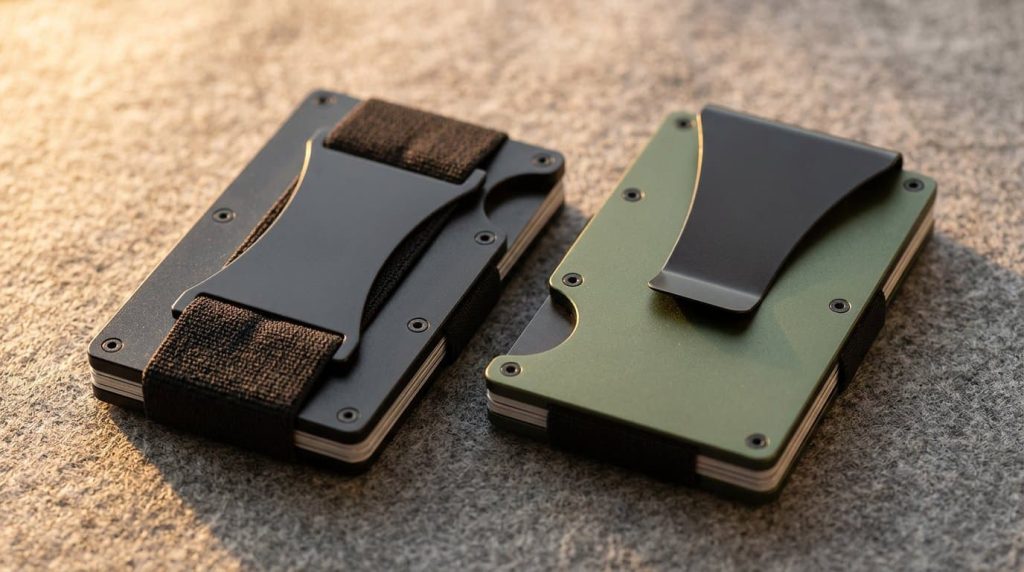
The thin wallet category demands a profile under 10 mm while holding 4–8 cards. This requires precision manufacturing—tolerances below 0.3 mm separate a smooth-sliding card mechanism from a frustrating one. CNC-machined aluminum frames dominate this segment because injection-molded plastics cannot achieve the same thin-wall structural integrity.
Smart Wallets
Smart wallets integrate Bluetooth tracking or wireless charging. These are complex electromechanical products requiring:
-
Injection-molded housings with precise internal tolerances for electronics
-
Battery compartments that survive flexing without contact failure
-
Certification for wireless charging (Qi standard) if applicable
Wallet Materials and Construction: What Affects Quality
The direct answer: Material selection determines 70% of a wallet’s perceived quality and long-term durability; the remaining 30% depends on construction precision and finishing.
Full-Grain vs. Bonded Leather
Full-grain leather uses the complete hide layer, developing a patina over years of use. Bonded leather contains leather fibers mixed with adhesives—it peels within months. For B2B buyers, the distinction appears in pricing: full-grain costs 3–5 times more per square foot. Retail price points below $25 typically indicate bonded leather or split-grain at best.
Aluminum Alloys
The dominant metal for premium wallets is aluminum 6061-T6. This aerospace-grade alloy offers:
-
Weight reduction of 40% compared to stainless steel
-
Excellent anodizing compatibility for scratch-resistant finishes
-
Machinability that allows complex internal geometries
Buyers should verify the alloy grade in writing. Some manufacturers substitute cheaper alloys (6063 or ADC12 cast aluminum) that bend under pressure and show poor anodizing results.
CNC Machining vs. Casting
CNC machining removes material from a solid billet, producing consistent wall thickness and precise tolerances. Casting pours molten metal into a mold, which can create micro-porosity—weak points that fail under stress. A wallet frame that flexes daily needs machined construction, not cast.
RFID Protection Technology
RFID-blocking works through metallic shielding that attenuates electromagnetic fields at 13.56 MHz (the frequency used by contactless payments). Effective blocking requires:
-
A continuous conductive layer across the entire wallet surface
-
No gaps exceeding 5 mm between shielding sections
-
Shielding material thickness appropriate for the frequency (typically aluminum foil or metalized fabric)
The failure point in cheap wallets is stitching holes that pierce the shielding layer, creating antenna paths that leak signals.
Wallet Quality and Performance Factors
The direct answer: Wallet quality is measurable through material thickness, stitching density, hardware durability, and finishing consistency—not brand reputation.
Stitching Standards
Hand-stitched wallets use waxed thread with 4–6 stitches per centimeter. Machine-stitched wallets may use the same density but with weaker tension control. For leather wallets, examine:
-
Stitch holes: should be clean, not torn
-
Thread material: bonded nylon outperforms polyester in abrasion resistance
-
Edge finishing: painted edges should be smooth, without visible layering
Hardware Durability
Snap buttons, rivets, and closure mechanisms are common failure points. A snap button should withstand 10,000+ open/close cycles without losing retention force. Buyers can request cycle testing data—reputable manufacturers perform this in-house.
Anodizing Quality
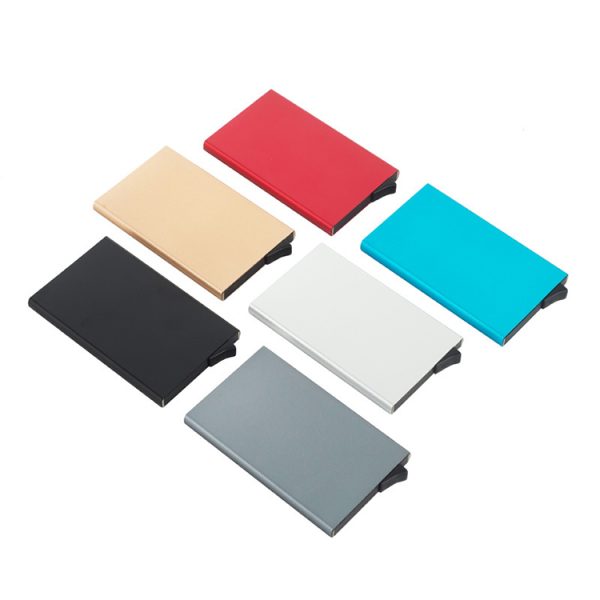
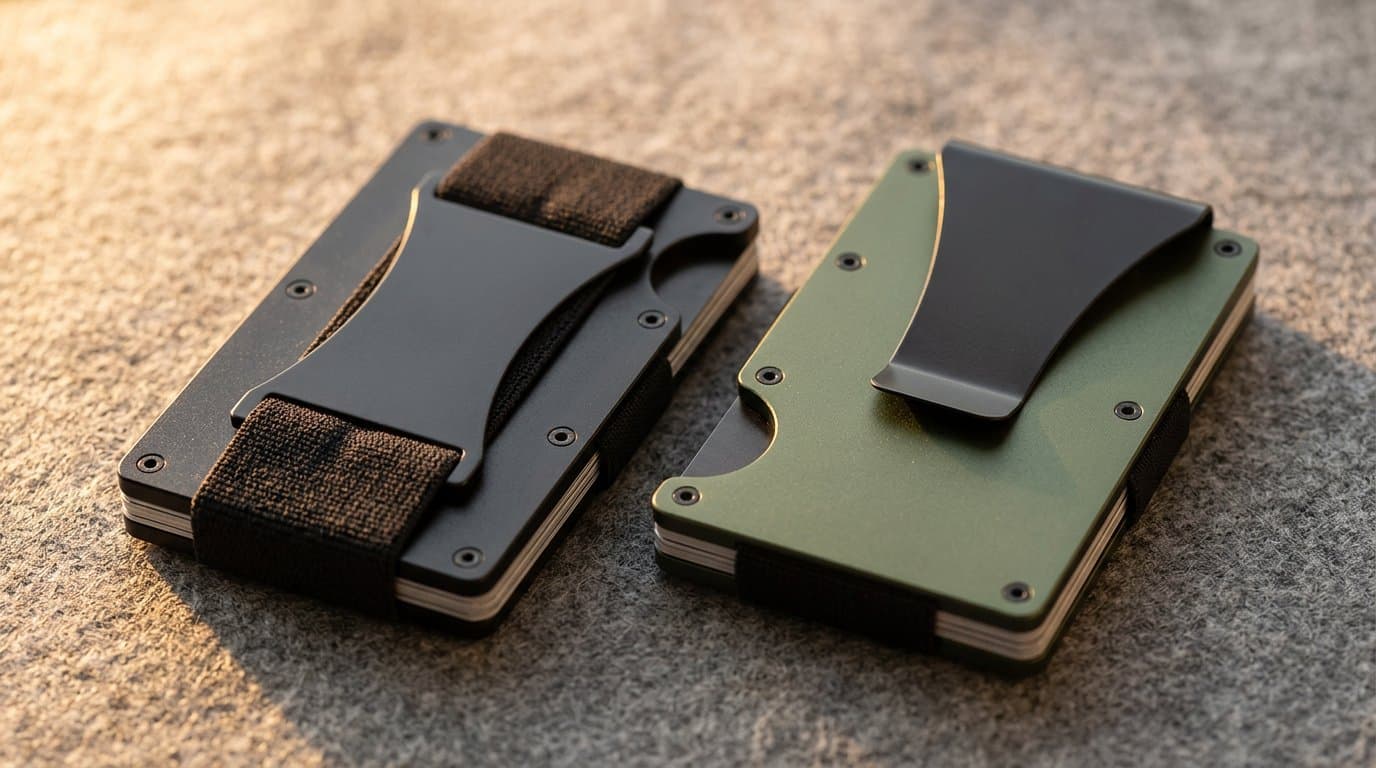
For aluminum wallets, anodizing thickness directly correlates with scratch resistance. Industry standard is 10–15 microns (ASTM B244). Thinner anodizing (under 8 microns) allows the underlying metal to show through within weeks of pocket use.
The Imperfect Insight
Premium materials do not automatically create a premium wallet. A CNC-machined aluminum frame with poor internal edge deburring will shred cards or pants pockets regardless of the alloy quality. Conversely, a well-constructed bonded leather wallet can outperform a poorly made full-grain product in real-world use. Material selection must be evaluated alongside construction quality—never in isolation.
How to Evaluate Wallet Quality: Key Specifications
The direct answer: Buyers should evaluate wallets against measurable specifications: card capacity, weight, thickness, material grade, and RFID attenuation levels.
Specification Checklist for Product Sourcing
| Specification | Premium Standard | Acceptable Standard | Reject Below |
|---|---|---|---|
| Material (Metal) | 6061-T6 Aluminum | 6063 Aluminum | Cast zinc alloy |
| Material (Leather) | Full-grain | Top-grain | Bonded leather |
| RFID Blocking | ISO 14443 compliant | Tested at 13.56 MHz | No test data |
| Card Capacity | 8–12 cards | 6 cards | Less than 4 |
| Weight (Metal) | 40–70 g | 70–90 g | Over 100 g |
| Stitching Density | 5–6 stitches/cm | 4 stitches/cm | Under 3/cm |
Requesting and Verifying Test Reports
Do not accept verbal assurances. Request:
-
RFID test reports from accredited laboratories (or in-house test data with methodology)
-
Material certificates showing alloy composition
-
Anodizing thickness measurements (can be verified with a coating thickness gauge)
-
Cycle testing reports for moving parts
A supplier who cannot provide documentation is either not testing or hiding failures.
Wallet Testing Standards and Certifications
The direct answer: Physical wallets fall under general merchandise safety regulations and material compliance standards—RFID wallets additionally require electromagnetic shielding verification.
Material Compliance
For EU and US markets, wallets must comply with:
-
REACH (EU chemical safety regulation)—restricts hazardous substances in materials
-
RoHS (Restriction of Hazardous Substances)—relevant if any electronic components are present
-
Proposition 65 (California)—requires warnings for certain chemical exposures
Buyers should request compliance declarations and, for larger orders, third-party test reports.
RFID Testing
The relevant standard for contactless payment cards is ISO 14443 (proximity cards) and ISO 15693 (vicinity cards). Effective RFID-blocking wallets should attenuate signals at 13.56 MHz below the level required to trigger a card read. Testing methods vary, but a simple field test with an RFID reader and a payment card at 5 cm distance is a practical first check.
Quality Management Systems
Suppliers certified to ISO 9001 demonstrate documented quality management processes. This certification does not guarantee product quality, but it indicates the factory has traceable procedures for inspection, corrective action, and continuous improvement.
How to Evaluate Wallet Suppliers
The direct answer: A reliable wallet supplier demonstrates in-house production control, transparent quality processes, and realistic lead times—not just attractive samples.
Manufacturing Capability Assessment
The critical question: which processes does the supplier control internally, and which are outsourced?
| Process | In-House Advantage | Outsourced Risk |
|---|---|---|
| CNC Machining | Tight tolerance control, faster iteration | Communication delays on spec changes |
| Anodizing | Consistent color and thickness | Batch variation between suppliers |
| Leather Cutting | Better hide utilization, lower waste | Quality variation between batches |
| Assembly | Direct QC oversight | No visibility into workmanship |
Questions to Ask Before Ordering
-
What is your monthly production capacity for this product type?
-
Which production steps are completed in-house?
-
Can you provide a process flow chart from raw material to finished goods?
-
What is your defect rate target and actual performance over the last 12 months?
-
How do you handle quality disputes on bulk shipments?
-
Can you show me your inspection checklist for this product category?
Avoid Suppliers Who…
-
Cannot name the specific alloy grade or leather type they use
-
Quote prices significantly below market average without explaining how
-
Promise lead times under 15 days for custom tooling
-
Have no quality documentation or test reports available
-
Cannot articulate their quality control process without reading from a script
What to Look for in a Wallet Manufacturer
The direct answer: Choose a manufacturer whose production capabilities match your product complexity—a minimalist card holder requires different manufacturing expertise than a smart wallet with electronics.
Matching Manufacturer Capability to Product Complexity
| Product Type | Required Manufacturing Expertise | Recommended Supplier Profile |
|---|---|---|
| Simple card holder | Leather cutting, stitching, or basic metal forming | Small to mid-size factory with craft skills |
| CNC aluminum wallet | Precision machining, anodizing, assembly | Factory with in-house CNC and finishing lines |
| RFID-blocking wallet | Shielding integration, testing capability | Factory with RFID testing equipment |
| Smart wallet | Injection molding, electronics assembly, battery handling | Factory with electronics manufacturing experience |
The OEM/ODM Decision
OEM (Original Equipment Manufacturing) means producing a supplier’s existing design with your branding. This is the fastest path to market—typically 2–4 weeks for production after sample approval.
ODM (Original Design Manufacturing) involves co-developing a new design. This requires:
-
Longer development timelines (4–8 weeks for samples)
-
Higher upfront investment in tooling
-
Stronger intellectual property protection (NDA and design ownership agreements)
Supply Chain Red Flags
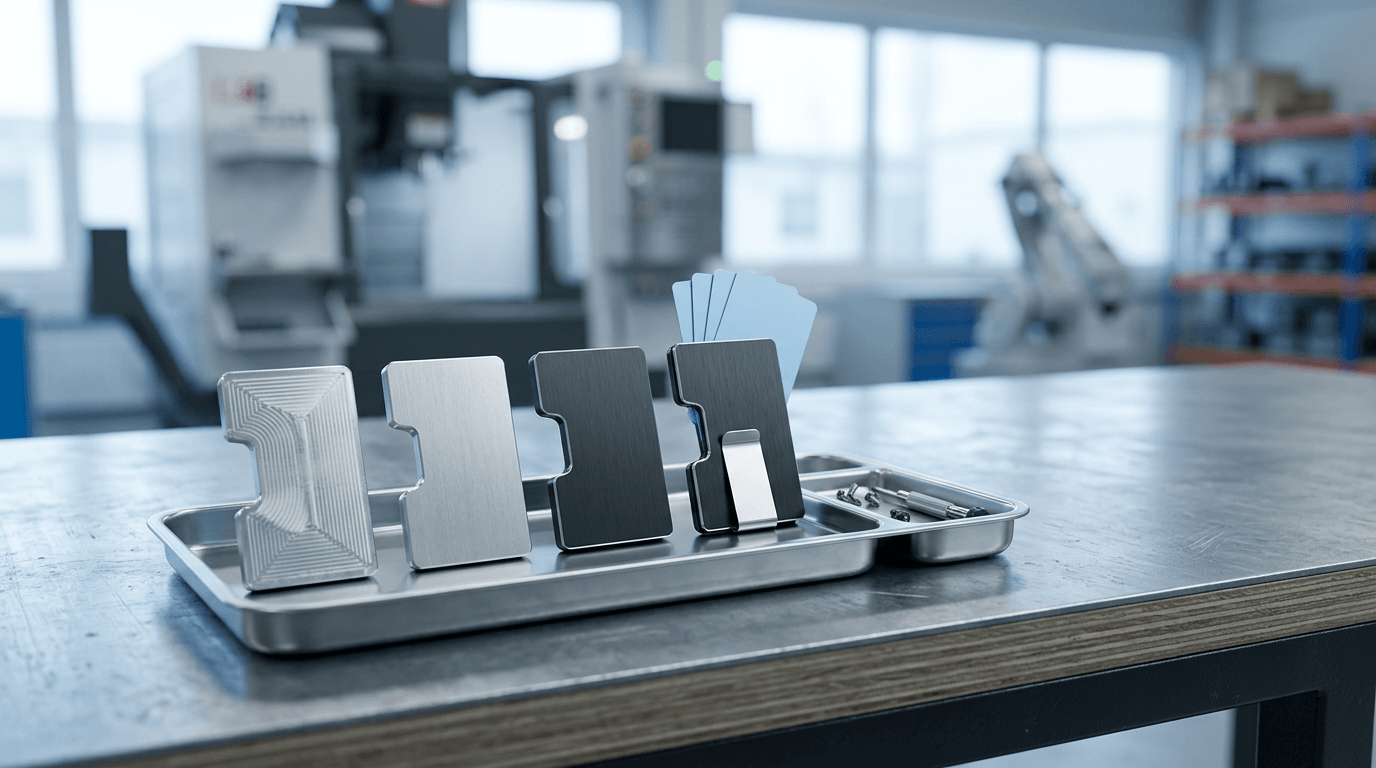
A supplier who claims to handle everything but outsources critical steps creates coordination risks. If the anodizing is done by a third party, color matching becomes difficult. If the RFID layer is sourced separately, shielding effectiveness may vary. Vertical integration—even partial—reduces these variables.
How to Evaluate the Best Wallet for Your Product Line
The direct answer: Align wallet selection with your target customer’s priorities—security for travel buyers, slimness for urban commuters, durability for outdoor users.
| Customer Segment | Priority Features | Price Band (Retail) | Recommended Category |
|---|---|---|---|
| Urban commuters | Slim profile, quick card access | $30–$60 | Aluminum minimalist |
| Frequent travelers | RFID blocking, passport slot | $40–$80 | RFID travel wallet |
| Outdoor enthusiasts | Rugged construction, weather resistance | $35–$70 | Nylon or metal EDC |
| Corporate gifts | Premium materials, customization options | $50–$150 | Leather or hybrid |
| Value-conscious | Basic functionality, acceptable materials | $15–$25 | Simple card holder |
Choose a minimalist aluminum wallet if your customers carry fewer than eight cards and prioritize pocket comfort. Choose a full-featured RFID wallet if your customers travel frequently or live in high-contactless-payment regions. Choose a classic leather bifold if your target demographic skews traditional.
Our Wallet Manufacturing Approach
The framework above describes what a capable wallet manufacturer should control. As a manufacturer with 14 years of production experience, our approach to meeting these standards starts with vertical integration. We operate in-house CNC machining lines, which means tolerance control stays within our hands rather than depending on external suppliers. When a brand specifies a 0.2 mm tolerance on a card slot, we machine it to that spec and verify it with digital calipers on the production floor.
Our RFID wallets are assembled with shielding layers that undergo signal attenuation testing before bulk production begins. We do not assume the material works because the supplier said so—we verify each batch. This is the difference between a wallet that blocks RFID on paper and one that blocks it in practice.
For brands needing differentiation, we support full OEM and ODM development. Our monthly production capacity exceeds 300,000 units, which means we can scale from a pilot run of 500 pieces to a container order without changing production processes. Sample turnaround typically takes 7–15 days, allowing buyers to validate designs before committing to bulk production.
Quality control follows international AQL standards, with inspection protocols aligned to retail and marketplace requirements. We provide material compliance documentation and test reports to support EU and US market entry.
If you are evaluating wallet suppliers against the criteria in this guide, we welcome you to compare our capabilities firsthand. Contact our team to discuss your project requirements and request a detailed capability statement.
Common Buyer Questions
What is the best wallet to use?
The best wallet matches the user’s priorities: RFID protection for travelers, slim construction for daily commuters, or smart features for tech adopters. For B2B buyers, the best wallet is the one that satisfies your target customer’s needs while meeting your retail price point and quality standards.
Which wallet brand is best?
The market is fragmented across hundreds of brands, many sourcing from the same OEM manufacturers. Leading brands win through design and marketing rather than proprietary manufacturing. For private labels, the brand becomes yours—the critical factor is supplier capability, not brand heritage.
What kind of wallets do billionaires use?
High-net-worth individuals typically favor understated, high-craftsmanship wallets. The common thread is material quality, precise construction, and discreet branding—whether in full-grain leather or precision-machined metal. The visible marker is not the logo but the finishing quality.
What is the minimum order quantity for custom wallets?
Stock designs with custom logo printing may start at 100–300 units. Fully custom designs requiring new tooling typically need higher MOQs—often 500–1,000 units depending on complexity. Always request a detailed quotation to understand MOQ thresholds for your specific design.
How do I verify RFID blocking actually works?
Request test reports showing signal attenuation at 13.56 MHz, ask for the shielding material specification, and conduct a field test with an RFID reader and a contactless payment card. Reputable suppliers will provide documentation and encourage verification.
How long does wallet production take?
Typical timelines: sample production 7–15 days, bulk production 20–45 days, plus shipping. Lead times depend on design complexity, material availability, and order volume. Custom tooling adds 2–4 weeks for mold creation.
Decision Guide
Choose a thin aluminum wallet if you serve urban professionals who carry fewer than eight cards and prioritize pocket comfort. The manufacturing complexity is higher, but so is the perceived value and retail margin.
Choose a full-grain leather wallet if your customers value traditional aesthetics and long-term patina development. Material costs are higher, but the product commands premium pricing with less manufacturing complexity.
Choose an RFID-blocking wallet if your market includes frequent travelers or regions with high contactless payment adoption. This feature has become a baseline expectation rather than a differentiator.
Choose a hybrid wallet (metal frame with elastic or leather elements) if you need a balance between slimness, capacity, and visual appeal. Hybrids offer design flexibility that pure metal or pure leather cannot achieve.
References
-
ISO 14443 Identification cards — Contactless integrated circuit cards. International Organization for Standardization. https://www.iso.org/standard/73598.html
-
ISO 15693 Identification cards — Contactless vicinity cards. International Organization for Standardization. https://www.iso.org/standard/73599.html
-
ASTM B244 Standard Test Method for Measurement of Thickness of Anodic Coatings on Aluminum. ASTM International. https://www.astm.org/b0244-09r21.html
-
REACH Regulation (EC) No 1907/2006. European Chemicals Agency. https://echa.europa.eu/regulations/reach/understanding-reach
-
ISO 9001 Quality Management Systems. International Organization for Standardization. https://www.iso.org/iso-9001-quality-management.html