12 min read
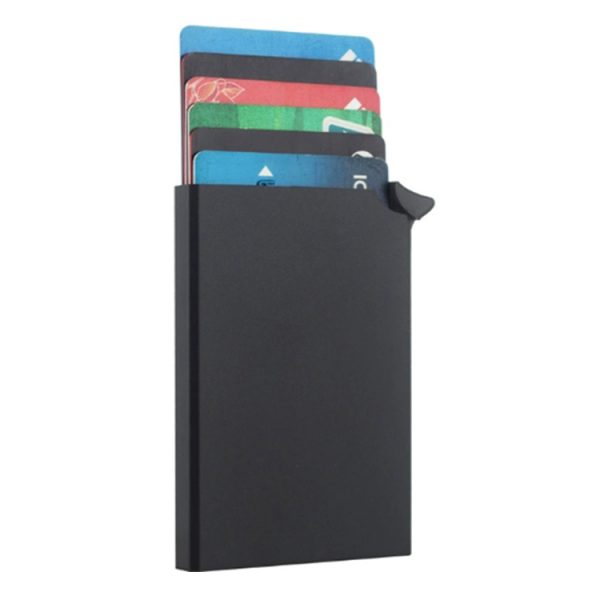
When a procurement manager sends a request for quotation for 5,000 RFID-blocking aluminum wallets, the first question is rarely about the wallet itself. It is about the logo. The brand mark — whether laser-engraved, screen-printed, or embossed — is where the unit price starts to shift in ways that are not always transparent.
Most buyers budget for the base product and treat branding as an afterthought. That is a mistake. Logo customization is not a single line item. It is a variable cost component influenced by at least four distinct levers, each with its own pricing logic. Understanding these levers before you negotiate can mean the difference between a profitable margin and a silent margin killer.
How much does logo customization add to a wallet’s unit cost?
Logo customization typically adds $0.30 to $3.00 per unit depending on the method (screen printing vs. metal embossing), the material of the wallet (leather, metal, or plastic), and the complexity of the design. For a standard RFID-blocking aluminum wallet, a simple laser engraving may add $0.40–$0.80 per unit, while a multi-color metal emblem can add $2.00–$3.00. The cost is offset by higher Minimum Order Quantities (MOQs) — the larger the order, the lower the per-unit customization fee.
The Four Cost Levers of Logo Customization
Every logo customization quote breaks down into four primary cost drivers. If you understand how each one behaves, you can predict pricing before the supplier sends the invoice.
Customization Method: Engraving vs. Printing vs. Embossing
The method you choose determines the base cost of customization. Each technique has different setup requirements, consumable costs, and labor intensity.
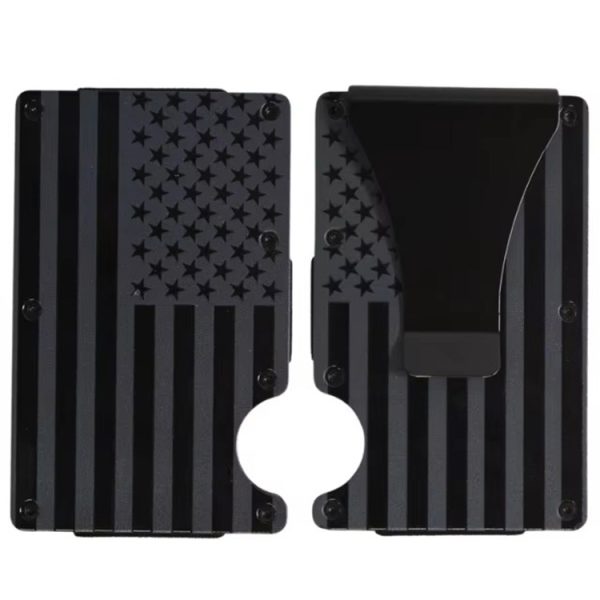
Laser Engraving — The standard for metal wallets and some leather goods. A focused laser beam removes the surface layer to create a permanent mark. Setup cost is minimal because there are no physical tools to manufacture — just a digital file. The per-unit cost lands between $0.30 and $0.80. It is the most cost-effective method for aluminum and stainless steel wallets.
Screen Printing — Common for flat plastic or leather surfaces. A mesh screen transfers ink onto the material. Each color requires a separate screen, and each screen costs $50–$200 to produce. Per-unit cost runs $0.50–$1.50, with the higher end reserved for multi-color designs.
Metal Emblems / Badges — A physical metal badge attached to the wallet or integrated into the mold. This delivers the highest perceived value but requires separate manufacturing steps: stamping the emblem, finishing it, and attaching it. Labor costs push the per-unit price to $1.50–$3.00.
Debossing / Embossing — A metal die presses the logo into leather. Debossing creates an indented mark; embossing raises the surface. The die costs $100–$400 as a one-time expense. Per-unit cost is $0.40–$1.00. Heat stamping with foil adds another layer of cost for a metallic finish.
One insight that surprises many buyers: the cheapest method is not always the best choice. A screen-printed logo on a wallet that will be carried daily for three years will fade and chip. A laser engraving on the same wallet will still be legible. The customization method should match the expected lifespan of the product, not just the upfront cost.
Material Type of the Wallet
The wallet’s base material dictates which customization methods are even possible.
Aluminum / Metal Wallets — Laser engraving is the most efficient option. Paint filling — where engraving is done first and then color is applied into the recess — adds $0.50–$1.00 per unit because it requires an additional drying and cleaning cycle.
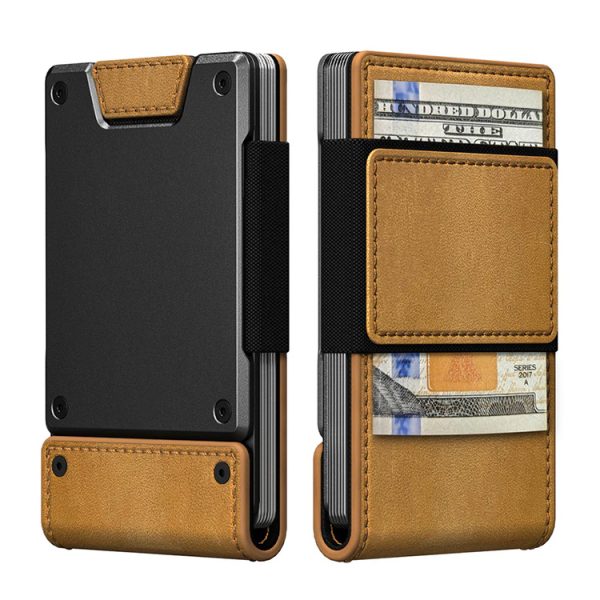
Leather Wallets — Heat stamping with a brass die is the industry standard. Full-grain leather takes the stamp well; bonded leather can tear or bubble. Foil stamping (metallic leaf pressed into the leather) adds premium appeal but costs more per unit due to the consumable foil.
Plastic / ABS Wallets — Pad printing and UV printing are the common methods. Plastic surfaces need corona treatment or a primer layer before ink adheres properly. This pre-treatment step adds processing time and cost.
Design Complexity and Placement
A single-color logo in one position is the baseline. Every deviation adds cost.
-
Multi-color logos require multiple screens or passes. A three-color logo costs roughly 2–3 times more than a single-color logo.
-
Exterior placement costs more than interior placement. Exterior logos require precise alignment and higher surface preparation. Interior printing reduces cost by 20–40%.
-
Full-surface or edge-wrapping designs increase machine time significantly. The wallet must be repositioned or the design split into multiple passes.
The most cost-efficient approach is a single-color logo in a standard placement — the front face or the top corner. It saves money and still delivers brand visibility.
Order Volume and Setup Amortization
Fixed costs — screens, dies, jigs, programming time — are spread across the total order quantity. This is where volume creates leverage.
| Order Quantity | Setup Cost ($200) | Per-Unit Setup Share |
|---|---|---|
| 500 units | $200 | $0.40/unit |
| 2,000 units | $200 | $0.10/unit |
| 5,000 units | $200 | $0.04/unit |
| 10,000 units | $200 | $0.02/unit |
A $200 setup fee represents 13% of a $1.50 per-unit customization cost at 500 units. At 5,000 units, it is less than 3%. Buyers who need small quantities should negotiate to have setup fees waived or credited against a larger future order — many factories agree to this to secure the initial contract.
Unit Cost by Material Tier: A Quick Reference
To put the customization cost in context, here is how the base wallet price and customization expense interact across material tiers.
Entry-Level Plastic Wallets
Base cost: $1.50–$3.00 per unit. Customization adds 15–30%. A $0.50 pad-printing charge on a $2.00 wallet is a 25% increase. This is why promotional plastic wallets often ship with no logo or a simple one-color print.
Mid-Range Aluminum RFID Wallets
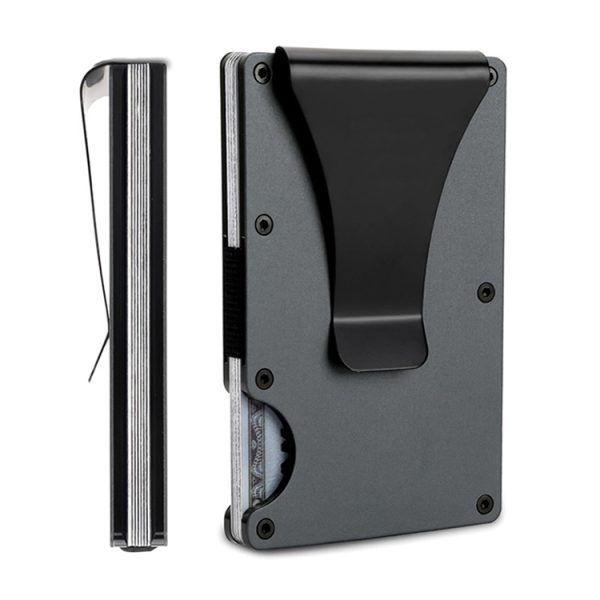
Base cost: $4.00–$8.00 per unit. Customization adds 5–15%. A $0.60 laser engraving on a $6.00 wallet is only 10%. Aluminum wallets absorb customization costs more gracefully because the base price is higher.
Premium Leather Wallets
Base cost: $8.00–$15.00 per unit. Customization adds 3–10%. A $1.00 heat stamp on a $12.00 wallet is just over 8%. Leather wallets have the lowest percentage impact, but the absolute cost still matters for margin calculations.
The “Sweet Spot” for Cost Efficiency
Here is the practical rule: match the customization method to the wallet’s lifespan. A $2.00 promotional plastic wallet with a $2.50 metal emblem is a waste of budget — the emblem costs more than the product it decorates. A $10.00 leather wallet with a $0.50 interior stamp is under-branded for the price point.
Sample Cost vs. Mass Production Cost: What to Expect
Sample pricing confuses many first-time buyers. A sample of a customized wallet can cost $50–$150, which seems absurd when the bulk unit price is $6. The gap exists because samples carry the full weight of setup costs that bulk orders amortize.
Why Samples Are Expensive
When a factory produces one sample, the screen or die must still be manufactured. The machine must be programmed. The operator must handle the piece manually. None of these costs are spread across thousands of units. The sample price reflects the true cost of the setup, not the cost of the item.
How Sample Costs Translate to Bulk Pricing
A typical sample fee structure looks like this: base unit cost ($6–$10) plus tooling fee ($100–$200 for a die or screen) plus a handling fee. Many factories deduct the sample fee from the first bulk order. This is standard practice, but you must ask for it explicitly — it is rarely offered unprompted.
Questions to Ask Before Paying for a Sample
-
Is the sample produced with the same method you will use for mass production? A 3D-printed prototype of a metal wallet tells you nothing about how laser engraving will look on the final product.
-
Will the tooling cost be waived or credited on a confirmed bulk order?
-
How many revisions are included in the sample fee? Industry standard is 2–3 rounds.
OEM vs. ODM: Which Saves More on Logo Customization?
The distinction between OEM and ODM is not just terminology — it changes your cost structure.
OEM (Custom Logo on Existing Design)
You select an existing wallet design from the factory’s catalog. The factory applies your logo, adjusts colors, and modifies packaging. You leverage existing molds and production lines, which keeps costs low. Customization is limited to surface treatment. Per-unit logo cost: $0.30–$1.00.
OEM is the right choice when you have a clear product vision and a tight budget. You sacrifice exclusivity — other brands may sell the same base design — but you gain speed and cost efficiency.
ODM (Custom Design and Manufacturing)
You commission a wallet designed from scratch around your specifications. This includes new molds, engineering work, and multiple prototyping rounds. The logo can be integrated into the product structure — embossed into the mold itself, for example — rather than applied afterward. Upfront costs are significant: $2,000–$10,000 in mold costs, plus $0.50–$2.00 per unit for integrated branding.
ODM is justified when the product itself is part of your brand identity — when the shape, structure, or material choices differentiate you from competitors.
| Factor | OEM (Logo on Existing Design) | ODM (Custom Design) |
|---|---|---|
| Upfront tooling cost | Minimal ($50–$400) | High ($2,000–$10,000) |
| Per-unit logo cost | $0.30–$1.00 | $0.50–$2.00 |
| Design exclusivity | Low | High |
| Lead time | 2–4 weeks | 6–12 weeks |
| Best for | Tight budgets, quick launches | Brand-defining products |
How to Evaluate Wallet Suppliers for Custom Logo Work
Choosing a supplier for custom logo wallets requires a different checklist than buying blank products. You are not just evaluating product quality — you are evaluating process capability.
The Procurement Evaluation Framework
1. Verify the customization method is in-house. Factories that outsource laser engraving or screen printing add a markup and lose quality control. Ask whether the equipment is on-site and ask to see it during a factory audit.
2. Request a pre-production sample with your exact logo. A sample with a generic logo or no logo is meaningless. The interaction between your artwork and the material determines the final result.
3. Confirm the rejection threshold. In metal wallet production, a 2–3% defect rate is acceptable. For logo work, the defect rate should be lower — a misaligned logo makes the whole unit unsellable. Ask about the factory’s internal quality control pass rate for customized orders.
4. Check the lead time for tooling. A die for leather embossing takes 5–7 days to manufacture. A screen for printing takes 2–3 days. These timelines affect your overall production schedule.
5. Demand a transparent cost breakdown. A reliable supplier separates tooling costs, per-unit processing costs, and packaging costs. If a quote lumps everything into one line, you cannot evaluate where your budget is going.
Questions to Ask Before Ordering
-
What is the tooling cost, and is it credited on bulk orders?
-
What is the per-unit customization cost at my target order quantity?
-
Can you provide a sample with my exact logo before mass production?
-
What is your defect rate for customized orders?
-
How do you handle logo alignment on the production line?
-
What is the lead time for tooling creation and mass production?
Avoid Suppliers Who…
-
Quote a flat per-unit price without asking about your logo design. Complexity drives cost. A supplier who ignores this is either overcharging you or planning to cut corners.
-
Cannot show you the actual equipment. If the factory says they handle laser engraving but cannot show you the machine, they are likely subcontracting.
-
Guarantee zero defects. Every production run has a natural defect rate. A zero-defect guarantee is a red flag — the supplier either does not inspect properly or is lying.
Choose A if… Choose B if…
Choose OEM if: You need a quick launch, have a limited budget, and the base product design is not a differentiator.
Choose ODM if: The wallet design itself is central to your brand, you plan to sell this product for years, and you can absorb the upfront tooling investment.
How Much Should a Decent Wallet Cost?
A decent custom wallet for resale typically costs between $5 and $15 at the factory level, depending on material (aluminum, leather, or plastic) and customization depth. Retail pricing is usually 3–5 times the factory cost. If you are sourcing aluminum RFID wallets with laser-engraved logos, expect $5–$9 per unit at 2,000+ quantities. Premium leather with heat stamping runs $10–$15.
What Material Is Best for a Wallet?
There is no universal answer because the best material depends on the target customer. Aluminum offers durability and RFID blocking — it is the preferred choice for tech-focused buyers. Full-grain leather delivers classic aesthetics and ages well — it suits premium positioning. Plastic is the most cost-effective option for promotional giveaways where the logo matters more than the material lifespan.
Which Color Wallet Is Not Good?
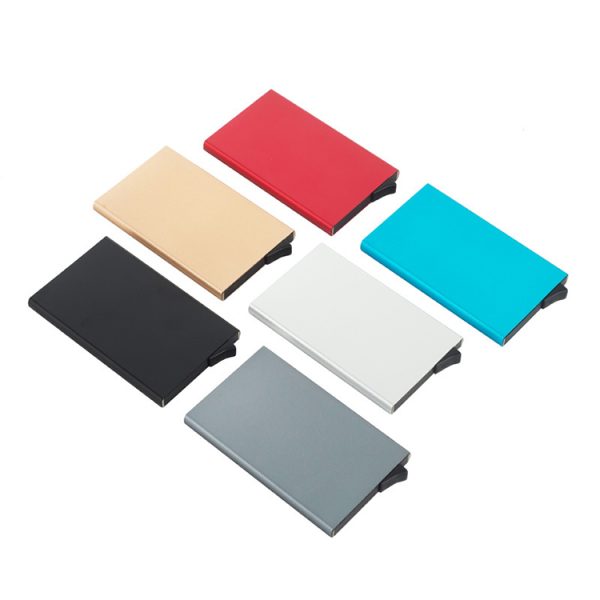
In the B2B resale context, light-colored leather (white, beige, pastels) shows wear faster and is harder to sell. Dark colors — black, brown, navy — have broader market appeal and are more forgiving of daily use. For metal wallets, silver and black dominate; colored aluminum (rose gold, blue) appeals to a narrower demographic.
What Are 6 Things You Shouldn’t Carry in Your Wallet?
Spare keys scratch RFID chips and the wallet surface. Excess coins stretch the stitching and distort the shape. Multiple loyalty cards add bulk and create pressure points. Wet receipts damage leather and transfer ink. A spare SIM card bends and can damage the card slot. Large bills folded tightly crease over time, which matters if you are selling a premium leather wallet — customers will hold you responsible for design flaws that cause these issues.
How We Meet These Standards at Gstar Technology
The industry standards described above — transparent cost breakdowns, in-house equipment, sample verification — are not just best practices. They are the baseline we hold ourselves to as a manufacturer.
We operate in-house CNC machining lines, which means laser engraving and metal logo application happen under our own roof. We do not subcontract this work, so there is no third-party markup and no quality control gap between the engraving process and the final inspection. When you request a quote, the customization cost is broken into three lines: tooling (one-time), per-unit processing, and packaging. You can see exactly where your budget goes.
With 14 years of OEM/ODM experience, we have refined our setup processes to minimize waste. For standard wallet models, our tooling setup time is roughly 30% faster than the industry average, which lowers the amortized cost per unit. Our monthly production capacity exceeds 300,000 units, which allows us to spread fixed costs across larger runs and offer flexible MOQs. We are transparent about the trade-off: larger orders yield the lowest per-unit customization cost, and we advise buyers accordingly.
For logo precision, we use automated vision inspection on metal and leather wallets. The system checks logo alignment, contrast, and placement consistency across every batch. This reduces rejected units and rework costs — costs that would otherwise be passed back to you.
A practical note on how we work: When you send us your design, we first evaluate whether your logo is optimized for the chosen material. A logo with fine lines that looks good on screen may not engrave cleanly on aluminum. We flag these issues before production, not after. This is the difference between a supplier who processes orders and a partner who protects your brand.
Conclusion: Budget for the Logo, Not Just the Wallet
Logo customization cost is a function of four levers: method, material, complexity, and volume. A simple laser engraving on an aluminum wallet adds $0.40–$0.80 per unit. A multi-color metal emblem can add $2.00–$3.00. The key is not to find the cheapest method — it is to find the method that matches your product’s lifespan and market position.
Before you commit to a supplier, request a cost breakdown that separates tooling from per-unit costs. Verify that the customization method for your sample is the same method used in mass production. Confirm whether tooling fees are credited on bulk orders. These are simple questions, but they protect your margin.
If you are sourcing RFID wallets, card holders, or key organizers with custom branding, the right supplier will walk you through these cost drivers rather than hiding them. The logo is your brand’s first impression. It deserves more than an afterthought in the budget.
References
-
ISO 9001:2015 Quality Management Systems — https://www.iso.org/standard/62085.html
-
Leather Grading Standards (Full-Grain vs. Top-Grain vs. Bonded) — https://www.mooreandgiles.com/leather-grades/
-
RFID Blocking Technology Overview — https://www.nist.gov/
-
CNC Machining and Laser Engraving Process Specifications — https://www.sciencedirect.com/topics/engineering/laser-engraving